
Last Updated: September 30, 2026
BPC-157 is a synthetic peptide of 15 amino acids, derived from a protective protein in human gastric juice. Researchers study how BPC-157 works because its structure survives stomach acid, a rarity among peptides, making it unusually stable in laboratory models.
Its full name, Body Protection Compound, reflects that origin: a fragment of a larger protein isolated from gastric secretions. Because it is synthetic, labs can produce it in standardized form rather than extracting it from tissue, which matters for reproducibility. At Canada BioGenix, we supply premium-quality research peptides, lab compounds, and reconstitution products to Canadian laboratories that need consistent material for controlled experiments. This guide covers how BPC-157 works at the molecular level, what the research models show, and how to evaluate peptide purity before you begin.
The BPC-157 mechanism of action centers on its interaction with the vascular endothelial growth factor (VEGF) system, particularly the VEGFR2 receptor. This pathway drives angiogenesis, the formation of new blood vessels that deliver oxygen and nutrients to damaged tissue.
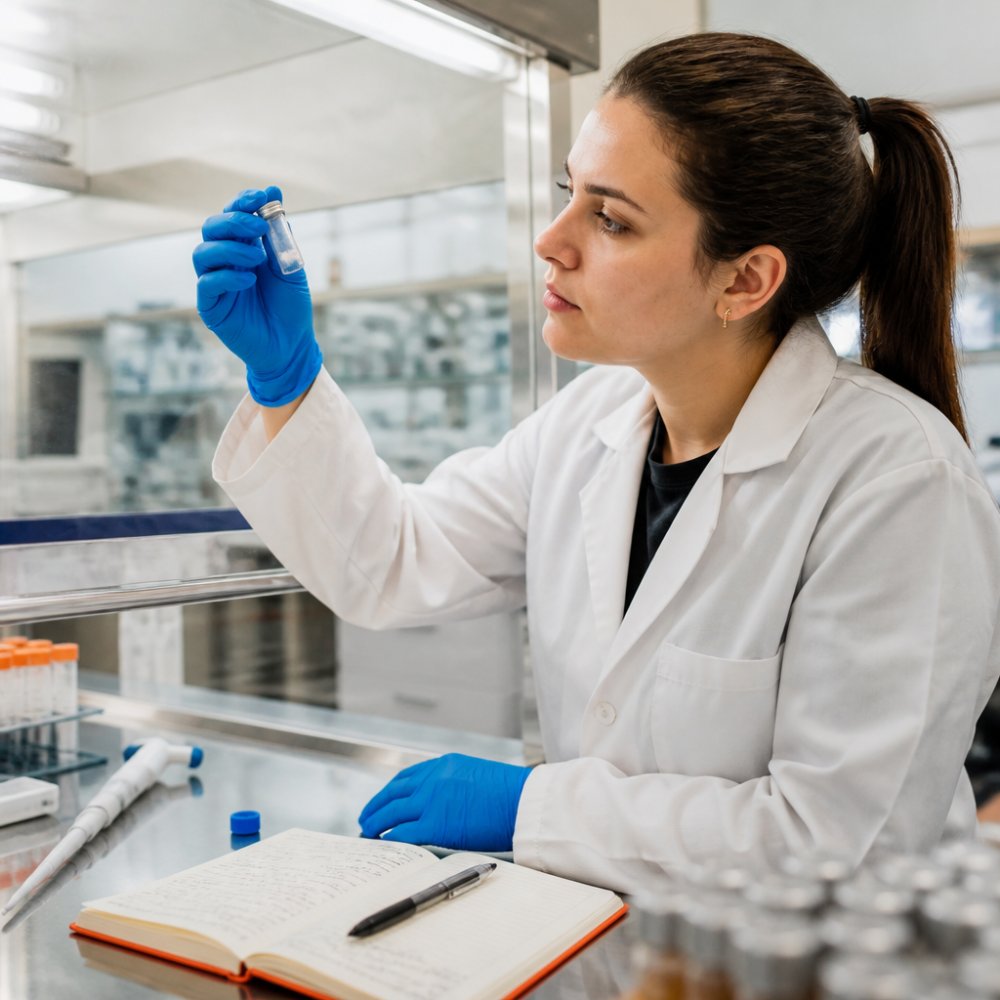
Unlike growth factors that act on a single receptor, BPC-157 appears to influence several signaling routes at once: it modulates the nitric oxide system, which affects blood flow and vascular tone, and interacts with growth hormone receptor signaling.
VEGFR2 activation is the best-documented mechanism. When BPC-157 binds or indirectly activates this receptor, endothelial cells migrate and form new capillary structures. In laboratory models, this correlates with faster vascularization of injured tissue.
The downstream sequence is what most summaries omit. VEGFR2 activation triggers phosphorylation of phospholipase C gamma (PLCγ), generating inositol trisphosphate (IP3) and diacylglycerol (DAG). IP3 releases intracellular calcium while DAG activates protein kinase C (PKC); this calcium-PKC axis drives endothelial nitric oxide synthase (eNOS), producing nitric oxide (NO) that diffuses to smooth muscle and promotes vasodilation, raising localized perfusion to support repairing tissue.
VEGFR2 signaling also activates the PI3K/Akt pathway, suppressing endothelial cell apoptosis, and the MAPK/ERK cascade, driving proliferation. Together these three branches, survival, proliferation, and vasodilation, explain why BPC-157’s angiogenic effects appear across multiple tissue models rather than one organ system.
The nitric oxide connection deserves separate attention because it links BPC-157 to a system the body already uses for vascular regulation. NO is a short-lived gas that relaxes vascular smooth muscle, inhibits platelet aggregation, and modulates inflammatory cell adhesion. BPC-157 appears to raise eNOS activity in endothelial cells, increasing local NO availability without the systemic hypotension direct NO donors can cause.
This matters for interpreting dose-response data. If BPC-157 works partly by amplifying an endogenous signaling molecule, the baseline state of the NO system, which varies with age, cardiovascular health, and diet, becomes a confounding variable. A model with impaired endothelial function may show a different response curve than a healthy one at identical doses.
Fibroblasts produce the collagen framework that gives tendons and ligaments their tensile strength. BPC-157 appears to increase fibroblast activity and collagen synthesis in cell cultures, which researchers link to improved tendon-cell movement and faster structural repair.
The proposed mechanism involves upregulation of growth factor receptors on fibroblast surfaces, particularly fibroblast growth factor (FGF) receptors. Activated fibroblasts migrate into the injury site, proliferate, and secrete type I and type III collagen, type I providing tensile strength, type III forming the initial scaffold later remodeled.
BPC-157 also appears to interact with growth hormone receptor signaling. One hypothesis is that it upregulates growth hormone receptor expression in target tissues, making cells more responsive to endogenous growth hormone without raising systemic levels, which would explain tissue-specific growth effects in some animal models without the systemic changes of exogenous growth hormone administration. The distinction matters for safety: receptor sensitization is a different pharmacological profile than hormone supplementation.
BPC-157’s resistance to enzymatic degradation, unusual for a peptide of its size, means it can reach target tissues intact. Most peptides are cleaved within minutes by gastric enzymes or plasma proteases; BPC-157’s structure, stabilized by disulfide bonds and a compact sequence, resists breakdown long enough to interact with receptors in the gastrointestinal tract and, after absorption, in peripheral tissues.
BPC-157 has a short plasma half-life, generally minutes to a few hours depending on the model. Despite rapid clearance, observed effects in animal models persist far longer than the peptide remains detectable.
BPC-157 research applications span several tissue types, with the strongest bodies of work in musculoskeletal and gastrointestinal models. Each model tests a different facet of how BPC-157 works.
| Model Type | Primary Focus | Observed Research Outcome |
|---|---|---|
| Tendon and ligament | Fibroblast activity, collagen synthesis | Improved structural repair markers |
| Muscle | Muscle recovery, vascular supply | Faster regeneration in injury models |
| Gastrointestinal | Cytoprotection, mucosal healing | Reduced lesion severity in animal studies |
| Anti-inflammatory | Healing cascades, systemic effects | Lower inflammatory markers in some models |
In orthopaedic sports medicine research, BPC-157 is studied for its effect on tendon-cell movement and ligament repair. Animal models of surgical trauma show accelerated healing versus controls, though human clinical efficacy data remains limited.
The peptide’s origin in gastric juice makes gastrointestinal healing a natural research focus. Studies examine cytoprotection against toxic trauma and mucosal repair. Separate models explore its anti-inflammatory properties, where BPC-157 appears to modulate rather than suppress inflammatory pathways.
The gap between animal models and human application is the most important caveat in this field. Animal models use genetically similar subjects, controlled diets, standardized injury timing, and doses that may not translate to human physiology; rats metabolize peptides differently, and immune responses to injury vary across species.
Standardization is the weakest link in BPC-157 research. Protocols vary widely in dose, route, frequency, and model, which makes the dose-response relationship difficult to compare across studies.
BPC-157 does not act in isolation. It interacts with endogenous systems already present in the body, including the nitric oxide system and growth hormone receptor signaling. This interaction is why researchers describe its effects as modulatory rather than purely exogenous.
Purity determines whether your results reflect the peptide or the contaminants. BPC-157 peptide purity standards should start with a batch-specific Certificate of Analysis (COA) from an independent third-party laboratory, not an in-house claim.
Standardization is the weakest link in BPC-157 research. Protocols vary widely in dose, route, frequency, and model, which makes the dose-response relationship difficult to compare across studies.
The gap between promising preclinical models and standardized, reproducible protocols is where most BPC-157 research stalls. Closing it requires material you can trust and documentation you can verify. Canada BioGenix supports Canadian researchers with premium-quality research peptides, lab compounds, and reconstitution products, carefully selected manufacturing partners, and a focus on quality and purity, including free shipping on orders over $250 and credit card payment for convenience.
Timelines vary by study design, model, and route of administration. Some preclinical models report observable tissue changes within days of subcutaneous or intramuscular dosing, while others track outcomes over several weeks. The dose-response relationship and the specific tissue being studied both influence how quickly results appear. Researchers should design protocols with appropriate observation windows rather than expecting a fixed timeline across all applications.
Research suggests BPC-157 does not act as a classical hormone or directly alter testosterone production. Studies indicate it may interact with growth hormone receptor signaling and the nitric oxide system, but these are localized or indirect effects rather than systemic endocrine disruption. The current scientific consensus is that its primary activity involves tissue-repair pathways, not hormonal replacement or suppression. Researchers studying endocrine endpoints should still include appropriate controls.
Most published data comes from preclinical animal models rather than human clinical trials. Findings consistently point to accelerated tissue regeneration, angiogenesis, and anti-inflammatory activity, but the absence of large-scale human studies means clinical efficacy remains unconfirmed. The scientific consensus is that BPC-157 shows therapeutic potential in research settings, warranting further controlled investigation before any clinical conclusions are drawn.
BPC-157 appears to upregulate vascular endothelial growth factor (VEGF) and activate VEGFR2 signaling, which promotes the formation of new blood vessels. This angiogenesis supports oxygen and nutrient delivery to injured tissue, a key step in healing cascades. The effect is one of the most consistently reported mechanisms in preclinical literature, though the exact molecular pathway continues to be refined through ongoing research.