
Last Updated: August 2, 2026
Understanding the proper handling of research chemicals is non-negotiable in any laboratory environment. Whether you’re working with corrosives, toxic reagents, or high-potency compounds, the stakes are too high for shortcuts. This guide walks you through every critical aspect of chemical safety, from hazard identification to waste disposal, so your team can work confidently and responsibly.
Every chemical in your laboratory presents specific risks that must be understood before anyone touches it. Hazard identification is the foundation of all safe chemical handling.
The Safety Data Sheet (SDS) is the official document accompanying every chemical you purchase. It contains toxicology information, physical hazard data, storage requirements, and emergency procedures. Section 2 lists hazard classifications; Section 5 covers fire-fighting measures; Section 6 addresses accidental release procedures; Section 8 specifies exposure controls and personal protective equipment requirements.
Designate someone to extract the key hazards for each chemical and post a summary near the storage area, including the chemical name, primary hazards, required PPE, and emergency contact information.
Not all chemicals can coexist safely in the same storage space. Oxidizers cannot be stored with flammables or reducing agents; acids must be separated from bases; reactive metals must be kept away from water and halogens. Many labs use a color-coded or zone-based system to prevent the mistake of grabbing the wrong bottle in a hurry.
PPE is your last line of defense against chemical exposure. The right PPE depends entirely on the hazards you’re facing. Your lab coat won’t protect you from a corrosive splash if it’s made of cotton instead of treated material. Your gloves won’t protect you from organic solvents if they’re latex instead of nitrile.
Canada’s Workplace Hazardous Materials Information System (WHMIS) requires employers to provide appropriate PPE at no cost to workers, and workers are required to use it.
Chemical splashes can cause permanent vision damage in seconds. Safety goggles form an airtight seal around your eyes, protecting against liquid splashes. For chemicals that generate aerosols or vapors, you need a respirator with the correct cartridge for the hazard you’re facing. Organic vapor cartridges protect against solvents; acid gas cartridges protect against hydrogen chloride or sulfur dioxide.
Never assume that if you use a fume hood, respiratory protection isn’t needed. Fume hoods are essential, but they’re not 100% effective. Proper positioning at the hood, maintaining appropriate sash height, and wearing a respirator as backup creates redundancy.
Your lab coat is a barrier between your skin and chemical hazards. Treated lab coats with permeation resistance are designed to slow the passage of chemicals through the fabric, buying you time to remove the coat and rinse. For labs handling corrosives or high-potency compounds, consider a lab coat made from tyvek or similar synthetic material. Pair the coat with an apron for additional protection in high-splash areas.
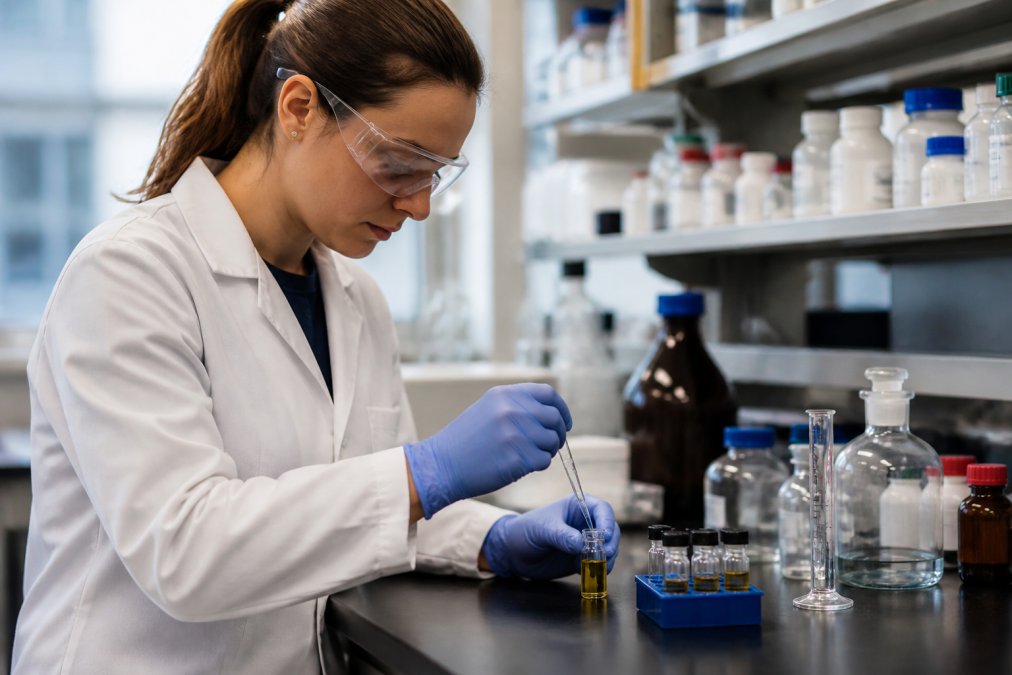
How you store chemicals determines whether they remain stable, whether incompatible substances mix accidentally, and whether spills stay contained. The fundamental principle is segregation: separate chemicals by hazard class, maintain appropriate temperature control, and use secondary containment to catch leaks before they spread.
A practical segregation system uses dedicated storage zones. Flammable liquids go in a flammable storage cabinet with proper ventilation and grounding. Corrosives go in a separate acid or base cabinet. Oxidizers occupy their own space. Reactive metals are stored under mineral oil or in inert atmospheres. Label everything clearly with the chemical name, hazard class, date received, and expiration date.
Secondary containment is your backup system. If a bottle leaks, the secondary container catches the spill. The containment capacity should be at least 110% of the largest container stored in that area.
Chemical stability depends partly on temperature. Many reagents degrade faster at room temperature than at 4°C or even at -20°C. The SDS specifies the ideal storage temperature for each chemical.
If you store chemicals in a refrigerator, use a dedicated laboratory refrigerator, never one used for food or beverages. For chemicals requiring freezer storage, a -20°C freezer is standard. Some high-potency compounds require -80°C storage. Use a thermometer or digital temperature logger to verify that your storage areas maintain the correct temperature, recording readings weekly.
How you physically handle and transfer chemicals determines whether exposure occurs. Most laboratory accidents happen during routine transfers. The principle of safe transfer is simple: minimize exposure time, use appropriate containment, and maintain control of the chemical at all times.
A fume hood is a ventilated enclosure that draws air and vapors away from you and exhausts them outside or through a filtration system. Position yourself directly in front of the sash opening, not to the side. Keep your face at a safe distance back from the sash to avoid disrupting airflow. Keep the sash at the recommended height.
Never block the hood’s air intake or exhaust. Keep clutter out of the hood. Before using the hood, verify that it’s functioning properly by checking the airflow indicator. Fume hoods require regular maintenance: the filter needs changing periodically, the sash should move smoothly, and the exhaust should be unobstructed. Schedule quarterly maintenance checks.
Every chemical container must be clearly labeled with the chemical name, concentration, hazard class, date received, and expiration date. For compounds you’ve prepared or reconstituted, include the preparation date, the person who prepared it, and any relevant notes about stability or special handling.
Digital inventory tracking systems make this manageable. Use a lab information management system (LIMS) or a simpler inventory app that tracks what you have, where it’s stored, when it expires, and who last used it. These systems can alert you when something is approaching expiration or when stock runs low.
WHMIS 2015 is the Canadian system for classifying and communicating hazards of controlled products. It aligns Canada’s requirements with the Globally Harmonized System (GHS) used internationally. Understanding WHMIS is a legal requirement for anyone handling research chemicals in Canada.
WHMIS requires that every hazardous product be classified, labeled, and accompanied by an SDS. Employers must provide training to workers, maintain records of hazardous products, and ensure that workers can access SDS documents. For research chemicals, compliance means maintaining an up-to-date inventory of all hazardous products, ensuring that labels are complete and legible, keeping SDS documents accessible, and providing training to all personnel who handle chemicals.
Despite your best efforts, spills happen. How you respond determines whether a minor incident stays minor or escalates into an emergency. Every lab should have a spill response plan that everyone knows and practices.
The first rule of spill response is to assess the situation. Is it a small spill you can handle, or is it large enough to require evacuation? If there’s any doubt, evacuate and call emergency services.
For small spills, containment is your first priority. Stop the spill from spreading by placing absorbent material around it. Use spill kits designed for your lab. For corrosive spills, neutralize before absorbing. Acid spills can be neutralized with a base (sodium bicarbonate is common), and base spills can be neutralized with an acid. Never add water to a corrosive spill.
For organic solvent spills, use solvent-absorbent material, not water-based absorbents. Once the spill is contained and absorbed, place the contaminated material in a hazardous waste container labeled with the chemical name and hazard class. Decontaminate the area with appropriate cleaning solution.
Contact emergency services (911 in Canada) if the spill is large, the chemical is highly toxic or reactive, the spill involves a high-potency compound where even small exposures are dangerous, the spill cannot be contained with materials on hand, anyone has been exposed or injured, the spill threatens to escape the lab or facility, or you’re uncertain whether the situation is safe.
When you call emergency services, have the following information ready: the chemical name and concentration, the amount spilled, the location, whether anyone is injured, and what you’ve done so far. Have the SDS available so you can answer questions about the hazard.
Chemical waste disposal is heavily regulated in Canada. You cannot simply pour chemicals down the drain or put them in regular trash. Your lab should have designated hazardous waste containers for different chemical classes: one for halogenated organic solvents, one for non-halogenated solvents, one for aqueous waste, one for acids, one for bases. Label each container clearly with the chemical names and concentrations of everything in it.
When a waste container is full, arrange for disposal through a licensed hazardous waste contractor. In Canada, regulations vary by province, so check with your local environmental authority for approved contractors. Keep disposal records for at least three years.
Technical competence matters, but human factors, fatigue, distraction, rushing, and fear of reporting mistakes, cause more accidents than equipment failure or chemical hazards. Creating a culture where safety is the default and where people feel comfortable reporting near-misses prevents incidents before they happen.
Psychological safety means that team members can speak up about concerns without fear of punishment or blame. A near-miss reporting system helps the team learn what conditions led to the near-miss and how to prevent a real incident.
Standard operating procedures (SOPs) prevent errors by documenting exactly how a task should be done. An SOP for handling a specific chemical includes the hazards, the required PPE, the step-by-step procedure, the emergency response, and the disposal method. Checklists are simple but powerful: before handling a chemical, verify that the SDS is available, the PPE is correct, the fume hood is functioning, the area is clear of incompatible substances, and the waste container is ready.
Proper handling of research chemicals is the foundation of a functional, trustworthy laboratory. When your team knows the hazards, has the right tools, and feels psychologically safe reporting concerns, accidents become rare.
Canada BioGenix is committed to supporting your research with premium-quality compounds and the guidance you need to use them safely. Our products come with detailed specifications and Certificates of Analysis so you can verify purity and stability. When you order from Canada BioGenix, you’re getting more than a product, you’re getting a partner who takes your research integrity and your team’s safety seriously. Explore our product catalog and reach out with any questions about handling, storage, or quality specifications.
| Topic | Key Action | Frequency |
|---|---|---|
| Hazard Identification | Read SDS before handling | Every new chemical |
| PPE Selection | Match PPE to chemical hazards | Before each use |
| Chemical Storage | Segregate by hazard class | Ongoing |
| Temperature Monitoring | Record storage temperatures | Weekly |
| Fume Hood Maintenance | Schedule professional service | Quarterly |
| Spill Response | Practice with spill kit | Annually |
| Waste Documentation | Log disposal records | Per batch |
| Near-Miss Reporting | Report and discuss incidents | As they occur |
According to Health Canada’s WHMIS guidelines, proper hazard communication and worker training are foundational requirements for any facility handling research chemicals. Compliance protects both workers and facilities from regulatory penalties and real safety incidents.
Research from the [EXTERNAL_LINK: Canadian Centre for Occupational Health and Safety | ccohs.ca] emphasizes that chemical spill response training and readily available spill kits reduce incident severity by up to 80% compared to labs without formal procedures.
The Workplace Hazardous Materials Information System (WHMIS) 2015 legislation establishes the legal framework for chemical safety in Canada. Every employer handling hazardous products must comply with classification, labeling, SDS requirements, and worker training.
Canada's Hazardous Products Regulation (HPR) and the Workplace Hazardous Materials Information System (WHMIS) govern proper handling of research chemicals. Employers must provide Safety Data Sheets (SDS) for all hazardous substances, ensure appropriate labeling, and train personnel on safe handling procedures. Provincial occupational health and safety legislation also applies. Organizations must develop a chemical hygiene plan that addresses hazard identification, storage, emergency response, and waste disposal protocols specific to their laboratory environment.
Minimum PPE typically includes safety goggles or a face shield for eye protection, a lab coat with appropriate permeation resistance for the chemicals in use, and nitrile or chemical-resistant gloves. Respiratory safety equipment may be required depending on chemical toxicology and whether a fume hood is available. The specific PPE requirements depend on the hazard classification of each chemical, which is detailed in its Safety Data Sheet. Always consult the SDS before handling any compound to determine the correct protective gear needed.
Store research chemicals in a cool, well-ventilated area away from direct sunlight to maintain chemical stability. Segregate incompatible substances to prevent dangerous reactions. Use appropriate storage containers that resist permeation and corrosion. Maintain proper storage temperature as specified on the product label or SDS. Implement batch labeling with expiration dates and storage conditions. Use digital inventory tracking systems to monitor stock levels and ensure older batches are used first. Store corrosives separately from bases, oxidizers away from flammable materials, and reactive compounds in isolated areas.
First, assess the spill size and chemical involved by consulting the SDS. For small spills, evacuate the immediate area, put on appropriate PPE, and use spill containment materials (absorbent pads or neutralizing agents) to contain the spill. For large spills or spills involving highly toxic or corrosive chemicals, evacuate the entire laboratory and contact emergency services and your facility's safety officer. After containment, place contaminated materials in appropriate hazardous waste containers. Document the incident and decontaminate the area according to your laboratory's standard operating procedures.
WHMIS requires that all hazardous research chemicals be classified, labeled, and accompanied by Safety Data Sheets. Employers must ensure all personnel handling research chemicals receive WHMIS training covering hazard identification, safe handling, and emergency procedures. Labels must display the product name, hazard symbols, and signal words. Your laboratory must maintain current SDS documents accessible to all staff and establish standard operating procedures that comply with WHMIS requirements. This applies regardless of whether chemicals are used for formal research or fitness-related applications.
Chemical segregation means storing incompatible substances in separate areas to prevent accidental mixing and dangerous reactions. Spill containment refers to equipment and procedures used to prevent spilled chemicals from spreading and contaminating the laboratory environment or entering drainage systems. Segregation is preventive storage strategy, while spill containment is an emergency response measure. Both are essential components of a comprehensive chemical safety program. Proper segregation reduces the risk that a spill will create an unexpected chemical reaction, and adequate containment systems minimize environmental and personnel exposure if a spill does occur.
Digital inventory systems track batch numbers, expiration dates, storage locations, and chemical stability conditions in real time. This reduces the risk of using degraded reagents that may perform unpredictably or pose safety risks. Automated alerts notify staff when chemicals are approaching expiration, ensuring older batches are used first and preventing accumulation of unstable compounds. Digital tracking also improves compliance documentation for audits and helps identify which batches were involved in incidents. These systems support better organization, reduce human error in inventory management, and provide clear records of chemical exposure and disposal for occupational health monitoring.
This article was written using GrandRanker