
Last Updated: August 19, 2026
Peptide purity determines whether your experimental results are reproducible, valid, and publishable. Impure peptides introduce unknown variables into your research design. Contaminants interact with your assay, interfere with cell signaling, and create noise that masks the real effects you’re measuring. A batch that appears active might deliver mixed signals from multiple compounds, making it impossible to distinguish whether results came from the intended peptide or a byproduct. That ambiguity invalidates your work.
At Canada BioGenix, we’ve built our operation around the principle that purity is foundational. We carefully select manufacturing partners and demand batch-specific documentation because researchers depend on consistent, verifiable quality to advance their work. Without it, you risk wasting time and materials, and potentially publishing results that won’t replicate.
Peptides don’t synthesize perfectly. The chemistry of peptide assembly introduces multiple opportunities for incomplete reactions, side reactions, and unwanted byproducts.
Truncated sequences are the most common problem. During synthesis, the coupling reaction between amino acids doesn’t always proceed to completion. If an amino acid fails to attach at position 5, you end up with a shorter peptide chain missing critical residues.
Deletion peptides occur when an entire amino acid is skipped during the synthetic cycle. The chain continues building with a gap in the sequence, creating a completely different compound with altered binding properties.
Trifluoroacetic acid (TFA) and counter-ions remain in the final product after synthesis. TFA is used to cleave peptides from the resin, but residual TFA can account for 10-20% of sample weight, diluting your actual peptide concentration and interfering with downstream applications.
Solvent residues from purification, including acetonitrile and methanol, persist even after lyophilization if drying wasn’t complete. These solvents can affect peptide solubility and introduce osmotic stress in cell-based assays.
Oxidized forms of methionine and cysteine residues develop over time or during synthesis. Oxidation changes the peptide’s charge distribution and three-dimensional structure.
Impurities don’t scale linearly with their concentration. A 5% contamination rate doesn’t mean 5% signal noise. Depending on the contaminant’s biological activity, it can dominate your results.
Consider a cell proliferation assay testing whether a peptide stimulates growth at nanomolar concentrations. Your "pure" sample is actually 85% target peptide and 15% truncated fragments that lack the critical binding domain. Those fragments compete for space in your culture medium and consume resources. Alternatively, truncated versions might retain partial activity, enough to contribute unpredictable signal that makes dose-response curves nonlinear and impossible to model.
When you publish results based on impure material and another lab replicates your work using truly pure peptide, their results won’t match yours. The field labels your work irreproducible, damaging your reputation and polluting the scientific record.
Cell culture is unforgiving. Cells respond to their chemical environment with precision. When you introduce a peptide sample containing multiple related compounds, you’re running an uncontrolled experiment.
Reproducibility collapse happens because experimental conditions appear identical between runs, but actual peptide composition varies. Batch A is 92% pure. Batch B is 88% pure. Both are within "acceptable" ranges, but the difference in contaminant load changes cell behavior. One batch triggers strong proliferation. The other produces marginal effects. You can’t explain the discrepancy because you didn’t know the purity profiles differed.
Assay sensitivity drops when impurities compete for the same biological target. A truncated version that doesn’t bind still occupies space in the culture medium, reducing the effective concentration of active peptide without contributing signal. Your dose-response curve flattens, requiring higher concentrations to reach the same effect level.
Cell stress can occur from unexpected compounds. Truncated peptides might trigger off-target signaling. Solvent residues or TFA can alter osmotic balance. You observe cell death or growth inhibition and attribute it to your peptide, when the real culprit is a contaminant.
Reproducibility requires knowing exactly what’s in your sample through analytical testing and transparent documentation.
A Certificate of Analysis (CoA) is your proof of purity. It bridges the gap between what a supplier claims and what actually exists in your vial.
A legitimate CoA contains specific analytical data: purity percentage determined by high-performance liquid chromatography (HPLC), identity confirmation via mass spectrometry, water content, amino acid composition, and batch-specific information including synthesis date and expiration.
Start with the purity percentage, typically reported as a range (e.g., 95.3% ± 1.2%). This represents the proportion of target peptide detected by HPLC relative to all compounds in the sample.
Look for HPLC method details: wavelength of detection, column type, and gradient conditions. Different methods can produce different purity values for the same sample.
Check the mass spectrometry data. The molecular ion peak should match the theoretical mass of your target peptide. Multiple peaks suggest the sample contains multiple compounds.
Review the water content (Karl Fischer titration). Lyophilized peptides should contain less than 5% water. Higher water content indicates incomplete drying and accelerates degradation.
Examine the amino acid analysis if provided. This confirms the peptide contains expected amino acids in roughly correct ratios.
Not all CoAs are created equal. Some suppliers generate in-house certificates without independent verification. Others rely on third-party contract testing laboratories with ISO 17025 accreditation.
Third-party laboratories are preferable because they have no financial incentive to overstate purity. They’re accredited, audited, and liable for inaccurate results.
Red flags include CoAs lacking specific method details, showing implausibly high purity (99.5%+ is rare for synthetic peptides), or providing no mass spectrometry confirmation. Vague testing dates or lack of batch-specific information suggest templates rather than actual results.
Canada BioGenix provides batch-specific CoAs for every product, generated by accredited third-party laboratories. We measure purity rather than estimate it, enabling researchers to make informed decisions.
Understanding the analytical methods behind purity testing gives you confidence in the numbers on your CoA. HPLC and mass spectrometry are complementary techniques answering different questions about your peptide sample.
High-performance liquid chromatography (HPLC) separates compounds based on their chemical properties. A liquid sample is injected onto a column packed with tiny particles. Different compounds interact with the particles differently, creating a chromatogram showing peaks at different times. Each peak represents a different compound.
For peptides, reverse-phase HPLC is standard. The column material is hydrophobic. Peptides with more hydrophobic amino acids stick longer than hydrophilic ones.
The purity percentage is calculated by comparing the area under the target peptide’s peak to the total area of all peaks. If your target peptide’s peak accounts for 94% of total area, purity is 94%.
The limitation is that HPLC detects compounds but doesn’t identify them. Two different peptides with similar hydrophobicity might co-elute as a single peak. HPLC alone can’t confirm the major peak is your intended peptide.
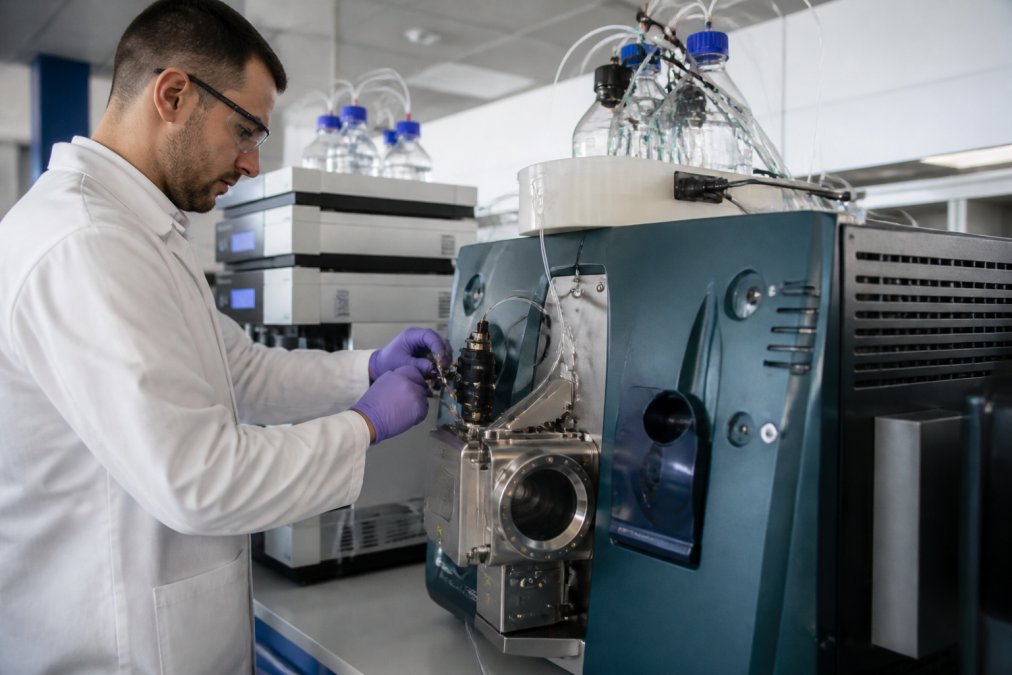
Mass spectrometry (MS) measures the mass-to-charge ratio of molecules, answering: "What is this compound, and what is its exact mass?"
A peptide sample is ionized and accelerated through a magnetic field. Lighter molecules deflect more than heavier ones. A detector counts molecules arriving at each mass-to-charge value, creating a mass spectrum.
For a peptide with a known sequence, you can calculate the theoretical molecular weight. When you run mass spectrometry, you should see an ion peak at that exact mass. If the peak appears at a different mass, the compound isn’t your target peptide.
Tandem mass spectrometry (MS/MS) fragments the peptide and measures fragment masses. The fragmentation pattern confirms the amino acid sequence. Fragments that don’t match your expected sequence indicate contaminants.
Purity requirements depend on your application. There’s no universal "acceptable" threshold.
For cell culture and in vitro assays, aim for 85% purity minimum. At this level, you have enough target peptide to generate signal, and impurities are dilute enough not to dominate biological response. Many researchers use 90%+ purity for dose-response studies requiring precise concentration-effect relationships.
For structural studies (NMR, X-ray crystallography), 95%+ purity is standard. Contaminants create spectroscopic noise and interfere with crystal packing.
For animal studies or therapeutic development, regulatory bodies expect 98%+ purity. Contaminants might be toxic or immunogenic.
For preliminary screening, 80% purity is often acceptable. You’re testing whether a peptide has activity. If it does, repeat with higher-purity material to confirm.
The cost of purity scales nonlinearly. Moving from 85% to 90% might increase synthesis cost by 10%. Moving from 95% to 98% can double the price. Specify the purity level you actually need to optimize your budget.
Peptides degrade. The rate depends on storage conditions, peptide composition, and time.
Temperature is the dominant factor. Peptides stored at room temperature degrade measurably within weeks. Refrigerated storage (2-8°C) slows degradation to months. Frozen storage (−20°C) extends shelf life to years. Ultra-cold (−80°C) preserves peptides for a decade or more.
Humidity accelerates degradation. Lyophilized peptides should be stored in a desiccated environment. If a vial is opened repeatedly, moisture enters and promotes hydrolysis and oxidation. Reseal vials tightly and store with desiccant packets.
Light exposure degrades peptides containing tryptophan or tyrosine. Store in amber vials or opaque containers away from direct sunlight.
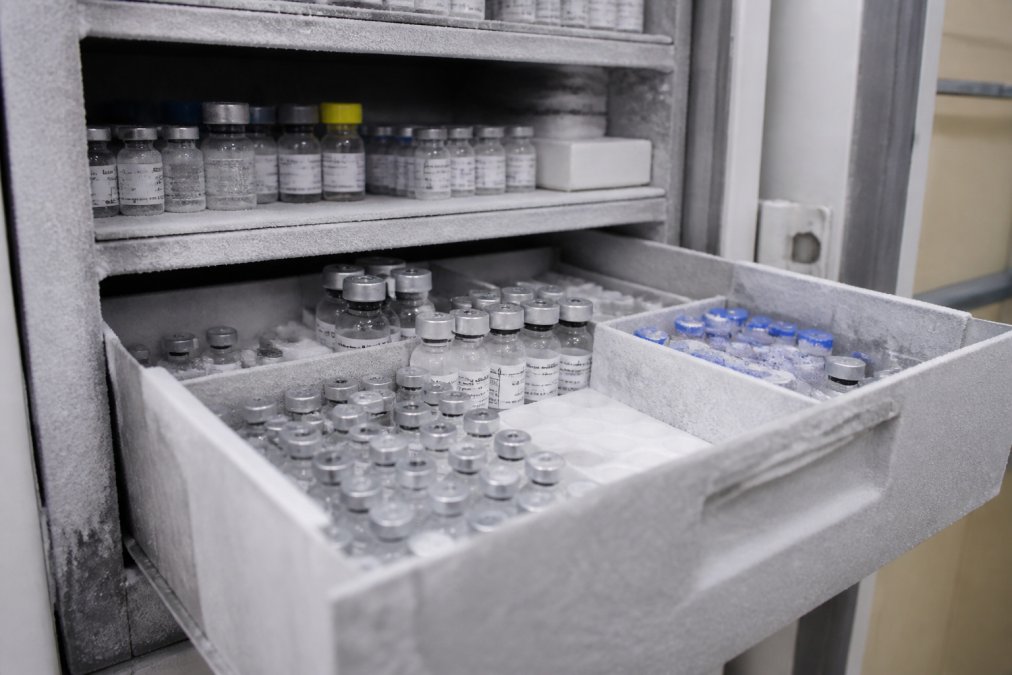
Reconstitution introduces new risks. When you dissolve a lyophilized peptide in water or buffer, you create an aqueous solution where hydrolysis and oxidation accelerate. Use sterile, degassed solvents. Add antioxidants (ascorbic acid, DTT) if your peptide contains methionine or cysteine. Store reconstituted peptides at 4°C and use within days, or prepare fresh aliquots from lyophilized stock.
Documentation matters. Record storage temperature, date of receipt, date of first opening, and observations about appearance or solubility. If a peptide looks discolored or fails to dissolve properly, degradation may have occurred. Don’t use it.
You’ve run an experiment twice. The first time, the peptide worked beautifully. The second time, no signal. The peptide is from a different batch. This is the classic signature of purity variation.
Step 1: Check the CoA for both batches. Compare purity percentages, HPLC profiles, and mass spectrometry data. If purity differs by more than 5%, that’s likely your culprit. Even if percentages are similar, examine impurity profiles. Different contaminants can have different biological effects.
Step 2: Verify storage conditions. Has the peptide been stored properly since arrival? Peptides stored at room temperature for weeks will degrade noticeably.
Step 3: Test a positive control. Rerun your assay with a peptide from a batch that worked previously. If the old batch still produces signal, your protocol is sound. The problem is the new peptide batch.
Step 4: Request a fresh aliquot from the supplier, ideally from a different synthesis batch. If the new aliquot works, the original batch was degraded or impure.
Step 5: Consider off-target effects. Run a negative control using a scrambled peptide sequence. If the scrambled peptide also produces signal, an impurity is driving the effect.
Step 6: Perform HPLC or mass spectrometry yourself if your facility has the equipment. Compare actual sample composition to the CoA. Discrepancies suggest degradation in transit or storage, or inaccurate documentation.
Peptide purity directly affects whether your research produces reliable, reproducible results. When you choose a supplier, you’re buying confidence in your data. Canada BioGenix supplies research peptides with batch-specific analytical documentation, carefully sourced from vetted manufacturing partners meeting strict quality standards. That commitment to transparency and consistency means you can focus on your science, not validating your materials. For researchers demanding dependable service and verifiable quality, we provide both. Explore our current inventory and request a CoA for any product to see exactly what you’re getting.
95% purity is generally acceptable for many research applications, but acceptability depends on your specific experiment. For cell culture work and sensitive assays, higher purity (98%+) reduces variability and improves reproducibility. Lower purity levels introduce more contaminants that can interfere with results. Your Certificate of Analysis will show the exact impurity profile, allowing you to assess whether the batch suits your research needs. When peptide purity matters for your outcomes, verify the purity threshold matches your experimental requirements before ordering.
A Certificate of Analysis reports the peptide's purity percentage, molecular weight, identity verification results, and impurity profile. The purity percentage shows what fraction of the sample is your target peptide; the remainder consists of byproducts from synthesis. Look for HPLC purity data (typically shown as a percentage by area) and mass spectrometry confirmation of the correct molecular weight. The certificate should also list detected contaminants such as truncated sequences or residual trifluoroacetic acid. Third-party testing by an independent lab adds credibility. Always request batch-specific certificates rather than generic claims about product lines.
Low-purity peptides often contain truncated sequences (incomplete amino acid chains from synthesis errors), deletion peptides (missing amino acids), residual trifluoroacetic acid (TFA, a solvent used during synthesis), counter-ions, and other byproducts from the manufacturing process. Crude peptides may also retain organic solvents or water. These contaminants compromise experimental reproducibility and can produce false results in cell culture, assays, and binding studies. High-performance liquid chromatography and mass spectrometry identify these impurities. Understanding your peptide's impurity profile helps you troubleshoot failed experiments and select batches appropriate for your research.
Impurities introduce experimental variables that reduce reproducibility and compromise data quality. In cell culture applications, contaminants can trigger unexpected cellular responses, mask the true effect of your target peptide, or cause inconsistent results across replicates. Truncated sequences or deletion peptides may have different biological activity than the intended compound, skewing your findings. Residual solvents can affect peptide solubility and bioavailability. When peptide purity matters for your research, low-purity batches make it difficult to isolate the true effect of your treatment, requiring more replicates and wasting time and resources. Higher purity ensures that observed effects come from your target peptide, not contaminants.
Third-party testing provides independent verification that a supplier's purity claims are accurate. Manufacturers have financial incentive to report optimistic results; independent labs have no such bias. Third-party analysis using HPLC and mass spectrometry confirms both the purity percentage and the identity of the peptide. This protects your research investment by ensuring batch consistency and scientific integrity. Before ordering, ask your supplier whether their Certificates of Analysis come from independent analytical testing. Batch-specific certificates, not generic product claims, demonstrate genuine quality control and build confidence in your experimental results.
Purity requirements depend on your application. For cell culture and sensitive assays, aim for 95% or higher to minimize interference from contaminants. Binding studies and in vivo work often require 98%+ purity to ensure accurate results. Less demanding applications may tolerate 85-90% purity, though reproducibility suffers. Your research goals and budget guide the choice. Request a Certificate of Analysis and review the impurity profile before deciding. Higher purity costs more but reduces experimental variability, saves time on troubleshooting, and produces more reliable data. Understanding peptide purity matters because it directly affects whether your results are reproducible and scientifically valid.
Request batch-specific certificates (not generic product documents) and confirm they come from an independent analytical laboratory, not the manufacturer. Verify the lab's credentials and accreditation. The certificate should include the testing date, batch number, HPLC chromatogram, mass spectrometry data, and identified contaminants. Ask your supplier whether they use the same analytical partner consistently and whether results are available before shipment. Reputable suppliers provide certificates proactively and welcome questions about their quality control. If a supplier resists sharing detailed analytical data or offers only marketing claims instead of test results, that's a red flag. Transparency about testing protects your research integrity.
First, review the Certificate of Analysis to check whether the batch's purity and impurity profile match what was promised. If impurities are higher than expected or contaminants are present, that explains poor performance. Document your experimental results and contact your supplier with the batch number and your findings. Reputable suppliers investigate discrepancies and offer solutions such as replacement batches or refunds. Keep detailed records of which batches worked and which didn't, this data helps identify patterns and guides future orders. If troubleshooting confirms that peptide purity matters for your failed experiment, request a fresh batch from a different manufacturing lot or consider a supplier with stricter quality control.
This article was written using GrandRanker