
Last Updated: September 9, 2026
The GHK-Cu copper peptide mechanism is a well-documented biological process where a naturally occurring tripeptide, glycyl-L-histidyl-L-lysine, binds to copper ions to activate cellular repair pathways. This copper-binding affinity is the foundation of the peptide’s regenerative effects, influencing everything from collagen synthesis to antioxidant defense. At Canada BioGenix, we track the research literature closely to help Canadian researchers understand what this compound actually does at the cellular level.
GHK-Cu doesn’t act alone; its effects depend on its ability to transport copper into cells, where the metal becomes a cofactor for enzymes that rebuild tissue.
The GHK-Cu copper peptide mechanism refers to the sequence of molecular events that begin when GHK-Cu binds to copper ions and delivers them to copper-dependent enzymes inside cells. GHK-Cu is a tripeptide composed of glycine, histidine, and lysine, with a high affinity for copper ions. Once bound, the complex interacts with cell membranes and transports the trace element into the intracellular space.
Copper transport matters because the metal is essential for enzymatic activity that drives tissue remodeling. Without adequate delivery, fibroblasts cannot efficiently produce collagen. The mechanism is concentration-dependent, with effects observed at picomolar and nanomolar concentrations, suggesting the peptide operates through specific receptor-mediated pathways rather than passive diffusion (peer-reviewed research).
Copper binding is not a passive cargo-loading event; it is the critical conformational switch that enables the tripeptide to interact with cellular machinery. Upon chelating a Cu²⁺ ion, GHK forms a stable, square-planar complex recognized by cell membrane components, initiating a cascade of intracellular signaling.
Once internalized or bound at the cell surface, the GHK-Cu complex modulates the expression of a broad set of genes. Microarray studies have shown that GHK-Cu can influence the expression of over 4,000 genes in human fibroblasts (PubMed). A key downstream effect is the upregulation of transforming growth factor-beta (TGF-β) and its receptors. TGF-β is a master regulator of extracellular matrix production, and its activation is a primary driver for the shift of fibroblasts into a proliferative and synthetic state.
Simultaneously, GHK-Cu suppresses the expression of key pro-inflammatory cytokines, such as interleukin-6 (IL-6) and tumor necrosis factor-alpha (TNF-α). This dual action, promoting anabolic signaling while dampening catabolic inflammation, is central to its role in tissue repair. The peptide also influences the Wnt/β-catenin and Notch pathways, which are critical for cell proliferation and differentiation during the healing process.
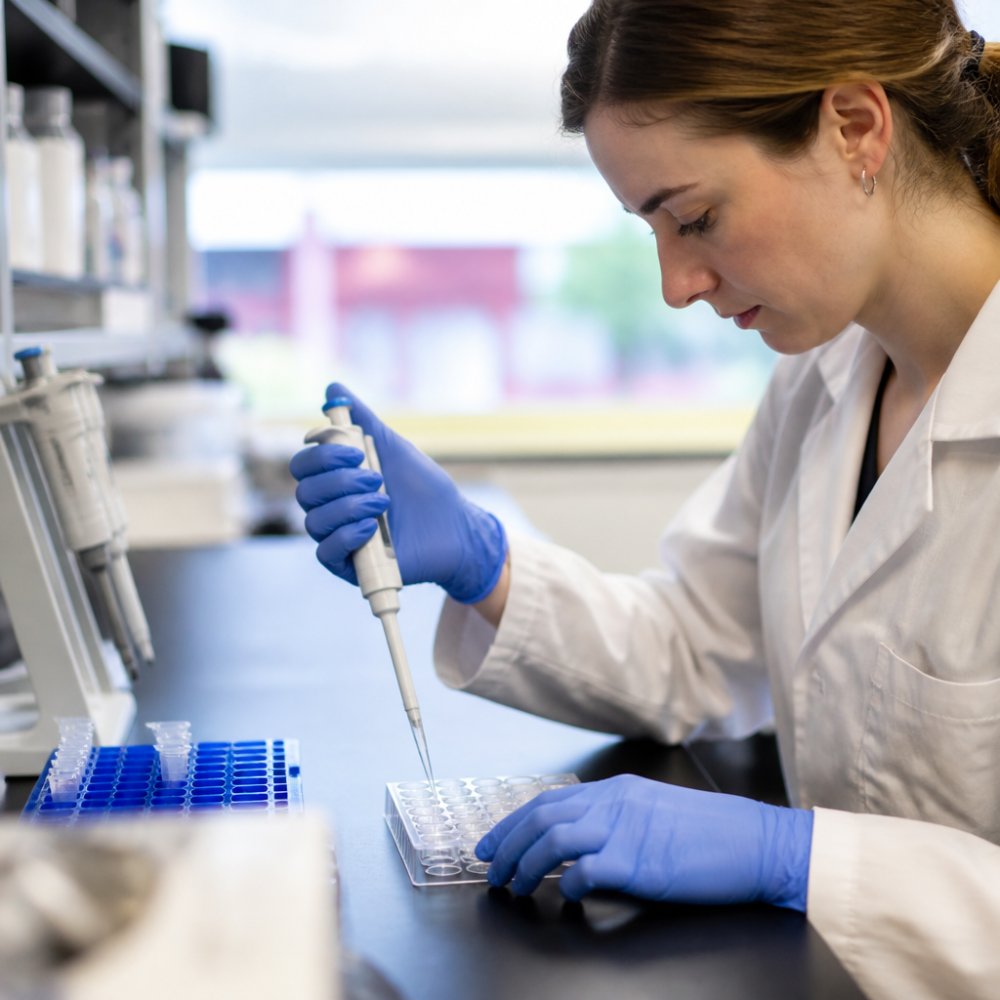
The practical consequence is a coordinated tissue response. In the inflammatory phase, GHK-Cu helps resolve inflammation by modulating macrophage activity and reducing oxidative stress. In the proliferative phase, it promotes the migration and proliferation of keratinocytes and fibroblasts. In the remodeling phase, its influence on matrix metalloproteinases (MMPs) ensures the temporary collagen matrix is replaced with stronger, better-organized tissue.
Research from the National Center for Biotechnology Information’s gene expression database documents these transcriptional changes, showing a clear shift from a catabolic to an anabolic gene expression profile in dermal fibroblasts treated with GHK-Cu.
Copper-dependent enzymes are the workhorses that execute the repair signals initiated by GHK-Cu. The most studied is lysyl oxidase (LOX), an extracellular enzyme that initiates the cross-linking of collagen and elastin. LOX oxidizes specific lysine residues on these proteins, a first step that allows them to form covalent bonds with neighboring fibers. This cross-linking is what gives healed tissue its tensile strength and elasticity. Without adequate copper delivery to LOX, the newly synthesized collagen remains weak and poorly organized, leading to fragile scar tissue.
Another key enzyme is superoxide dismutase 1 (SOD1), an intracellular antioxidant enzyme requiring both copper and zinc as cofactors. SOD1 catalyzes the dismutation of the superoxide radical (O₂⁻) into oxygen and hydrogen peroxide. At sites of injury, where inflammatory cells produce a burst of reactive oxygen species (ROS), GHK-Cu helps bolster SOD1 activity, protecting surrounding healthy tissue.
These enzymes require copper as a structural cofactor, which explains why simple copper supplementation does not produce the same effects as GHK-Cu. The peptide acts as a targeted delivery vehicle, ensuring copper reaches the enzymes that need it. This specificity is what distinguishes the ghk-cu copper peptide from general mineral supplements, which are poorly absorbed and cannot efficiently cross cell membranes to reach intracellular targets like SOD1.
The most heavily documented outcome of the GHK-Cu copper peptide mechanism is increased collagen synthesis in dermal fibroblasts. Studies consistently show higher collagen deposition in tissues treated with the peptide compared to controls.
Beyond simple collagen production, GHK-Cu also regulates metalloproteinases, the enzymes that break down old or damaged matrix proteins. This balance between synthesis and degradation is what allows proper tissue remodeling rather than scar formation. The result is improved skin elasticity and structural repair, which is why much of the research focuses on wound healing and skin regeneration.
GHK-Cu provides antioxidant defense through multiple pathways, reducing oxidative stress. By supporting superoxide dismutase activity and promoting ferritin iron release regulation, the peptide helps cells manage reactive oxygen species, particularly during the inflammatory phase of healing.
The anti-inflammatory properties are equally important. The peptide modulates cytokine signaling, reducing excessive inflammation while allowing the immune response to proceed. This balanced approach prevents the chronic inflammation that delays healing.
The documented GHK-Cu peptide benefits extend well beyond skin applications. The peptide has been studied for its effects on angiogenesis, the formation of new blood vessels, and shows promise in models of nerve regeneration and lung tissue repair.
| Research Area | Primary Mechanism | Documented Outcome |
|---|---|---|
| Skin regeneration | Collagen synthesis stimulation | Improved wound closure and elasticity |
| Antioxidant defense | Superoxide dismutase support | Reduced oxidative stress markers |
| Angiogenesis | Endothelial cell modulation | Enhanced new blood vessel formation |
| Anti-inflammatory | Cytokine signaling regulation | Reduced chronic inflammation |
The breadth of these effects traces back to the same copper-binding mechanism, suggesting GHK-Cu acts on fundamental cellular processes rather than tissue-specific pathways. A common mistake is assuming GHK-Cu is only for cosmetic applications, when the literature points to broader regenerative potential.
GHK-Cu dosage protocols vary substantially depending on the research model and delivery method. In cell culture studies, effective concentrations typically range from 1 to 10 micromolar, while animal models often use subcutaneous or topical administration. The route of administration significantly affects bioavailability.
For researchers designing studies, the key variables are peptide concentration, delivery vehicle, and dosing frequency. Topical formulations generally require higher concentrations to achieve comparable effects to injected peptide, since the stratum corneum limits absorption.
A critical, often-overlooked aspect of working with GHK-Cu is its inherent chemical instability. Unlike some relatively robust peptides, GHK-Cu is highly susceptible to oxidation and degradation, which can render it inactive before it reaches a research model.
The primary threat is oxidation of the copper ion. In solution, Cu²⁺ can participate in redox cycling, generating free radicals that degrade the peptide backbone and the histidine residue critical for copper binding. This process is accelerated by light, heat, and dissolved oxygen, so the goal of reconstitution is to minimize these stressors.
| Storage Condition | Lyophilized Powder | Reconstituted Solution (Bacteriostatic Water) |
|---|---|---|
| Room Temperature (20-25°C) | Stable for weeks | Unstable; use within hours |
| Refrigerated (2-8°C) | Stable for months | Generally stable for 1-2 weeks |
| Frozen (-20°C) | Stable for years | Not recommended; freeze-thaw cycles degrade the peptide |
GHK-Cu is most stable in a slightly acidic to neutral pH range (pH 5.0-7.0). Bacteriostatic water typically falls within this range. However, if you are combining GHK-Cu with other research compounds, be aware that the final pH of the solution can impact stability. Avoid mixing GHK-Cu with strongly acidic or basic solutions.
For researchers developing topical formulations, the stability challenge is even greater. The peptide must be incorporated into a vehicle that protects it from oxidation while also facilitating skin penetration. Common formulation strategies include:
For consistent results, sourcing matters as much as technique. Canada BioGenix provides premium-quality research peptides with batch-specific Certificates of Analysis, so researchers can verify purity and copper content before beginning a study.
The GHK-Cu copper peptide mechanism represents an elegant example of how a small molecule can coordinate complex biological processes. By delivering copper to the enzymes that need it, this tripeptide influences collagen synthesis, antioxidant defense, and tissue remodeling across multiple research models.
The main challenge for researchers is formulation stability and delivery optimization, since the peptide’s permeability and degradation profile limit some applications. Working with a supplier that provides consistent, high-purity peptide and verifiable documentation makes the difference between reliable results and wasted effort.
The science behind GHK-Cu is solid, but the quality of your research depends on the quality of your materials. Canada BioGenix serves the Canadian research community with premium-quality research peptides, lab compounds, and reconstitution products, backed by carefully selected manufacturing partners and strict quality standards. Whether you are studying injury repair, skin regeneration, or cellular signaling, consistent purity and dependable supply matter. Get started with Canada BioGenix and experience research support built for professional standards.
GHK-Cu is a naturally occurring copper-binding tripeptide (glycyl-L-histidyl-L-lysine) that regulates gene expression related to tissue remodeling. Its primary function is to signal fibroblasts to produce collagen and elastin, components of the extracellular matrix. It also modulates the activity of metalloproteinases, enzymes that break down damaged matrix proteins. This dual action supports the replacement of old tissue with fresh, organized structures, which is why GHK-Cu is studied for skin regeneration and wound healing research.
GHK-Cu binds copper with high affinity and delivers it to copper-dependent enzymes inside cells. This copper transport triggers signaling cascades that increase the expression of collagen synthesis genes in dermal fibroblasts. Studies show GHK-Cu stimulates fibroblasts to produce collagen types I and III while also promoting elastin production. At the same time, it regulates matrix metalloproteinases to prevent excessive breakdown. The result is a net increase in organized collagen deposition, making GHK-Cu a focus of skin and connective tissue research.
GHK is the bare tripeptide sequence glycyl-histidyl-lysine without a metal ion attached. GHK-Cu is the same peptide bound to a copper ion, which is its active form. The peptide’s affinity for copper is so strong that it will scavenge copper from its environment. Many researchers believe GHK without copper may actually deplete local copper levels, which is why most studies use the pre-bound GHK-Cu form. The copper complex is what enables the peptide to activate copper-dependent enzymes and trigger tissue remodeling responses.
Published research on GHK-Cu reports a favorable safety profile at picomolar to nanomolar concentrations, which are the ranges that trigger regenerative effects. However, dosing protocols vary significantly depending on the research model and delivery method. Researchers should follow established protocols from peer-reviewed studies and use high-purity peptide sourced from a supplier that provides batch-specific certificates of analysis. Always consult the relevant safety data sheets and follow institutional guidelines for handling research compounds.