
Last Updated: July 19, 2026
Understanding peptide endotoxin levels explained is critical for anyone working with injectable research compounds. Endotoxins are pyrogenic substances that trigger fever and immune responses, and they represent one of the most significant safety concerns in pharmaceutical manufacturing. At Canada BioGenix, we’ve observed that many researchers underestimate the risks posed by endotoxin contamination, viewing it as a secondary concern behind chemical purity. That assumption costs time, money, and occasionally compromises research validity.
Endotoxins are lipopolysaccharides (LPS), complex molecules found in the outer membrane of gram-negative bacteria. When these bacteria die or break apart during manufacturing, they release LPS into the final product. Even at trace levels, measured in endotoxin units (EU), these molecules can trigger pyrogenic responses: fever, chills, and systemic inflammation. For research peptides intended for injection or systemic administration, endotoxin contamination transforms a promising compound into a liability.
The distinction between sterility and endotoxin safety is fundamental. A product can be completely sterile, free of living bacteria, yet still contain dangerous levels of endotoxin. The bacterial cells are dead, but their toxic fragments remain. This is why regulatory bodies like the FDA mandate separate endotoxin testing for all parenteral drugs and research compounds. According to guidance from FDA regulations on parenteral drug quality, endotoxin limits vary by route and product type, but injectable peptides typically require levels below 175 EU/kg of body weight.
Endotoxin doesn’t spontaneously appear in finished peptides. It enters the manufacturing process through specific, predictable pathways. Gram-negative bacteria thrive in aqueous environments, water, buffers, and reconstitution solutions. During peptide synthesis, if raw materials, solvents, or equipment contact contaminated water sources, bacterial populations establish themselves. When conditions shift (temperature changes, pH fluctuations, nutrient depletion), these bacteria die en masse, releasing their LPS into the batch.
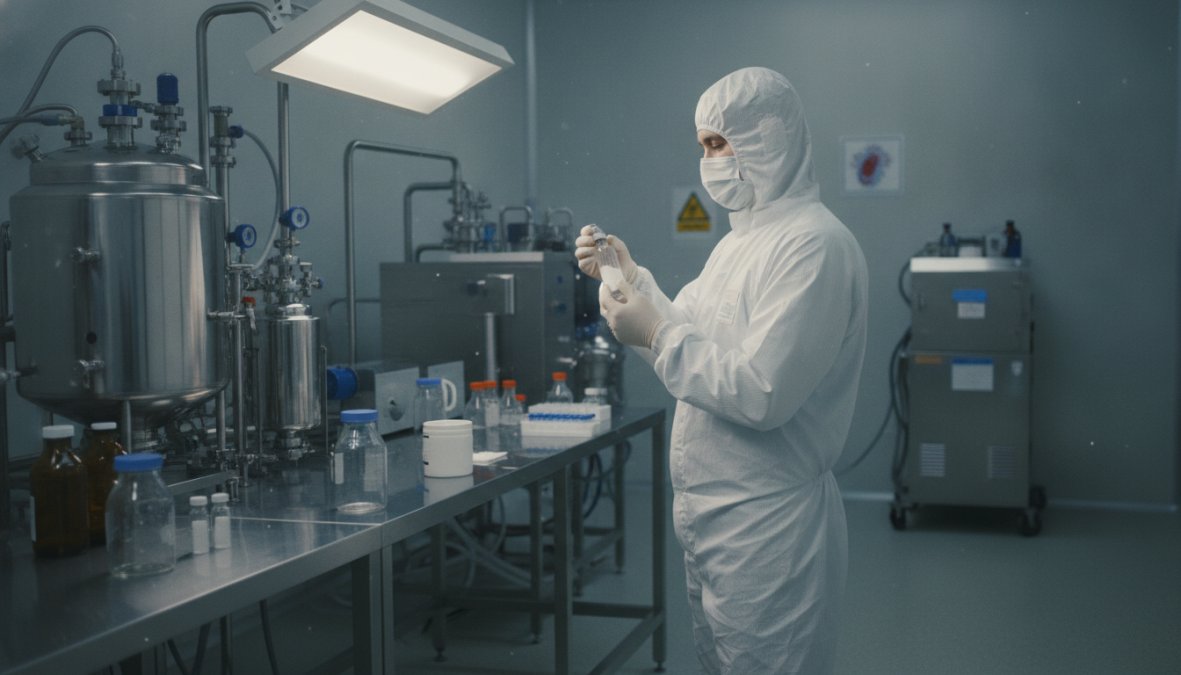
The most common contamination points occur during the later stages of manufacturing. Solid-phase peptide synthesis itself occurs in controlled, relatively anhydrous conditions where bacteria struggle to survive. The real vulnerability emerges during cleavage from the resin, purification steps involving aqueous buffers, and especially during reconstitution, when lyophilized peptide powder is dissolved in sterile water or saline for final packaging.
Manufacturing strategies to minimize contamination include using endotoxin-free water (pyrogen-free), maintaining strict environmental controls in the synthesis facility, and implementing validated depyrogenation procedures. Many premium suppliers, including Canada BioGenix’s carefully selected manufacturing partners, employ multiple redundant contamination prevention strategies. They use bacterial filters during aqueous processing steps, maintain positive pressure clean rooms, and validate that their depyrogenation methods (typically dry heat at 250°C for 30 minutes or more) actually remove endotoxins rather than merely killing bacteria.
Common contamination points in synthesis and reconstitution include:
Two primary assays dominate endotoxin testing: Limulus Amebocyte Lysate (LAL) and recombinant Factor C (rFC). Both detect endotoxins, but they operate on fundamentally different principles and carry different regulatory standing.
LAL testing uses a lysate derived from horseshoe crab blood cells. When endotoxin is present, it triggers a cascade reaction in the lysate, producing a gel clot or color change depending on the assay format (gel-clot, kinetic chromogenic, or kinetic turbidimetric). LAL has been the gold standard for decades. It’s highly sensitive, well-established in regulatory guidance, and accepted by every major pharmaceutical authority worldwide. The downside: LAL depends on a biological reagent sourced from wild horseshoe crabs. Supply variability, batch-to-batch inconsistency, and sustainability concerns have driven interest in alternatives.
Recombinant Factor C (rFC) offers a synthetic alternative. It mimics the cascade mechanism of LAL but uses a recombinant protein produced in laboratory conditions rather than harvested from crabs. rFC shows promise for consistency and sustainability. However, and this is critical, regulatory acceptance remains incomplete. The FDA and EMA have issued guidance allowing rFC for certain applications, but many pharmaceutical companies still require LAL data because regulatory precedent is deeper. For research peptides, rFC is increasingly accepted, particularly in academic and contract research settings. For clinical-grade compounds, LAL remains the safer choice unless your regulatory pathway explicitly permits rFC.
The practical difference for end-users: if you’re purchasing peptides, check your Certificate of Analysis (COA) for which assay was used. LAL data is universally recognized. rFC data is legitimate but may require additional justification if your downstream application has regulatory requirements. Assay sensitivity matters too, both LAL and rFC have detection limits typically in the range of 0.01-0.1 EU/mL, depending on the specific method and reagent lot.
Endotoxin concentration is measured in endotoxin units (EU), a standardized measure of pyrogenic potency. One EU is defined as the pyrogenic potency of 0.2 nanograms of E. coli O113 reference standard endotoxin. On a Certificate of Analysis, you’ll see endotoxin reported as EU/mL (for liquid formulations) or EU/mg (for lyophilized powder).
FDA guidelines establish safety thresholds based on route of administration and product type. For intravenous drugs, the limit is typically 5 EU/kg of body weight. For intramuscular or subcutaneous injection, limits may be higher, up to 175 EU/kg depending on the specific compound. For research peptides used in cell culture or in vitro applications, regulatory limits don’t strictly apply, but best practice suggests maintaining levels below 10 EU/mL to avoid immunogenic response that could confound experimental results.
The conversion between EU/mL and EU/mg depends on the peptide’s concentration in the reconstituted solution. A lyophilized peptide reported at 500 EU/mg becomes 5 EU/mL when reconstituted at 10 mg/mL in sterile water. This is why reading COAs carefully matters, the same batch can look "high" or "low" depending on which metric is emphasized.
Regulatory compliance standards vary by jurisdiction and application. Canada BioGenix ensures that all supplied peptides meet or exceed the most stringent applicable standards, with batch-specific COAs documenting exact endotoxin levels for each lot. This transparency allows researchers to assess whether a particular batch suits their specific application.
A common misconception: if a peptide is 95% chemically pure, it’s safe for injection. Chemical purity and endotoxin safety are independent properties. A peptide can be 99% pure by HPLC analysis yet contain dangerous endotoxin levels. Conversely, a less pure peptide (85-90%) with rigorous contamination control can be safer for biological applications.
Chemical purity reflects the ratio of target peptide to other organic compounds, related peptides, synthesis byproducts, salts, and residual solvents. It’s measured by chromatography and tells you about the peptide’s structural identity. Endotoxin is a bacterial lipopolysaccharide, a completely different class of molecule. HPLC doesn’t detect it. Mass spectrometry doesn’t quantify it. Only biological assays (LAL or rFC) reveal endotoxin presence.
This distinction matters for biological activity and immunogenic response considerations. When you inject a peptide into an animal or add it to cell culture, you’re introducing not just the peptide but any endotoxin present. Endotoxins activate toll-like receptor 4 (TLR4) on immune cells, triggering IL-6, TNF-α, and other inflammatory cytokines. In a cell culture experiment, this cytokine storm can mask or mimic the peptide’s actual biological effects. In an animal study, it confounds pharmacokinetics and safety data. You may think your peptide is toxic when really the endotoxin is responsible.
Premium suppliers like Canada BioGenix maintain rigorous control over both metrics. They source raw materials from validated vendors, use endotoxin-free water and buffers throughout synthesis, implement validated depyrogenation, and test every batch for both chemical purity (HPLC) and endotoxin (LAL). The result: peptides that are genuinely safe for research applications where biological activity matters.
A Certificate of Analysis (COA) is your primary tool for verifying that a peptide meets your safety requirements. However, COAs are not created equal. Suppliers can obscure poor endotoxin performance through selective reporting, vague language, or specification choices that technically "pass" while hiding risk. Reading a COA correctly separates informed decision-making from guesswork.
Understanding the Core Endotoxin Fields
Every legitimate COA should include these fields in the endotoxin testing section:
Test Method: Should specify the exact assay variant used. For example:
This matters because different LAL variants have different sensitivity and precision profiles. Gel-clot assays, for instance, have a typical detection limit of 0.25 EU/mL, while kinetic chromogenic can reach 0.01 EU/mL. If a supplier uses gel-clot and reports "<0.25 EU/mL," they’re being honest but imprecise. If they use kinetic chromogenic and report the same result, they’ve done more rigorous testing.
Result: The actual measured endotoxin concentration. This should be a specific number, not a range or a vague statement. Examples:
Limit (or Specification): The threshold the manufacturer tested against. This is where suppliers hide poor quality. Example scenario:
Supplier A: Limit ≤10 EU/mL, Result: 2.5 EU/mL → Passes, appears clean
Supplier B: Limit ≤500 EU/mL, Result: 2.5 EU/mL → Also passes, but the specification is 50× higher
Both batches have identical endotoxin levels, but Supplier B’s COA makes their quality standard invisible. Always compare the limit, not just the result. For intravenous peptides, FDA guidance requires limits ≤5 EU/kg body weight. For subcutaneous or intramuscular use, limits up to 175 EU/kg are permitted. For research peptides in cell culture, best practice is ≤10 EU/mL to avoid immunogenic confounding. If a COA specifies a limit higher than your application requires, that’s a red flag.
Detection Limit (or Sensitivity): The lowest concentration the assay can reliably detect and report. Typical values:
This field is critical for interpreting "below detection" results. If a COA reports "Result: <0.05 EU/mL" with a detection limit of 0.05 EU/mL, you know the endotoxin is genuinely very low. If the detection limit is 1.0 EU/mL and the result is "<1.0 EU/mL," the actual endotoxin could be anywhere from 0 to 0.99 EU/mL, you have no real information.
Lot/Batch Number and Test Date: Ensures traceability. Endotoxin levels can vary between batches of the same peptide sequence, so batch-specific testing is essential. If a COA doesn’t include a batch number or test date, it’s not batch-specific, it’s a generic template, and you should reject it.
Red Flags in COA Reporting
These patterns indicate poor quality control or deliberate obfuscation:
Missing endotoxin data entirely. If a COA doesn’t mention endotoxin testing, the peptide wasn’t tested. This is disqualifying for any injectable or systemic application. Some suppliers claim "we use endotoxin-free water, so testing isn’t necessary." This is false. Contamination can occur at any stage; testing is mandatory.
"Meets specification" without a numerical result. Vague language like "Endotoxin: Compliant" or "Passes USP <85>" hides the actual result. Demand the specific EU/mL or EU/mg value. A legitimate supplier will provide it immediately.
Detection limit equal to or higher than the reported result. If the detection limit is 10 EU/mL and the result is "<10 EU/mL," the assay is too insensitive to be useful. You cannot distinguish between 0.1 and 9.9 EU/mL. This is a sign the supplier is using an older or less rigorous method.
Different assay methods across batches of the same peptide. If one batch used LAL kinetic chromogenic and another used rFC, the data isn’t directly comparable. Consistent methodology across batches indicates mature quality control. Switching methods suggests the supplier is using whatever assay is cheapest or fastest at the moment.
Endotoxin limit higher than FDA guidance for your application. If you’re using the peptide for intravenous injection and the COA specifies a limit of 500 EU/kg, that’s inadequate. FDA guidance (referenced in FDA Guidance for Industry: Sterile Drug Products Produced by Aseptic Processing) requires 5 EU/kg for IV drugs. A limit of 500 EU/kg is 100× higher than required. This indicates the supplier is not controlling endotoxin to pharmaceutical standards.
Endotoxin result reported in different units across batches. One batch reported as "5 EU/mL," another as "50 EU/mg." Without knowing the reconstitution concentration, you can’t compare them. Legitimate suppliers normalize all results to the same unit (typically EU/mL for solutions or EU/mg for lyophilized powder) for easy comparison.
No information on the reference standard used. LAL assays are calibrated against reference endotoxin standards (typically E. coli O113 or O55). Some suppliers use different standards, which can affect results. A complete COA specifies which standard was used. If it’s missing, ask.
Practical COA Comparison Workflow
When comparing COAs from multiple suppliers for the same peptide:
Normalize the units. If one COA reports EU/mL and another reports EU/mg, convert both to the same unit using the peptide’s concentration. For example, a lyophilized peptide at 500 EU/mg becomes 5 EU/mL when reconstituted at 10 mg/mL.
Check the detection limit. The supplier with the lower detection limit has done more rigorous testing. If Supplier A’s detection limit is 0.01 EU/mL and Supplier B’s is 1.0 EU/mL, Supplier A’s result is more trustworthy.
Compare against your safety threshold, not the supplier’s limit. Your safety threshold depends on your application. If you’re doing intravenous injection, your threshold is 5 EU/kg. If you’re doing cell culture, it’s 10 EU/mL. Compare each supplier’s result against your threshold, not against their stated limit.
Look for consistency across batches. Request COAs for multiple batches (if available) from the same supplier. Endotoxin levels should be similar across batches, typically within 2-3 fold variation. If one batch is 1 EU/mL and another is 50 EU/mL, the supplier’s process control is poor.
Verify batch-specificity. The COA should include the batch number, manufacturing date, and test date for your specific vial. If it’s a generic template, it’s not valid.
Real-World Interpretation Example
Consider two hypothetical COAs for a research peptide intended for subcutaneous injection in mice:
Supplier A:
Supplier B:
Supplier A’s COA is transparent and rigorous. The detection limit is 0.01 EU/mL, so the 2.5 EU/mL result is precise. The limit of 5 EU/mL is conservative. The batch number and test date allow you to verify this is your specific vial. For subcutaneous injection, 2.5 EU/mL is well below the FDA guidance of 175 EU/kg (assuming a 25 g mouse, that’s 4.4 EU total, well below 2.5 EU/mL × volume injected).
Supplier B’s COA is vague and concerning. The detection limit is not stated, so you don’t know if "<10 EU/mL" means <0.1 or <10. The limit of 500 EU/mL is 100× higher than necessary for subcutaneous injection. No batch number or test date means you can’t verify this is your vial. This COA provides minimal assurance of quality.
Both suppliers might claim their peptide is "safe," but Supplier A has done the work to prove it. Supplier B is hiding behind vague reporting. This is why reading COAs carefully is not optional, it’s the difference between informed purchasing and blind trust.
Endotoxin stability during storage is often overlooked in peptide safety discussions, yet it represents a critical risk point that separates laboratory best practice from contamination disasters. Unlike proteins or peptides, which degrade over time under stress, endotoxins are remarkably stable molecules. Lipopolysaccharides (LPS) survive freezing, drying, moderate temperature fluctuations, and even some chemical treatments. However, this stability cuts both ways: endotoxins don’t degrade during storage, but they also don’t disappear if contamination occurs post-manufacture. The real risk lies in how storage conditions and handling practices introduce contamination after the peptide leaves the manufacturer’s controlled environment.
Endotoxin Stability Across Storage Conditions
Research into LPS stability (referenced in USP <85> Bacterial Endotoxins Test) shows that endotoxins remain biologically active across a wide range of conditions:
Frozen storage (-20°C or lower): Endotoxins are stable indefinitely. Freezing does not inactivate LPS or reduce its pyrogenic potency. A peptide stored at -20°C for 5 years will have the same endotoxin level as when it was frozen, assuming the vial remains sealed.
Refrigerated storage (2-8°C): Endotoxins are stable for extended periods. However, repeated freeze-thaw cycles can introduce contamination if the vial is not handled aseptically. Each time you thaw a vial, condensation forms on the exterior, creating an opportunity for bacterial contamination if the vial is not wiped with an alcohol pad before opening.
Room temperature (20-25°C): Endotoxins are stable for weeks to months. However, room-temperature storage increases the risk of bacterial growth if the vial is not sealed properly or if the peptide is in liquid form. Lyophilized peptides are safer at room temperature than reconstituted solutions because the dry environment inhibits bacterial growth.
Elevated temperature (>30°C): Endotoxins remain stable, but the peptide itself may degrade. More importantly, elevated temperatures can promote bacterial growth if moisture is present, increasing the risk of post-manufacture contamination.
The key takeaway: endotoxin levels do not spontaneously decrease during storage. If your peptide arrives with 5 EU/mL endotoxin, it will still have 5 EU/mL after 6 months of proper storage. However, improper handling can introduce additional contamination.
Post-Manufacture Contamination: The Hidden Risk
The biggest endotoxin risk for end-users occurs after the peptide leaves the manufacturer. Even if your supplier provides a batch with 2 EU/mL endotoxin (excellent quality), contamination can occur during reconstitution, handling, or storage if best practices are not followed.
Common post-manufacture contamination pathways include:
Non-endotoxin-free water during reconstitution. This is the most common mistake. A researcher receives a lyophilized peptide and reconstitutes it in "sterile water" from a standard laboratory supply. Standard sterile water is not necessarily endotoxin-free. It is free of living bacteria (sterile) but may contain bacterial fragments and endotoxins from the manufacturing process. Reconstituting a 2 EU/mL peptide in water containing 50 EU/mL endotoxin can instantly contaminate your batch. The solution: use only water explicitly labeled "endotoxin-free" or "pyrogen-free." These products are specifically processed to remove endotoxins and are available from major suppliers (Sigma-Aldrich, Thermo Fisher, etc.) at modest cost ($20-50 per liter).
Non-validated reconstitution equipment. Syringes, needles, and vials used for reconstitution must be validated as endotoxin-free. Standard laboratory syringes are not automatically pyrogen-free. Many suppliers offer pre-validated, endotoxin-free syringes and vials specifically for peptide reconstitution. If you use a standard syringe, you risk introducing contamination. The solution: purchase syringes and vials explicitly validated as pyrogen-free, or use pre-filled syringes provided by your peptide supplier.
Incomplete depyrogenation of glassware. If you’re reconstituting peptides in your own glassware (e.g., glass vials, pipette tips), that glassware must be depyrogenated. Standard autoclaving (121°C, 15 minutes) sterilizes glassware but does not remove endotoxins. Depyrogenation requires dry heat at 250°C for 30 minutes or more. If you use standard autoclaved glassware for peptide reconstitution, you’re not removing endotoxins that may be present. The solution: either purchase pre-validated, endotoxin-free glassware, or depyrogenate your own glassware using a dry-heat oven at 250°C.
Improper aseptic technique during handling. Even with endotoxin-free water and validated equipment, contamination can occur if aseptic technique is poor. Opening a vial without wiping the septum with an alcohol pad, touching the needle tip, or exposing the solution to non-sterile air introduces bacteria and endotoxins. The solution: follow strict aseptic technique, wipe all vial septa with 70% ethanol before puncturing, use sterile gloves, work in a clean environment (ideally a biosafety cabinet or laminar flow hood), and minimize the time the vial is open.
Contamination during storage or between uses. If you reconstitute a peptide and store it for later use, contamination can occur if the vial is not sealed properly or if it’s stored in a contaminated environment. Repeated access to the vial (e.g., drawing aliquots multiple times) increases contamination risk. The solution: if you need to use a peptide multiple times, prepare single-use aliquots in separate vials immediately after reconstitution, then freeze them. This minimizes repeated access to the main vial.
DIY Endotoxin Verification: What’s Possible and What’s Not
Most research labs lack the equipment and expertise to perform LAL or rFC assays independently. However, there are practical steps you can take to assess endotoxin risk without full laboratory testing:
What you can do:
Verify the supplier’s COA. Request a batch-specific Certificate of Analysis and review it using the criteria outlined in the previous section. A transparent COA with a low detection limit and batch-specific data is the strongest indicator of quality control.
Request a third-party test if the COA is questionable. If a supplier’s COA is vague or missing endotoxin data, you can send a sample to a contract testing laboratory (e.g., Charles River Laboratories, Sigma-Aldrich’s testing services, or local university analytical labs) for independent LAL testing. Cost is typically $200-500 per sample. This is expensive but justified if you’re using the peptide for a critical application (animal studies, clinical research).
Implement strict aseptic technique and use validated materials. This doesn’t test for endotoxins, but it prevents post-manufacture contamination. Using endotoxin-free water, validated syringes, and proper aseptic technique ensures that any endotoxin present is only what came from the manufacturer, not what you introduced.
Monitor for unexpected immune responses in cell culture or animal studies. If you’re using a peptide in cell culture and observe unexpected cytokine production (IL-6, TNF-α) or immune activation that doesn’t match the peptide’s known biology, endotoxin contamination is a possible culprit. This is not a definitive test, but it’s a red flag that warrants further investigation (e.g., repeating the experiment with a different peptide batch or supplier).
What you cannot do without specialized equipment:
Perform LAL or rFC assays yourself. These require specialized reagents, equipment, and training. LAL reagents are expensive ($500-2000 per kit) and have short shelf lives. rFC assays require similar investment. Unless you’re running a dedicated testing facility, in-house testing is not practical.
Visually inspect for endotoxins. Endotoxins are invisible. A clear, colorless solution may contain high endotoxin levels. You cannot assess endotoxin safety by looking at the peptide.
Infer endotoxin levels from chemical purity. A peptide that is 99% pure by HPLC may contain high endotoxin levels. Chemical purity and endotoxin safety are independent. You must test for endotoxins specifically; you cannot infer it from other quality metrics.
Storage and Handling Best Practices
To maintain the endotoxin profile of your peptide from receipt through use:
Inspect the shipment upon arrival. Check that the peptide arrived in the expected condition (frozen if it should be frozen, sealed vials, no visible damage). If the package was damaged or thawed during transit, contact the supplier immediately. Do not use the peptide until you’ve confirmed it was handled properly.
Store lyophilized peptides at -20°C or lower in a sealed, labeled vial. Avoid repeated freeze-thaw cycles. If you need to use the peptide multiple times, prepare aliquots immediately after reconstitution and freeze them separately. This minimizes repeated access to the main vial.
Use only endotoxin-free water for reconstitution. Purchase water explicitly labeled "endotoxin-free" or "pyrogen-free" from a reputable supplier. Do not use standard sterile water, distilled water, or water you’ve prepared yourself unless you’ve validated it for endotoxin content.
Use validated, endotoxin-free syringes, needles, and vials. If your supplier provides pre-filled syringes or pre-validated equipment, use it. If you’re sourcing your own, purchase from suppliers who explicitly validate their products as endotoxin-free.
Depyrogenate any glassware you use. If you’re using glass vials, pipette tips, or other equipment, depyrogenate them at 250°C for 30 minutes or purchase pre-validated, endotoxin-free alternatives.
Follow strict aseptic technique. Wipe vial septa with 70% ethanol before puncturing. Use sterile gloves. Work in a clean environment. Minimize the time vials are open. These practices prevent bacterial contamination and endotoxin introduction.
Document your handling procedures. If you’re using the peptide for research, keep records of how it was stored, reconstituted, and handled. If results are unexpected, this documentation helps identify whether contamination occurred post-manufacture.
Request handling guidance from your supplier. Premium suppliers like Canada BioGenix provide detailed instructions on storage, reconstitution, and handling with every shipment. Follow these instructions. If your supplier doesn’t provide guidance, ask for it. Their silence is a red flag.
Cost-Benefit Analysis: Testing vs. Risk
For end-users, the decision to invest in third-party endotoxin testing depends on the application and the cost of failure:
Cell culture experiments: Endotoxin contamination can confound results by triggering unexpected immune responses. If you’re studying peptide biology in cells, the cost of a failed experiment ($5,000-20,000 in materials and labor) far exceeds the cost of third-party testing ($200-500). Testing is justified.
Animal studies: Endotoxin contamination can invalidate pharmacokinetics, safety, and efficacy data. If you’re conducting a mouse or rat study, the cost of failure (repeating the study, lost time, potential regulatory issues) is high. Third-party testing is justified.
Clinical research: Endotoxin contamination is a regulatory and safety issue. If you’re using peptides in human subjects, third-party testing is mandatory, not optional.
Routine research with low-risk applications: If you’re using peptides for non-critical applications (e.g., optimization studies, preliminary data), and your supplier provides a transparent COA with batch-specific data, third-party testing may not be necessary. However, implementing strict aseptic technique and using endotoxin-free materials is still essential.
The general rule: if the cost of failure exceeds the cost of testing, test. If you’re uncertain, ask your supplier for guidance or consult with your institution’s quality assurance team.
Manufacturing strategies to minimize contamination begin upstream. Selecting endotoxin-free raw materials, using only pyrogen-free water and buffers, and maintaining strict environmental controls in the synthesis facility prevent most contamination. However, even with perfect prevention, some bacterial presence may occur during aqueous processing steps.
Depyrogenation, the removal or inactivation of endotoxins, is the final safeguard. The most validated method is dry heat. Heating glassware and equipment to 250°C for 30 minutes or more denatures LPS and renders it biologically inactive. Alternatively, some manufacturers use bacterial filtration followed by chemical treatment (e.g., with sodium hydroxide) to inactivate residual endotoxins. The key requirement: the depyrogenation method must be validated. "We use dry heat" means nothing without data showing that the specific protocol actually reduces endotoxin to acceptable levels.
What to expect from premium suppliers includes:
Canada BioGenix maintains partnerships with carefully selected manufacturing facilities that meet these standards. Every peptide we supply includes a batch-specific COA with complete endotoxin documentation. If you receive a peptide and the COA is vague or missing endotoxin data, contact us, that’s a red flag we take seriously.
Endotoxin contamination remains one of the most underestimated risks in peptide research. Whether you’re conducting cell culture studies, animal experiments, or clinical research, the safety and validity of your work depend on peptide endotoxin levels explained and controlled. Canada BioGenix delivers research peptides with transparent batch-specific COAs documenting endotoxin levels, rigorous quality control, and dependable service. Our carefully selected manufacturing partners maintain strict contamination prevention and validated depyrogenation protocols. Start your research with confidence, choose peptides backed by complete endotoxin data and premium quality standards.
Endotoxins are lipopolysaccharides (LPS) found in the outer membranes of gram-negative bacteria like E. coli. They enter peptide manufacturing through contaminated raw materials, water systems, or equipment. Even after bacterial cells are removed, endotoxins remain and can trigger pyrogenic responses, fever, inflammation, and in severe cases, septic shock. Understanding these sources is critical for assessing peptide endotoxin levels in your products.
Endotoxin levels are measured in EU/mL (endotoxin units per milliliter) or EU/mg (per milligram of peptide). One EU roughly equals 0.1 nanograms of endotoxin. FDA guidelines for injectable peptides typically require levels below 5 EU per dose or per kilogram of body weight. When reviewing your COA, confirm the testing method (LAL or rFC), the reference standard used, and whether the assay sensitivity is appropriate for your application. Lower numbers are safer.
Yes. Chemical purity measures the ratio of your target peptide to other chemical compounds, it does not detect biological contaminants like endotoxins. A peptide can be 99% chemically pure yet contain significant endotoxin contamination from manufacturing processes. This is why both chemical purity testing and endotoxin testing (via LAL or rFC assays) are essential. Sterility testing is also separate and checks for living bacteria, not their toxins.
LAL (Limulus Amebocyte Lysate) uses extract from horseshoe crab blood cells and is the gold standard for endotoxin detection. rFC (Recombinant Factor C) is a synthetic alternative that avoids animal sourcing and offers comparable sensitivity. Both methods measure the same pyrogenic compounds. rFC is increasingly preferred for regulatory compliance and sustainability, but LAL remains widely used. Your COA should specify which method was used and confirm assay sensitivity is adequate for your peptide concentration.
This article was written using GrandRanker