
Last Updated: August 11, 2026
Research peptides are short chains of amino acids synthesized in laboratory settings for scientific investigation. Unlike pharmaceutical-grade peptides produced under strict regulatory oversight, research peptides are manufactured to high laboratory standards but remain explicitly intended for research use only, not for human or animal administration.
A research peptide labeled as 95% pure might contain contaminants or degradation products that render results unreliable. When buying research peptides in Canada, purity directly determines whether your experiments yield valid data or misleading conclusions. Quality assurance involves manufacturing oversight, batch-specific testing, proper storage, and transparent documentation. Suppliers offering detailed Certificates of Analysis (COAs) and verifiable testing records demonstrate commitment to the research community.
Canada BioGenix has built its reputation on this foundation, sourcing from carefully selected manufacturing partners and maintaining strict quality standards across every batch. For researchers in Canada seeking dependable supply with consistent purity verification, this approach eliminates uncertainty.
Research peptides exist in a specific regulatory category: they are permitted for legitimate scientific research when marketed and used exclusively for research purposes. Health Canada does not approve research peptides as drugs or therapeutic agents. Suppliers must clearly label products "for research use only" and cannot make health claims or suggest human consumption.
The Therapeutic Products Directorate (TPD) and Biologic and Radiopharmaceutical Drugs Directorate (BRDD) within Health Canada maintain jurisdiction over any peptide product making therapeutic claims. Unauthorized distribution of peptides as treatments for injury recovery, fitness enhancement, or medical conditions violates federal law.
For researchers ordering from Canadian suppliers, compliance typically means:
Many reputable Canadian suppliers, including Canada BioGenix, emphasize regulatory compliance as a core operational principle. This means transparent communication about permitted uses and strict adherence to Health Canada’s framework.
When evaluating suppliers for buying research peptides in Canada, several factors distinguish reliable partners from less dependable options. The following comparison examines four major Canadian suppliers across critical dimensions: purity standards, delivery speed, pricing transparency, and compliance focus.
Canada BioGenix serves the Canadian research community with a focus on premium-quality research peptides and lab compounds. Every product meets strict purity and consistency standards before reaching researchers. The company offers free shipping on orders over $250 and accepts credit card payment.
Best for: Researchers prioritizing consistency, quality verification, and domestic support. Ideal for teams conducting multi-phase studies requiring reliable batch standards.
Pros:
Cons:
Helix Peptides operates from Ontario with rapid delivery: same-day service within the Greater Toronto Area and next-day service across Ontario. Every product includes a Certificate of Analysis detailing purity verification and batch-specific testing results. Products are North American sourced, reducing supply chain complexity.
Best for: Researchers in Ontario and the GTA requiring rapid delivery and immediate access to batch testing documentation.
Pros:
Cons:
Canada Peptide specializes in synthetic research peptides with capabilities extending beyond standard product sales, offering custom peptide synthesis, analytical services, and solutions tailored to specific research requirements. The company’s emphasis on compliance and research-use-only restrictions suggests serious attention to regulatory requirements.
Best for: Researchers requiring custom synthesis, analytical services, or specialized peptide modifications. Institutions with dedicated procurement processes.
Pros:
Cons:
NCRP differentiates through a specific purity guarantee: all products manufactured at greater than 98% purity. The company’s entirely Canadian operation, manufacturing, packaging, and shipping all domestic, appeals to researchers prioritizing supply chain transparency and reduced customs complexity.
Best for: Researchers prioritizing maximum purity standards and entirely Canadian-sourced supply chains.
Pros:
Cons:
| Supplier | Delivery Speed | Purity Standard | Pricing Transparency | Best For |
|---|---|---|---|---|
| Canada BioGenix | Standard | Verified batches | Contact for pricing | Consistency and domestic support |
| Helix Peptides | Same-day (GTA) / Next-day (Ontario) | Lab verified with COAs | Contact for pricing | Speed and documentation |
| Canada Peptide | Standard | Custom specifications | Contact for pricing | Custom synthesis and institutions |
| NCRP | Fast | 98%+ guarantee | Contact for pricing | Maximum purity assurance |
A Certificate of Analysis (COA) represents the most critical document in peptide purchasing. This certificate documents batch-specific testing results, purity percentages, and analytical methodology used to verify product specifications.

Legitimate COAs contain specific technical information: batch number, testing date, analytical methods used (typically HPLC or mass spectrometry), purity percentage, and moisture content. The most reliable COAs come from independent laboratories with no financial relationship to the supplier.
When reviewing a COA, verify these elements:
Many researchers contact the testing laboratory directly to confirm COA authenticity. Suppliers confident in their testing welcome this verification.
Peptide integrity depends critically on shipping conditions and post-arrival storage. Lyophilized (freeze-dried) peptides remain relatively stable during transit when properly packaged, but temperature fluctuations, moisture exposure, and extended delivery times degrade product quality.
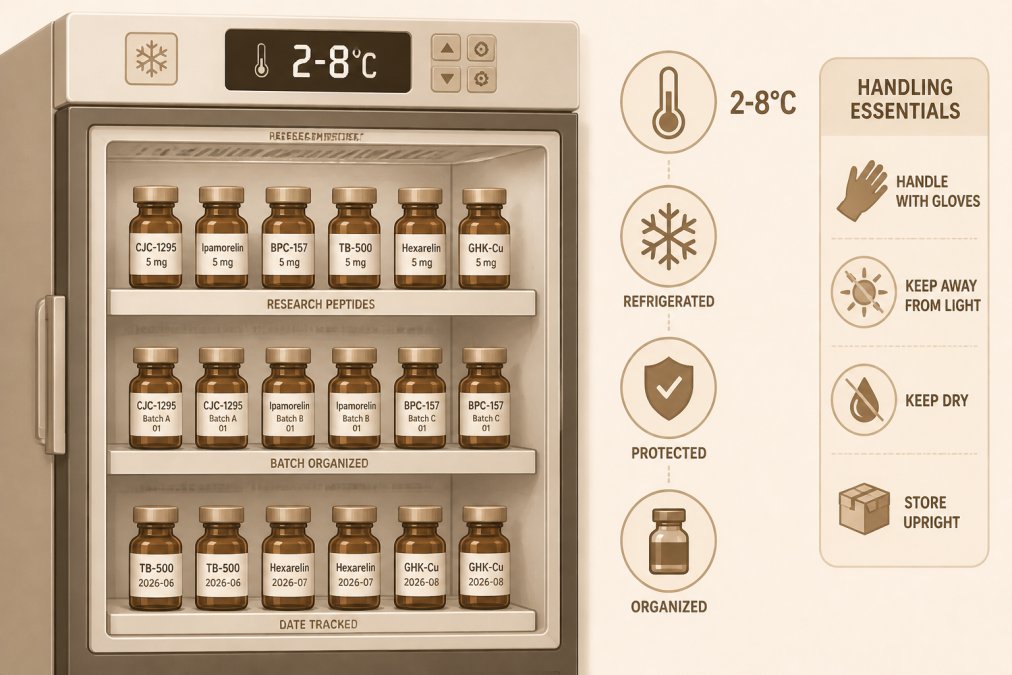
Professional suppliers use insulated packaging with temperature-stable materials to maintain consistent conditions during transit. Researchers in Canada benefit from domestic suppliers reducing transit time, a significant advantage over international sourcing.
Most lyophilized peptides remain stable at 2-8°C (refrigerated) for extended periods. Critical handling practices include:
Improper storage degrades results significantly. A peptide stored at room temperature in a humid environment might lose 15-20% potency within weeks. Shipping timeframes matter directly, suppliers offering 2-3 day delivery reduce degradation risk compared to week-long international shipping.
Selecting the right supplier involves balancing multiple competing priorities. Your choice depends on which factors matter most for your specific research needs.
Purity and verification: Start here. Non-negotiable purity standards and third-party testing documentation form the foundation of reliable research. Suppliers offering batch-specific COAs with independent verification demonstrate commitment to quality.
Delivery reliability: Consistent, timely delivery prevents research delays. Domestic suppliers offer speed advantages over international sources. Researchers in Ontario benefit from suppliers offering same-day or next-day service.
Regulatory compliance: Suppliers clearly communicating research-use-only restrictions and adhering to Health Canada guidelines protect you from legal complications. This reflects operational maturity and serious commitment to legitimate research applications.
Pricing transparency: Direct pricing information allows budget planning. However, custom synthesis or small-batch orders may justify quote-based pricing.
Customer communication: Responsive, knowledgeable support indicates professional operations. Suppliers answering technical questions about storage, reconstitution, and handling demonstrate expertise.
Batch consistency: Long-term research benefits from consistent batch specifications. Suppliers with established quality systems show less batch-to-batch variation.
Payment flexibility: Multiple payment options accommodate different preferences and purchasing systems.
Canada BioGenix exemplifies the supplier profile that prioritizes these fundamentals. The company’s emphasis on carefully selected manufacturing partners, consistent quality standards, and transparent communication reflects the operational maturity that serious researchers require.
Buying research peptides in Canada requires balancing quality, reliability, compliance, and practical considerations like delivery speed and pricing. The suppliers outlined above represent different approaches to these priorities, from Canada BioGenix’s emphasis on consistency and domestic support to NCRP’s high-purity guarantee to Helix Peptides’ speed advantages in Ontario.
Your choice depends on your specific research requirements, location, budget constraints, and institutional purchasing processes. Prioritize batch-specific COAs from independent testing laboratories, verify regulatory compliance, and confirm storage and handling protocols match your research environment.
For researchers seeking a supplier combining premium quality, transparent documentation, and dependable Canadian service, Canada BioGenix delivers the consistency and professional support that serious research demands.
Research peptides sold for laboratory use are legal to purchase and possess in Canada, provided they are clearly labeled 'research use only' and not intended for human consumption. Health Canada classifies unauthorized peptides as drugs if marketed for human use. Suppliers must comply with regulations governing research compounds. Always verify that your supplier operates within these guidelines and that products are explicitly designated for research purposes only.
Legitimate Certificates of Analysis should include the supplier's name, batch number, molecular weight, purity percentage, testing methodology (HPLC or mass spectrometry), and the independent lab's credentials. Cross-reference the COA batch number with your product shipment. Request third-party testing from accredited laboratories rather than relying solely on the supplier's internal testing. Reputable suppliers welcome independent verification and provide detailed chain-of-custody documentation.
Research-grade peptides typically range from 90% to 98%+ purity. Higher purity reduces contaminant risk and improves reliability in research applications. Third-party verified testing confirms actual purity rather than supplier claims alone. For critical applications, 95%+ purity with documented HPLC or mass spectrometry analysis is standard. Verify that purity claims are backed by independent laboratory results, not marketing estimates.
Research peptides require temperature-controlled shipping to prevent degradation during transit. Lyophilized powder should be stored at 2-8°C or frozen at -20°C, depending on the specific peptide. Reconstituted solutions are more fragile and may require expedited delivery. Check supplier shipping guarantees and insulation methods. Upon arrival, store peptides immediately in appropriate conditions and document receipt. Slow shipping or temperature fluctuations can compromise potency and research validity.
This article was written using GrandRanker