
Last Updated: August 16, 2026
Bacteriostatic water is sterile water containing benzyl alcohol, a preservative that inhibits bacterial growth without killing existing microorganisms. For peptides, it serves a critical function: once you reconstitute lyophilized powder with this diluent, the benzyl alcohol prevents contamination during storage and multiple withdrawals from the vial.
Here’s why this matters for peptide research. When you reconstitute a peptide with standard sterile water, you create an environment vulnerable to bacterial colonization. Each time you insert a needle into the vial, whether for measurement, injection, or sampling, you introduce potential pathogens. Bacteriostatic water’s preservative action keeps that vial stable across repeated access points over weeks or months. Without it, a multi-dose vial becomes a breeding ground for contamination, rendering your research compounds unusable and creating safety risks.
The benzyl alcohol concentration in pharmaceutical-grade bacteriostatic water typically ranges from 0.9% to 1.0%. This specific concentration achieves bacterial growth inhibition without destabilizing peptide molecules themselves. It’s the reason why reconstituted peptides stored in bacteriostatic water maintain their pharmacological integrity longer than those stored in plain sterile water.
For researchers working with peptides, understanding this distinction between diluent types directly impacts your protocol reliability. Canada BioGenix emphasizes this principle in their reconstitution guidance: the choice of diluent affects not just immediate solubility, but long-term stability and safety across your entire research timeline.
The core difference between bacteriostatic water and sterile water lies in preservation capability. Sterile water contains no preservative, it’s pyrogen-free and free from microorganisms at the moment of manufacture, but it offers no ongoing protection against contamination once the vial is opened or repeatedly accessed.
Bacteriostatic water, by contrast, maintains an antimicrobial environment throughout the vial’s usable life. The benzyl alcohol in bacteriostatic water doesn’t sterilize; it inhibits bacterial growth inhibition by disrupting cellular membrane function in microorganisms. This distinction matters because it means bacteriostatic water works best in multi-dose scenarios where you need the vial to remain safe across multiple needle insertions.
| Characteristic | Bacteriostatic Water | Sterile Water |
|---|---|---|
| Preservative | Benzyl alcohol (0.9-1.0%) | None |
| Multi-dose use | Safe for repeated access | Contamination risk increases with each access |
| Shelf-life after opening | 28 days typical | 24 hours typical |
| Cost per vial | Moderate | Lower |
| Best use case | Multi-dose vials, extended research | Single-use applications, immediate use |
| Storage temperature | Refrigeration required | Room temperature acceptable |
For peptide reconstitution specifically, the choice depends on your research protocol. If you’re using a single-dose vial and administering or sampling immediately, sterile water suffices and costs less. But if your research involves multiple withdrawals over time, measuring concentrations, running assays, or conducting serial injections, bacteriostatic water becomes essential. The preservative action prevents the pH balance shifts and microbial colonization that would compromise your data.
One practical consideration: sterile water can be stored at room temperature, while bacteriostatic water requires refrigeration due to the preservative’s stability profile. This affects both your storage logistics and your ability to maintain compound integrity during transport or field research.
Once you’ve reconstituted your lyophilized peptide powder with bacteriostatic water, storage conditions directly determine how long your compound remains viable. The critical factors are temperature, light exposure, and container integrity.
Refrigeration at 2-8°C (35-46°F) is the standard for reconstituted peptides in bacteriostatic water. This temperature range slows molecular degradation and supports the preservative’s antimicrobial function. Freezing at -20°C or lower extends shelf-life further, but introduces a new risk: repeated freeze-thaw cycles can cause peptide precipitation and loss of solubility. If you freeze reconstituted peptides, commit to single-thaw protocols, reconstitute only what you’ll use within your research timeframe, or accept the stability trade-off.
Light exposure degrades many peptide structures through photochemical reactions. Store your reconstituted vials in opaque containers or amber-colored glass vials, away from direct sunlight. Even under refrigeration, UV light can compromise your compound within days. This is why pharmaceutical-grade vials are typically amber or opaque, the material itself provides protection.
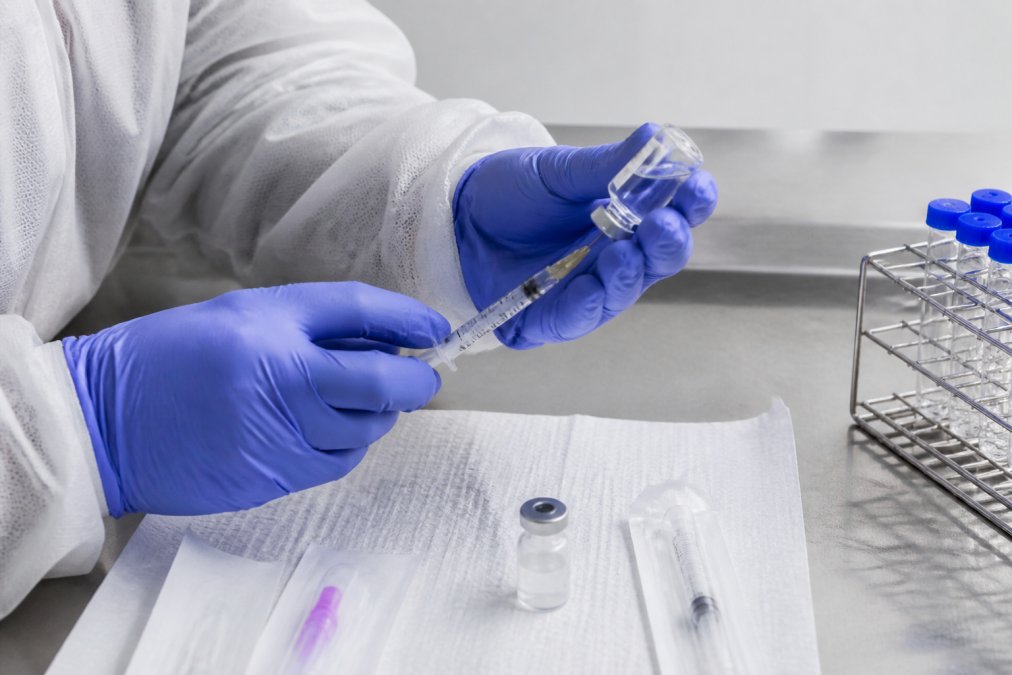
The vial itself matters. Medical-grade glass with a secure rubber septum and aluminum crimp cap prevents evaporation and contamination. Plastic containers are acceptable for short-term storage but can leach compounds or allow solvent evaporation over weeks. For research requiring stability data, glass vials are the standard.
Air exposure inside the vial creates oxidation risk. When you reconstitute peptides, minimize headspace and ensure the vial is properly sealed immediately after reconstitution. If you’re withdrawing multiple doses, use aseptic technique, sterile syringe, appropriate gauge needle, and alcohol wipes for the septum, to maintain the vial’s internal sterility.
Document your storage conditions. Note the reconstitution date, storage temperature, and any environmental factors (power outages, temperature fluctuations). This record becomes essential if your research results show unexpected variation, storage conditions are often the hidden variable.
An unopened vial of bacteriostatic water typically maintains stability for 2-3 years when stored at room temperature, though this varies by manufacturer and specific formulation. Once opened or used for reconstitution, the timeline contracts significantly.
After reconstituting peptides with bacteriostatic water, the reconstituted solution’s shelf-life depends on multiple factors working together. Under ideal conditions, refrigeration at 2-8°C, minimal light exposure, proper sealing, and aseptic technique during access, most peptides remain stable for 2-4 weeks. Some peptides extend to 6-8 weeks, while others degrade faster depending on their molecular structure and the specific solute-solvent interaction.
The benzyl alcohol preservative itself remains effective throughout this window, but peptide stability is the limiting factor. Over time, even in bacteriostatic water, peptide molecules can aggregate, oxidize, or undergo hydrolysis. This is why research protocols specify stability windows, the preservative prevents contamination, but it doesn’t stop inherent molecular degradation.
Temperature fluctuations accelerate instability. A vial moved repeatedly between refrigeration and room temperature experiences accelerated peptide breakdown. Consistent cold storage is more protective than intermittent refrigeration. If your research facility lacks reliable refrigeration, bacteriostatic water’s advantages diminish significantly.
The vial’s vacuum pressure affects stability too. A properly sealed vial maintains slight vacuum pressure, which reduces oxygen exposure inside. Over time, as the rubber septum is punctured repeatedly, this seal degrades. After 10-15 needle insertions, the septum’s integrity begins to compromise, allowing air exchange and accelerating oxidation.
Contamination risk in peptide research stems from multiple sources: environmental pathogens, improper aseptic technique, inadequate storage, and vial degradation. Bacteriostatic water reduces but doesn’t eliminate these risks.
The benzyl alcohol preservative prevents bacterial growth inhibition by disrupting microbial cell membranes, but it works only against susceptible organisms. Certain fungi and spore-forming bacteria may resist or tolerate benzyl alcohol concentrations. Additionally, if contamination is introduced before the preservative can act, through a heavily contaminated needle or severely compromised septum, bacterial colonies can establish themselves before the preservative takes effect.
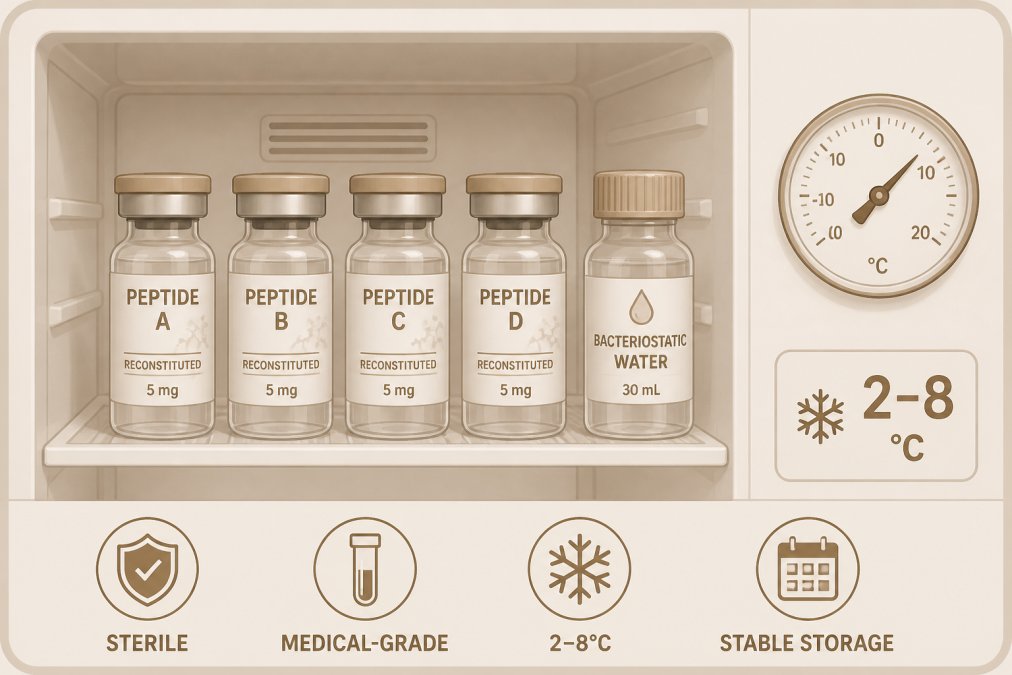
Aseptic technique is non-negotiable. Alcohol-wiping the vial’s septum before each needle insertion removes surface contaminants. Using a sterile, appropriate gauge needle (typically 25-27 gauge for peptide withdrawal) minimizes septum trauma. Changing needles between vial access and injection prevents cross-contamination. These practices work synergistically with bacteriostatic water’s preservative function.
Visual inspection catches some contamination: cloudiness, discoloration, or visible particles indicate microbial growth or precipitation. But many contaminants are invisible. pH changes, subtle color shifts, or loss of solubility may signal degradation that compromises your research without obvious signs.
The disposal and environmental safety aspect is often overlooked. Bacteriostatic water contains benzyl alcohol, a chemical that requires proper disposal. Pouring reconstituted peptides down the drain introduces benzyl alcohol into wastewater systems. Many jurisdictions classify this as hazardous waste. Consult your facility’s chemical disposal protocols, typically, contaminated vials are collected as medical or chemical waste and incinerated. This adds a cost and logistical layer to your research workflow.
Contamination risk increases with vial age. As the rubber septum accumulates puncture sites, its protective barrier weakens. A vial accessed 20+ times over several weeks has significantly higher contamination risk than one accessed 3-4 times. Plan your research to minimize vial access frequency, measure and document doses before reconstitution when possible.
The decision to use bacteriostatic water for peptide research hinges on balancing cost, stability requirements, and research protocol complexity. For many researchers, the investment is justified; for others, it represents unnecessary expense.
Bacteriostatic water costs more than sterile water, typically 2-3 times the price per vial, depending on volume and supplier. For a single-use research protocol where you reconstitute a peptide and use it immediately, that cost premium buys protection you don’t need. Sterile water suffices, and the lower cost supports your budget.
But for multi-dose protocols, the math shifts. If your research requires accessing the same vial multiple times over weeks, bacteriostatic water prevents the contamination risk that would force you to discard the vial prematurely. One compromised vial means lost research time, repeated reconstitution, and wasted peptide compound, costs that quickly exceed the bacteriostatic water premium.
Stability is the second variable. Peptides with shorter inherent stability windows benefit less from bacteriostatic water’s preservation, they degrade regardless of the diluent. Peptides with longer stability profiles gain the most from bacteriostatic water’s antimicrobial action, extending usable shelf-life from days to weeks.
Research facility infrastructure matters too. If your lab lacks reliable refrigeration or struggles with temperature control, bacteriostatic water’s advantages diminish. The preservative works best in stable cold conditions. In warm or fluctuating environments, peptide degradation accelerates regardless of the diluent choice.
Consider also the regulatory or quality context of your research. If you’re conducting research that requires documented stability data or formal quality assurance protocols, bacteriostatic water becomes standard practice. The preservative’s known antimicrobial profile supports compliance documentation. If your research is exploratory or informal, this documentation overhead may not justify the cost.
For Canadian researchers sourcing peptides through Canada BioGenix, the quality and purity standards of the peptide itself interact with your diluent choice. Premium-quality research compounds with documented purity above 90% justify the bacteriostatic water investment, you’re protecting a higher-value compound. Lower-purity compounds may not warrant the additional diluent cost.
The practical recommendation: use bacteriostatic water if your protocol involves multi-dose vials, extended storage beyond one week, or repeated access over time. Use sterile water if you’re reconstituting for immediate use or single-dose applications. The cost difference is modest, but the stability and safety difference is substantial when it matters.
Choosing the right diluent for peptide reconstitution reflects a deeper principle in research: matching your tools to your actual protocol requirements. Bacteriostatic water is worth the investment when your research demands multi-dose stability and repeated vial access. For single-use applications, it’s unnecessary expense. The key is honest assessment of your timeline and access patterns. When you commit to proper storage, refrigeration, minimal light, aseptic technique, and documented conditions, bacteriostatic water delivers measurable stability gains that protect your research integrity. Canada BioGenix supports this approach by providing premium-quality research peptides paired with guidance on appropriate reconstitution practices, ensuring your compounds maintain their documented purity and potency throughout your research timeline.
Sterile water lacks the preservative protection that bacteriostatic water provides. Without benzyl alcohol as a bacterial growth inhibitor, sterile water-reconstituted peptides face higher contamination risk, especially in multi-dose vials. Bacteriostatic water extends shelf-life and maintains stability longer, making it the safer choice for peptide reconstitution. Sterile water may work for single-dose applications, but bacteriostatic water is the standard for research peptides requiring storage.
Properly reconstituted peptides in bacteriostatic water typically remain stable for 2-4 weeks at room temperature and up to 8-12 weeks when refrigerated at 2-8°C. Shelf-life depends on storage conditions, vial integrity, and aseptic technique during reconstitution. Vacuum pressure and proper sealing prevent contamination and bacterial growth inhibition from degrading. Always verify stability with your specific peptide’s documentation and store in a consistent temperature environment to maximize shelf-life.
Contaminated water introduces bacterial pathogens and foreign particles that compromise peptide integrity and safety. This degrades solubility, causes precipitate formation, and reduces pharmacological effectiveness. For subcutaneous or intramuscular injection, contaminated solutions pose serious health risks including infection and inflammation. Using medical-grade bacteriostatic water with proper aseptic technique eliminates these risks by providing bacterial growth inhibition and sterility verification through pH balance and preservative action.
The amount depends on your target dosage and dilution ratio. Calculate by dividing the total peptide mass by your desired concentration per unit. For example, 10 mg peptide dissolved in 10 mL bacteriostatic water creates a 1 mg/mL solution. Most research applications use 1-2 mL per reconstitution. Measure precisely using a sterile syringe with appropriate gauge needle to ensure accurate dosage calculation and maintain solute consistency across multiple doses from a multi-dose vial.
Bacteriostatic water is available through licensed pharmaceutical suppliers and research chemical distributors in Canada. Availability depends on intended use and local regulations. For research peptide applications, reputable suppliers like Canada BioGenix provide medical-grade bacteriostatic water that meets sterility and purity standards. Over-the-counter availability varies by province and retailer. Always source from suppliers offering batch-specific Certificates of Analysis to verify quality and ensure compliance with your research standards.
This article was written using GrandRanker