
Last Updated: August 25, 2026
Peptide degradation happens fast. Oxidative damage, moisture infiltration, and temperature fluctuations can compromise your research in days, not months. The difference between a vial that maintains potency for six months and one that fails in six weeks often comes down to one decision: the storage container you choose.
At Canada BioGenix, we work with researchers across the country who’ve learned this lesson the hard way. A poorly sealed vial, the wrong material, or inadequate protection from light exposure can destroy months of work and thousands of dollars in research investment. The right container isn’t just about keeping peptides cold, it’s about maintaining vial integrity, preventing contaminant infiltration, and ensuring your samples remain viable when you need them.
This guide covers the five best storage containers for research peptides, based on real-world performance across different storage scenarios. Whether you’re running long-term cryogenic storage, managing ambient temperature samples, or transporting sensitive compounds, the container you select directly impacts your results. Below, we’ll show you exactly what separates a reliable vial system from one that puts your research at risk.
| Container Type | Best For | Key Advantage | Primary Consideration |
|---|---|---|---|
| Thermo Scientific Nunc Cryobank | High-volume automated labs | 2D barcode tracking, ultra-low temp stability | Higher cost, requires barcode readers |
| Eppendorf Protein LoBind | Peptide and protein storage | Minimizes sample adhesion loss | Pricing depends on quantity, dates, and delivery |
| Amber Glass Serum Vials | Light-sensitive peptides | Superior UV protection, freeze-dry compatible | Requires separate stoppers, glass fragility |
| Cryovial Polypropylene | General cryogenic storage | Durable, self-standing, cost-effective | Limited tracking features |
| Peptide Storage Cases | Organization and transport | Protects multiple vials, portable | Limited capacity per case |
For labs running high-volume peptide storage with strict inventory requirements, the Thermo Scientific Nunc Cryobank system stands apart. These vials feature laser-etched 2D barcodes that integrate directly with laboratory information management systems (LIMS), eliminating manual tracking errors and enabling automated sample retrieval.
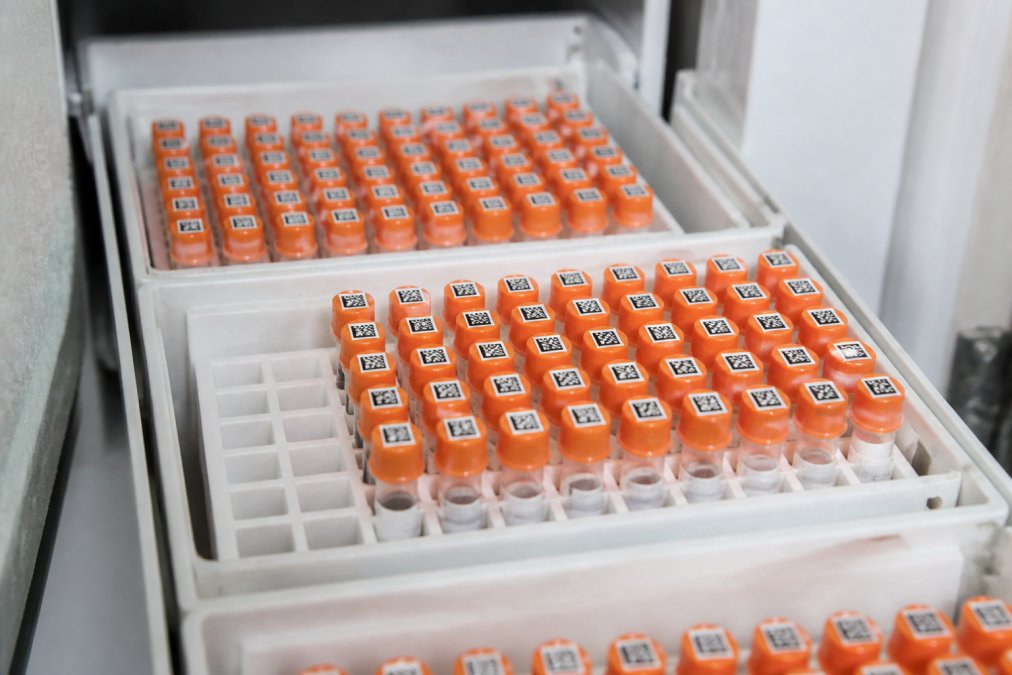
The real strength here is scalability. These vials handle vapor phase liquid nitrogen storage and integrate with automated liquid handling systems, something most standard cryovials can’t do reliably. The TPE-gasketed polypropylene caps maintain an airtight seal even at ultra-low temperatures, preventing moisture infiltration and oxidative damage that degrades peptide potency (peer-reviewed research).
What makes this system work: the microplate format racks fit directly into standard freezer equipment, and the 2D barcode system connects to your lab’s existing automation infrastructure. If you’re managing hundreds of samples across multiple researchers, this eliminates the guesswork.
The tradeoff is real. You’ll need compatible barcode readers and specialized capping equipment to get full functionality. For smaller labs or researchers working with fewer than 50 samples, this is overkill. For high-throughput operations, the time savings and error reduction justify the investment.
Pros:
Cons:
Peptide adhesion to tube walls is a silent killer. Standard polypropylene tubes lose 10-30% of peptide samples to surface adhesion, material that sticks to the container instead of staying in solution (peer-reviewed research). Eppendorf’s Protein LoBind technology changes this equation.
The LoBind surface uses a proprietary coating that dramatically reduces protein and peptide binding to plastic walls. For researchers storing valuable peptide sequences, this translates to higher recovery rates and more reliable assay results. You’re not losing your sample to the container itself.
These tubes come with screw caps for secure sealing and are PCR clean certified, meaning they’re free of DNA, DNase, RNase, and PCR inhibitors. If your research involves downstream amplification or sensitive detection methods, this purity matters.
The practical difference: when you reconstitute a peptide stored in LoBind tubes versus standard tubes, you recover more active compound. For expensive peptides or research where every microgram counts, this isn’t a luxury, it’s a necessity.
Pros:
Cons:
Light-sensitive peptides degrade through photo-oxidation, a process that happens gradually but relentlessly. Standard clear glass offers no protection. Amber glass serum vials block blue light and ultraviolet wavelengths, preventing the chemical reactions that compromise peptide potency.
These vials are manufactured from USP Type I borosilicate glass, which means they resist chemical leaching and pH changes. Your peptide solution stays stable in composition because the container isn’t introducing contaminants. The glass itself is inert, it won’t interact with your samples the way some plastics can.
The design includes a blow-back feature that accommodates lyophilization stoppers, making these vials ideal if you’re working with freeze-dried peptides or reconstituted solutions. They’re autoclavable for sterilization and come shrink-wrapped to minimize particulate contamination during storage.
For researchers storing peptides longer than six months, especially light-sensitive compounds, amber glass is the gold standard. The material compatibility eliminates concerns about chemical leaching that can occur with certain peptide sequences in plastic containers over extended timescales.
Pros:
Cons:
Temperature stability is non-negotiable for peptide preservation. Most research peptides remain stable at -20°C for 6-12 months, but long-term storage requires -80°C or cryogenic conditions (the NIH). The container you choose must maintain vial integrity across these temperature ranges without developing micro-fractures or seal failures.
Polypropylene vials with TPE-gasketed caps handle temperature cycling better than standard rubber-sealed containers. The elastomer maintains flexibility even at ultra-low temperatures, preventing the seal from becoming brittle and allowing moisture infiltration. Glass vials, by contrast, can develop stress fractures if temperature fluctuations are too rapid, though they perform excellently in stable cryogenic environments.
The cold chain concept applies here: every time you remove a vial from cold storage and let it warm to room temperature, condensation can form inside the container. This moisture rehydrates freeze-dried peptides and initiates degradation. Minimize these cycles by organizing your inventory so you retrieve multiple samples in one session rather than repeated individual access.
Material compatibility becomes critical at extreme temperatures. Certain plastics become brittle below -60°C, while others maintain flexibility. If you’re using vapor phase liquid nitrogen storage, verify that your vial material is rated for those conditions. Thermo Scientific Nunc vials are specifically designed for this; generic polypropylene vials may fail.
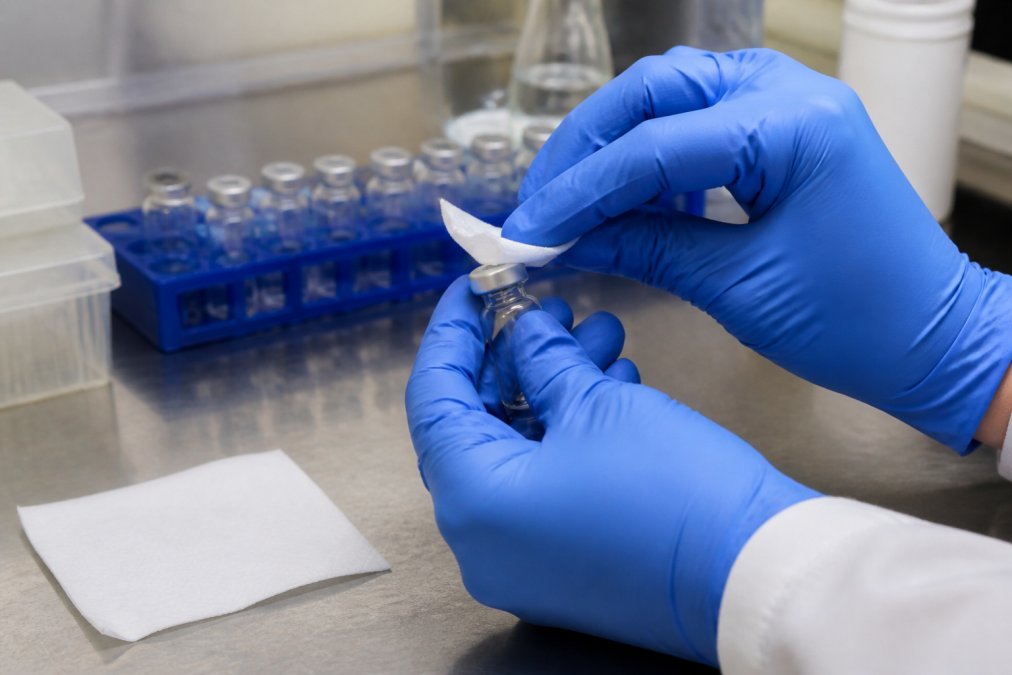
Vial stoppers are your first line of defense against microbial contamination and environmental contaminants. A compromised stopper introduces bacteria, fungi, or chemical residues that degrade peptides and render your research unusable.
Step 1: Prepare Your Workspace
Use a laminar flow hood or biosafety cabinet if available. If not, work in a clean area away from high-traffic zones. Disinfect your work surface with 70% ethanol before beginning. This prevents airborne particles from settling on your vials during handling.
Step 2: Inspect Stoppers Before Cleaning
Examine each stopper under magnification if possible. Look for visible debris, discoloration, or surface damage. Damaged stoppers should be discarded and replaced, cleaning won’t restore compromised integrity.
Step 3: Alcohol Swab Method (Most Common)
Use sterile, single-use alcohol prep pads containing 70% isopropyl alcohol. Wipe the stopper surface in a circular motion, starting from the center and working outward. This motion carries contaminants away from the critical sealing surface rather than dragging them across it. Allow the alcohol to air dry completely, at least 30 seconds, before proceeding. Residual alcohol can interfere with subsequent steps or contaminate your peptide solution.
Step 4: Acetonitrile Rinse (For Organic Residues)
If your peptides are stored in organic solvents like acetonitrile or formic acid solutions, alcohol alone may not remove all residues. Follow the alcohol swab with a quick acetonitrile rinse using a fresh, sterile applicator. This removes lipophilic contaminants that water-based solutions can’t dissolve.
Step 5: Verify Seal Integrity
After sanitizing, inspect the stopper seal visually. It should sit flush against the vial rim with no gaps or visible wear. If the stopper doesn’t seat properly, replace it. A loose stopper defeats the entire sanitization process.
The answer depends on three variables: storage duration, storage temperature, and sample value.
For long-term cryogenic storage (beyond 12 months at -80°C or in liquid nitrogen): Thermo Scientific Nunc Cryobank vials or amber glass serum vials are your best options. Both maintain vial integrity at extreme temperatures and prevent oxidative damage. Choose Nunc if you need automated tracking; choose amber glass if your primary concern is light protection and chemical stability.
For medium-term storage (3-12 months at -20°C to -80°C): Eppendorf Protein LoBind tubes excel here. They minimize sample loss through adhesion and maintain excellent seal integrity across standard laboratory freezer temperatures. This is the sweet spot for most research labs.
For ambient temperature storage of freeze-dried peptides: Amber glass vials with high-quality rubber or PTFE-lined stoppers. The combination of inert glass, light protection, and reliable sealing prevents moisture infiltration and photo-oxidation, the two primary degradation pathways at room temperature.
For high-volume labs with automation requirements: Thermo Scientific Nunc systems are the only choice that integrates 2D barcode tracking with automated liquid handling. The upfront investment pays dividends when you’re managing hundreds of samples.
For small research teams or individual researchers: Cryovial polypropylene vials offer reliable performance at a lower cost point. They handle standard cryogenic storage well and don’t require specialized equipment. Pair them with organized storage cases to prevent cross-contamination and improve inventory management.
Canada BioGenix provides premium-quality research peptides that demand equally premium storage solutions. When you’re investing in high-purity compounds, the container you choose directly impacts whether you recover that value. The vial system isn’t an afterthought, it’s part of your research protocol.
The right storage container protects your research investment and ensures your peptides remain viable when you need them. Whether you’re running automated high-volume operations or managing small research batches, matching your container choice to your specific storage conditions and timeline prevents costly sample loss. Canada BioGenix supports researchers with dependable supply solutions, starting with the compounds themselves and extending to the guidance you need for proper preservation. Get in touch with our team to discuss which storage system best fits your research workflow, and access our full range of premium-quality research peptides with the consistency and purity your work demands.
=== FAQ ANSWERS (audit these too, same rules) ===
[1] Q: What are the best storage containers for peptides?
A: The best storage containers for research peptides depend on your needs. Cryogenic vials with airtight seals work well for long-term frozen storage, while amber glass vials protect light-sensitive peptides from photo-oxidation. For high-volume automated labs, barcode-tracked cryobank systems offer superior inventory management. Eppendorf LoBind tubes minimize peptide adhesion loss during storage. Choose based on your storage temperature, sample volume, and whether you need tracking capabilities.
[2] Q: What temperature should I store research peptides at?
A: Most lyophilized peptides remain stable at ambient temperature in airtight, desiccant-protected containers for short-term use. For long-term storage and maximum potency retention, maintain temperatures below -20°C (standard freezer) or -80°C (ultra-low freezer) depending on shelf-life requirements. Reconstituted peptide solutions typically require refrigeration at 2-8°C or freezing at -20°C. Avoid temperature fluctuations, which accelerate degradation and compromise sample preservation. Always refer to your specific peptide’s stability data.
[3] Q: How do you sanitize a peptide vial stopper?
A: Clean peptide vial stoppers using sterile 70% isopropyl alcohol or ethanol swabs. Wipe the stopper surface thoroughly in a circular motion, then allow it to air-dry completely before use. For high-contamination-risk applications, use sterile cotton swabs or lint-free wipes to remove any residue. Never submerge rubber or elastomer stoppers in liquid; alcohol evaporation prevents moisture sensitivity. If the stopper shows visible degradation or discoloration, replace it to maintain vial integrity and prevent chemical leaching into your sample.
[4] Q: Can I use plastic containers instead of glass for peptide storage?
A: Yes, medical-grade polypropylene and PETG containers work well for peptide storage, especially for short-term use or frozen storage. Plastic is more durable than glass and resistant to breakage during transport. However, glass remains superior for long-term storage of light-sensitive peptides and those prone to oxidative damage. Plastic can leach chemicals over extended periods, potentially affecting sample integrity. Choose based on your storage duration, temperature range, and whether your peptides are sensitive to light or chemical leaching.
A: The best storage containers for research peptides depend on your needs. Cryogenic vials with airtight seals work well for long-term frozen storage, while amber glass vials protect light-sensitive peptides from photo-oxidation. For high-volume automated labs, barcode-tracked cryobank systems offer superior inventory management. Eppendorf LoBind tubes minimize peptide adhesion loss during storage. Choose based on your storage temperature, sample volume, and whether you need tracking capabilities.
A: Most lyophilized peptides remain stable at ambient temperature in airtight, desiccant-protected containers for short-term use. For long-term storage and maximum potency retention, maintain temperatures below -20°C (standard freezer) or -80°C (ultra-low freezer) depending on shelf-life requirements. Reconstituted peptide solutions typically require refrigeration at 2-8°C or freezing at -20°C. Avoid temperature fluctuations, which accelerate degradation and compromise sample preservation. Always refer to your specific peptide's stability data.
A: Clean peptide vial stoppers using sterile 70% isopropyl alcohol or ethanol swabs. Wipe the stopper surface thoroughly in a circular motion, then allow it to air-dry completely before use. For high-contamination-risk applications, use sterile cotton swabs or lint-free wipes to remove any residue. Never submerge rubber or elastomer stoppers in liquid; alcohol evaporation prevents moisture sensitivity. If the stopper shows visible degradation or discoloration, replace it to maintain vial integrity and prevent chemical leaching into your sample.
A: Yes, medical-grade polypropylene and PETG containers work well for peptide storage, especially for short-term use or frozen storage. Plastic is more durable than glass and resistant to breakage during transport. However, glass remains superior for long-term storage of light-sensitive peptides and those prone to oxidative damage. Plastic can leach chemicals over extended periods, potentially affecting sample integrity. Choose based on your storage duration, temperature range, and whether your peptides are sensitive to light or chemical leaching.
This article was written using GrandRanker