
Last Updated: August 8, 2026
The peptide market in Canada has exploded over the past five years, driven by growing interest in research compounds for fitness, injury recovery, and performance optimization. With that growth comes significant risk: contaminated products, mislabeled batches, and compounds that bear no resemblance to what you paid for. Degraded peptides won’t deliver results, and contaminated batches can cause adverse effects.
This guide walks you through identifying legitimate suppliers, verifying third-party lab testing, understanding Canadian regulatory requirements, and executing a safe purchasing process. At Canada BioGenix, we’ve built our reputation on transparency and rigorous quality standards. Every batch comes with independent verification, batch-specific documentation, and a commitment to the purity and safety standards serious researchers demand.
Peptides occupy a complex regulatory space in Canada. Health Canada classifies peptides as novel foods or drugs depending on intended use and structure. If marketed with health claims or therapeutic intent, they fall under the Natural and Non-prescription Health Products Directorate (NNHPD) or Therapeutic Products Directorate (TPD). Research-grade peptides sold without health claims exist in a different category, but suppliers must still comply with food safety regulations and import/export requirements.
A supplier claiming their peptides are "approved by Health Canada" for therapeutic use is either lying or operating outside the law. Legitimate research peptide suppliers position their products as research compounds for laboratory use only. Research-grade peptides don’t require the same manufacturing oversight as clinical-grade compounds, but reputable suppliers still follow Good Manufacturing Practices (GMP) principles, maintain strict quality control, and ensure batch purity meets published standards.
When evaluating a supplier, ask directly about their compliance framework. Do they follow GMP standards? Are manufacturing partners certified? Can they provide documentation of regulatory compliance for import into Canada? Legitimate suppliers answer these questions clearly.
Third-party lab testing is your primary defense against contaminated, mislabeled, or degraded peptides. When a supplier claims purity or potency, independent verification transforms that claim from marketing into verifiable fact. Most online peptide purchases fail because suppliers either don’t provide testing, provide in-house testing (which isn’t independent), or provide testing from labs with questionable credibility.

The gold standard for peptide verification is testing from accredited, independent laboratories using validated analytical methods. High-performance liquid chromatography (HPLC) determines purity. Mass spectrometry (MS) confirms identity. Endotoxin testing screens for bacterial contamination. Together, these methods provide comprehensive verification of what you’re purchasing.
Reputable suppliers provide a Certificate of Analysis (COA) for every batch, batch-specific documentation with lot numbers, testing dates, and results from an independent lab. The COA should include the lab’s credentials, testing methods used, and clear pass/fail results against established purity standards (typically 95% or higher for research peptides).
When you receive a COA, verify several things immediately. First, check the lab’s name and location, is it a recognized analytical laboratory with verifiable accreditations? Second, confirm the lot number matches your order. Third, look at the testing date; recent testing (within 30 days of shipment) indicates the supplier monitors stability.
A Certificate of Analysis is a formal document from an independent laboratory certifying the composition, purity, and safety of a peptide batch. A legitimate COA includes: the peptide name and lot number, testing date and expiration date, analytical methods used (HPLC, MS, endotoxin testing), results for each test with numerical values, purity percentage, any detected contaminants, and the lab’s official seal or signature.
Many suppliers provide COAs, but quality varies wildly. Some labs lack proper accreditation; others use outdated methods or are essentially in-house labs operating under the supplier’s control. When evaluating a COA, research the testing lab. Does it have ISO 17025 accreditation? Is it recognized by Health Canada or international standards bodies?
Beyond reading a COA, serious researchers implement batch-specific verification protocols by testing a sample of their received peptide independently and comparing results to the supplied COA. Set aside a small sample (50-100mg) from your received batch before using any product. Submit this sample to an independent lab for testing using the same methods listed on the original COA. Compare your results to the supplier’s COA. Matching results confirm the batch is as advertised; significant divergence indicates a problem.
This process costs $200-500 per batch depending on the lab and testing scope. For serious researchers, it’s insurance that protects research integrity and health while providing feedback on supplier quality claims. Document everything: lot numbers, purchase dates, COAs, your own testing results, and any discrepancies.
The online peptide market includes legitimate suppliers, questionable operators, and outright fraudsters. Buying from the wrong source exposes you to several specific risks.
Contamination is the most serious risk. Peptides synthesized without proper quality control can contain bacterial endotoxins, heavy metals, or other contaminants that cause adverse effects when used. Mislabeling is common, a supplier may claim 95% purity when it’s actually 70%, sell partially degraded peptides from improper storage, or ship the wrong compound entirely.
Instability during transit is another risk. Many peptides are sensitive to temperature, light, and humidity. Inadequate packaging or slow shipping can degrade peptides en route, dropping purity significantly by arrival. Supply chain opacity creates risk, legitimate suppliers trace their supply chain and provide manufacturing documentation. Finally, there’s legal ambiguity. Peptides occupy a gray area in Canadian regulation, and purchasing from suppliers operating without proper compliance frameworks exposes you to potential legal liability.
Reputation in the peptide market is built on consistency, transparency, and verifiable quality. Legitimate suppliers distinguish themselves through specific practices and credentials you can evaluate before purchasing.
Start with supply chain transparency. Reputable suppliers openly discuss manufacturing partners, the standards those partners follow, and quality controls during synthesis. They provide documentation of GMP compliance or equivalent standards. Third-party testing and batch-specific documentation are non-negotiable. Legitimate suppliers provide a COA for every batch from an accredited, independent lab with lot numbers, testing dates, and specific results. Canada BioGenix commits to providing batch-specific verification for every order.
Responsive customer service matters. Reputable suppliers answer technical questions about reconstitution, storage, and safety protocols. They respond to documentation inquiries quickly and discuss quality standards openly. Pricing that seems too low is a red flag, research-grade peptides from legitimate suppliers with proper quality controls cost money.
Suppliers claiming their peptides are "approved by Health Canada" or "pharmaceutical grade" are either lying or misrepresenting their product. Generic or undated Certificates of Analysis are major red flags. A legitimate COA includes a specific lot number matching your order, a testing date, and results from an identified lab.
Unwillingness to provide a COA before purchase is a serious warning sign. Vague purity claims without supporting documentation are problematic, legitimate suppliers specify exact purity percentages (e.g., "95% pure by HPLC") backed by testing results. Suppliers who pressure you to purchase quickly are operating a sales tactic.
GMP (Good Manufacturing Practices) certification is the baseline. GMP standards ensure consistent manufacturing processes, proper documentation, and quality control at every production step. ISO 17025 accreditation for testing labs is critical, this accreditation means the lab has been independently assessed and meets international standards for testing accuracy and reliability.
Custom peptide synthesis requires different standards than off-the-shelf compounds. Verify that the synthesis facility uses validated protocols, maintains batch records, and tests the final product. Reputable suppliers test peptides under various storage conditions to determine shelf life and stability, providing guidance on proper storage to maintain purity.
Safe purchasing requires a methodical approach that builds verification into every step.
Step 1: Research Supplier Credentials
Research supplier background before contacting them. Check their website for manufacturing standards, quality control, and third-party testing information. Look for customer reviews on independent forums. Search for regulatory actions or complaints. Verify they’re registered as a business in Canada with legitimate contact information.
Step 2: Request Pre-Purchase Documentation
Contact the supplier and request a batch-specific Certificate of Analysis for the exact lot number you’re interested in. Request documentation about manufacturing standards and quality control processes. Ask about reconstitution protocols and storage recommendations. Legitimate suppliers respond within 24-48 hours with detailed information.
Step 3: Verify the COA
Once you receive the COA, verify it independently. Research the testing lab’s credentials and ISO 17025 accreditation. Confirm the testing methods (HPLC, MS, endotoxin testing) are appropriate for the peptide. Verify the purity percentage meets your standards (typically 95% or higher). Look for red flags: unclear results, missing information, or outdated testing dates.
Step 4: Place Order with Documentation
Once you’ve verified the COA and confirmed supplier credentials, place your order. Request confirmation that you’ll receive the same batch (same lot number) as the one you verified. Request shipping tracking and ask about packaging standards to protect the peptide during transit.
Step 5: Receive and Inspect Shipment
When the package arrives, inspect it immediately. Check that packaging is sealed and undamaged. Verify the lot number on the received product matches your order and the COA. Store the peptide properly (frozen, protected from light and moisture). Set aside a small sample (50-100mg) for independent verification if you plan to test the batch.
Step 6: Optional Independent Batch Verification
Submit your retained sample to an independent lab for testing using the same methods listed on the supplier’s COA. Compare your results to the supplier’s results and document any discrepancies.
Reconstitution, dissolving a lyophilized peptide powder in a solvent, is critical and determines whether the peptide remains stable and safe for use. Improper reconstitution can degrade the peptide, introduce contamination, or create unsafe products.
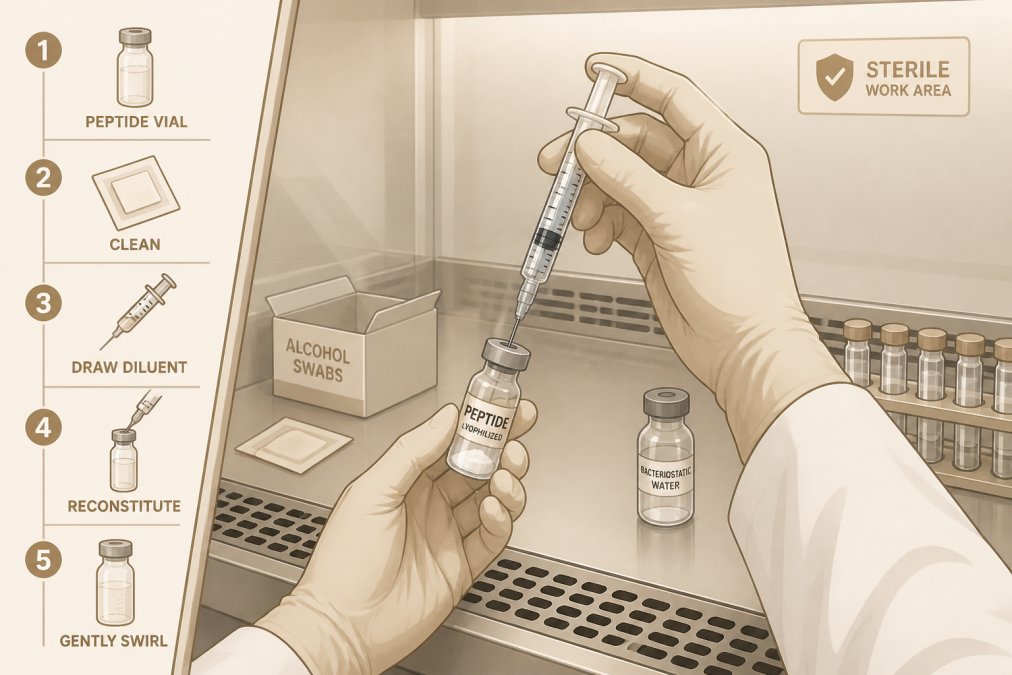
Use sterile technique throughout reconstitution. Work in a clean environment (ideally a laminar flow hood), use sterile equipment, and minimize exposure to air and contaminants. Start with sterile, pyrogen-free water or the solvent recommended by the supplier. The solvent matters, most peptides reconstitute in sterile water, but some require specific solvents to remain stable. Use exactly what the supplier recommends.
Reconstituted peptides have limited stability. Most remain stable for days to weeks when properly stored (refrigerated, protected from light). Longer-term storage requires freezing. Never refreeze and thaw repeatedly, as this degrades peptides. Document your reconstitution process: date, time, solvent used, volume added, and any observations about appearance.
Legitimate suppliers provide comprehensive documentation beyond a Certificate of Analysis.
Product Information Sheet: Includes the peptide name (common and chemical), molecular weight, molecular formula, CAS number (if applicable), and physical appearance. Specifies purity percentage and testing method used.
Certificate of Analysis: Batch-specific, from an independent lab, with lot number, testing date, and specific results for purity and contaminant screening.
Storage and Stability Information: Specifies proper storage temperature, protection from light and moisture, expected shelf life under proper storage conditions, reconstitution solvents, and stability of reconstituted solutions.
Safety Data Sheet (SDS): Provides information about potential hazards, handling precautions, and emergency procedures.
Reconstitution Protocol: Detailed instructions on proper reconstitution, including recommended solvents, volumes, temperature, and timing, plus post-reconstitution storage and stability guidance.
Batch Traceability Information: Documentation of manufacturing batch, manufacturing date, and manufacturing facility, creating a chain of custody that allows you to trace the product back to its source.
Suppliers providing all this documentation demonstrate commitment to transparency and safety.
Choosing where to purchase peptides online is one of the most important decisions you’ll make as a researcher. The difference between a safe purchase and a risky one comes down to verification, transparency, and supplier credibility. Legitimate suppliers like Canada BioGenix provide batch-specific Certificates of Analysis from independent labs, maintain rigorous quality control standards, and respond openly to questions about manufacturing and testing processes. By following the purchasing process outlined in this guide, researching supplier credentials, verifying third-party testing, understanding regulatory compliance, and documenting every step, you eliminate most of the risk associated with online peptide purchasing.
Peptides for research purposes are legal to purchase in Canada when sourced from licensed suppliers complying with Health Canada regulations. However, the regulatory landscape differs based on intended use and the specific peptide compound. Always verify that your supplier follows Health Canada guidelines and provides proper documentation. Peptides marketed for human consumption or therapeutic use face stricter oversight than those designated for research only. Check with your supplier about their compliance status and ask for proof of regulatory adherence before purchasing.
Request a Certificate of Analysis (COA) from the vendor that includes third-party lab testing results. Legitimate suppliers use independent laboratories that perform mass spectrometry, HPLC, and endotoxin testing to confirm purity levels. The COA should specify the batch number, testing date, and exact purity percentage. Cross-reference the lab name to confirm it is an accredited facility. Ask the vendor if they can provide batch-specific verification protocols and whether their manufacturing partners maintain GMP certification. Reputable suppliers are transparent about their testing methods and willing to discuss their quality control processes in detail.
Unregulated online suppliers may sell degraded, mislabeled, or contaminated peptides that fail to meet purity standards or contain harmful contaminants. Poor cold chain logistics during shipping can compromise product stability and bioavailability. Some vendors provide fraudulent or outdated Certificates of Analysis. Purchasing from unverified sources exposes you to legal risk if the supplier operates outside Health Canada compliance. Additionally, without proper reconstitution and sterile technique guidance, even quality peptides can become unsafe. Always source from vendors who provide complete documentation, maintain regulatory compliance, and offer clear safety protocols.
Look for suppliers who provide batch-specific Certificates of Analysis from accredited third-party laboratories, maintain transparent communication about their manufacturing standards, and clearly state their compliance with Health Canada regulations. Reputable vendors offer detailed product documentation, explain their quality control processes, and are willing to answer technical questions about purity, storage stability, and reconstitution. Check whether they source from GMP-certified manufacturers and offer secure payment methods. Avoid suppliers who make unsubstantiated purity claims, refuse to provide COAs, or lack clear contact information and customer support channels. Domestic sourcing from established Canadian suppliers often provides better traceability and regulatory assurance.
Contact your supplier immediately and request a batch-specific Certificate of Analysis if you haven't already received one. Document the issue and ask about their verification or refund policy. Reputable suppliers stand behind their products and may offer testing verification through a third-party lab to confirm whether the batch meets stated purity standards. If the COA shows the batch meets specifications but performance is poor, this may indicate a reconstitution or storage issue rather than a product defect. Always follow the vendor's storage and handling guidelines, use sterile technique during reconstitution, and maintain proper cold chain logistics. Legitimate suppliers will work with you to resolve quality concerns.
This article was written using GrandRanker