
Last Updated: August 21, 2026
Peptide synthesis impurities are unwanted molecular byproducts and structural variants that accumulate during chemical peptide assembly. They directly affect drug safety, efficacy, and regulatory compliance, a single undetected impurity can compromise an entire batch.
Impurities alter how peptides behave in biological systems, potentially triggering adverse reactions or reducing therapeutic effectiveness. Regulatory bodies demand rigorous characterization of every batch before clinical use or market release. Canada BioGenix recognizes that maintaining purity standards is foundational to reliable research and development. Every batch we supply includes detailed analytical documentation so you know exactly what you’re working with.
A single synthesis run can generate dozens of different byproducts, each with distinct chemical properties and potential impacts.
Peptide impurities fall into two fundamental categories: those created by the synthesis process itself, and those that emerge from the peptide structure after synthesis.
Product-related impurities are structural variants of the intended peptide, molecules that are almost, but not quite, the target compound.
Truncation sequences represent the most common product-related impurity. During solid-phase peptide synthesis (SPPS), if a coupling reaction fails to go to completion, the growing peptide chain can be cleaved prematurely, leaving a shorter version. An intended 20-amino-acid peptide might yield fragments that are 19, 18, or 17 amino acids long. Each truncation variant has different biological activity and must be quantified separately.
Amino acid deletions occur when a specific residue fails to couple during synthesis, creating a gap in the sequence. Unlike truncations, which remove everything from that point forward, deletions skip a single position and leave the rest of the chain intact.
Racemerization is the conversion of amino acids from their correct stereoisomeric form (L-form) to the incorrect form (D-form). During SPPS, certain coupling reagents can induce racemization, particularly at the C-terminal residue during cleavage. A racemized peptide has the same molecular weight as the target but a different 3D structure, potentially abolishing biological activity or creating unwanted side effects.
Oxidative degradation produces modified peptides where susceptible amino acids have been chemically altered. Cysteine oxidation is particularly common, where cysteine residues form disulfide bonds or become oxidized to cysteic acid. Methionine oxidation to methionine sulfoxide is another frequent variant.
Diketopiperazine (DKP) formation occurs when the N-terminal amino acid cyclizes with the second amino acid, forming a six-membered ring and releasing the rest of the peptide chain. The DKP byproduct is easily detected by mass spectrometry because it’s exactly 18 mass units lighter than the N-terminal dipeptide. Succinimide formation is similar; the side chain of aspartic acid or glutamic acid reacts with the backbone, creating a cyclic intermediate that can cause racemerization or peptide bond cleavage at adjacent positions.
Process-related impurities come from reagents, solvents, and protecting groups used during synthesis, not from structural variants of the target peptide.
Protecting group residues are fragments left behind after incomplete deprotection. If deprotection is incomplete, the peptide retains portions of the protecting group, readily identified by mass spectrometry as a mass shift corresponding exactly to the protecting group molecular weight.
Residual solvents like dimethylformamide (DMF), acetonitrile, or dichloromethane can remain in the final product if purification is inadequate. Reagent residues from coupling agents (DCC, HBTU, PyBOP) or cleavage reagents can also contaminate the batch. Salt impurities accumulate from buffer systems, counterions, or neutralization steps.
Truncation sequences are fragments of the intended peptide, missing the C-terminal portion. If your target is a 25-residue peptide, truncations might be 24, 23, or 22 residues. Amino acid deletions remove a single residue from the middle of the sequence, resulting in a mass 18 mass units lower than the target (peer-reviewed research).
Both are minimized by optimizing coupling times, reagent concentrations, and reaction temperatures. Using more reactive coupling reagents (like HBTU or PyBOP) and excess amino acid reduces incomplete couplings.
Oxidative impurities form when peptides are exposed to oxygen, heat, light, or metal ions during synthesis, storage, or handling. Cysteine is by far the most susceptible amino acid because its thiol side chain is highly nucleophilic and easily oxidized.
Cysteine oxidation produces disulfide-bonded dimers, intramolecular disulfides, and cysteic acid, each with a distinct mass signature. Methionine oxidation to methionine sulfoxide adds 16 mass units per affected residue (peer-reviewed research).
Oxidative impurities are controlled by minimizing oxygen exposure during synthesis and storage. Use inert gas (nitrogen or argon) to blanket reactions, store peptides in sealed vials under inert gas, and include antioxidants like ascorbic acid or EDTA in storage buffers.
Racemerization occurs when an L-amino acid is converted to its D-enantiomer during synthesis. The resulting peptide has one or more D-amino acids in place of L-amino acids. Since D and L forms have identical molecular weight, mass spectrometry alone cannot distinguish them; chiral separation techniques are required.
The most common site of racemerization is the C-terminal amino acid during cleavage from the resin. Histidine, serine, threonine, and cysteine are especially prone to racemization. Detection requires reversed-phase chromatography with a chiral stationary phase or chiral derivatization followed by standard HPLC.
Prevention focuses on minimizing racemization-promoting conditions: use mild cleavage reagents, lower temperatures, and shorter cleavage times.
Diketopiperazine (DKP) formation is a cyclization reaction where the N-terminal amino acid couples with the second amino acid via their backbone amide groups, forming a six-membered ring. The DKP byproduct is exactly 18 mass units lighter than the N-terminal dipeptide fragment (peer-reviewed research). Succinimide formation involves the side chain of aspartic acid or glutamic acid attacking the backbone carbonyl, creating a cyclic intermediate that is unstable and hydrolyzes back to the original peptide or rearranges to form a mixture of α- and β-peptide bonds.
Both are minimized by maintaining neutral to slightly basic pH during synthesis and storage and minimizing heat exposure.
Identifying peptide synthesis impurities requires a combination of analytical techniques. No single method captures the full picture; chromatography and mass spectrometry work in tandem to separate, detect, and characterize impurities.
Liquid chromatography-high resolution mass spectrometry (LC-hrMS) is the gold standard for peptide impurity analysis. This technique separates impurities by their chemical properties and measures their exact mass with sub-ppm accuracy, allowing unambiguous identification.
The LC component separates molecules based on hydrophobicity, charge, or size. Reversed-phase chromatography (RP-HPLC) is most common for peptides, using a nonpolar stationary phase and a gradient of increasingly organic mobile phase. The mass spectrometry component measures each peak’s mass-to-charge ratio with high precision. Tandem mass spectrometry (MS/MS) fragments each impurity ion, revealing its sequence and pinpointing the exact location of truncations and deletions.
LC-hrMS is the method of choice for regulatory submissions, as it provides unambiguous structural characterization.
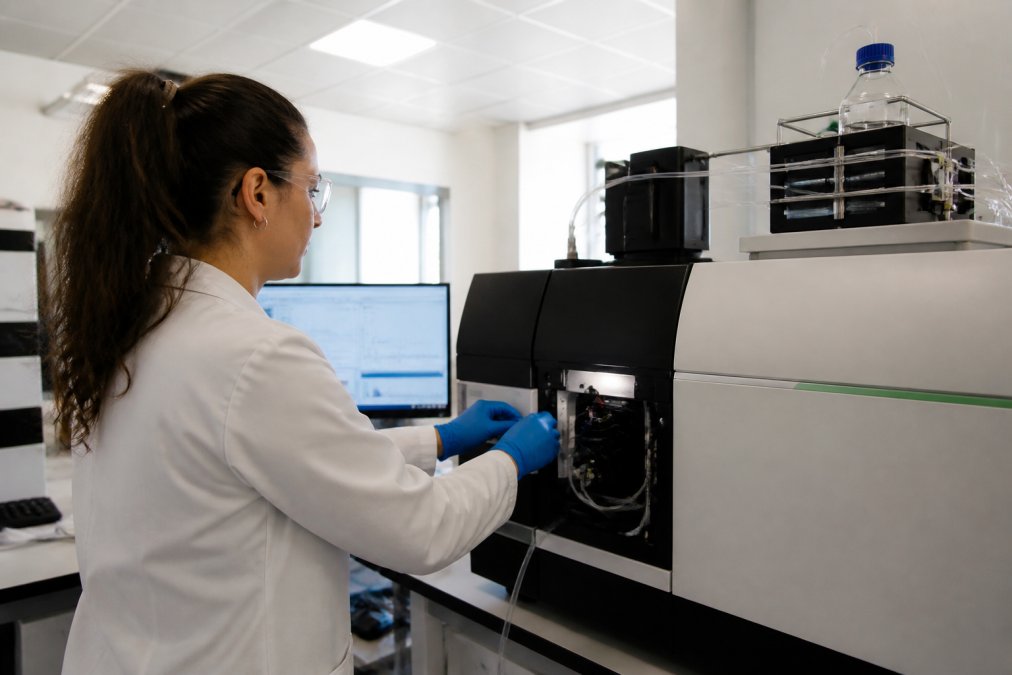
Reversed-phase HPLC (RP-HPLC) is widely used for peptide purity assessment because it’s robust, reproducible, and relatively affordable. The technique separates peptides and impurities based on their interaction with a nonpolar stationary phase (typically C18 or C8 bonded silica).
A typical RP-HPLC method uses a gradient starting with aqueous buffer (often 0.1% trifluoroacetic acid in water) and increasing the organic solvent (acetonitrile) over 20-40 minutes. The detector (typically UV absorbance at 214 nm or 280 nm) records the absorbance of each component, generating a chromatogram. The purity of the target peptide is calculated as the area of the target peak divided by the total area of all peaks, multiplied by 100.
RP-HPLC alone cannot identify impurities, it only separates them. Coupling RP-HPLC to a mass spectrometer (LC-MS) allows identification of each peak. For chiral impurities like racemerized peptides, a chiral stationary phase is required.
Regulatory compliance for peptide synthesis depends on the intended use. Peptides for pharmaceutical development must meet stringent standards, while research-grade peptides have more relaxed requirements.
The primary regulatory framework in Canada is aligned with Health Canada’s guidance on drug substance characterization. For investigational new drugs (INDs) and new drug submissions (NDSs), peptide drug substances must be characterized for identity, purity, and potency. Identity is established through amino acid sequencing, mass spectrometry, and other orthogonal methods. Purity is quantified by HPLC or LC-MS, with acceptance criteria typically set at 90-95% or higher depending on the therapeutic class.
Process-related impurities must be identified and quantified. Product-related impurities, truncations, oxidized forms, and racemerized peptides are quantified individually if they exceed a threshold (often 0.1-0.5% depending on the impurity and its potential impact).
Stability testing is required to establish shelf life and storage conditions. Canada BioGenix maintains strict quality control aligned with these expectations. Every batch undergoes LC-HPLC analysis and is released only when purity meets our specifications. For customers requiring additional assurance, we provide Certificates of Analysis documenting purity, identity, and batch-specific testing results.
Impurities directly affect the validity of research results and the safety of therapeutic peptides. A batch contaminated with truncations or oxidized forms will behave differently than pure peptide, leading to misleading conclusions.
In research settings, impurities introduce variability. If you’re studying a peptide’s binding affinity to a receptor, and your batch is 85% pure with 15% truncations, you’re actually measuring the binding of a mixture. Research peptides should be as pure as possible, ideally 95% or higher, to ensure reproducible, interpretable results.
In therapeutic applications, impurities pose safety risks. A truncated peptide might have no biological activity (benign) or unintended activity (potentially harmful). Oxidized forms may trigger immune responses. Regulatory agencies require comprehensive characterization of impurities precisely because of these risks.
Verifying purity and authenticity requires a systematic approach combining documentation review, analytical testing, and comparison to standards.
Step 1: Request and review the Certificate of Analysis (CoA). Every reputable supplier provides a CoA documenting purity, identity, and batch-specific testing. Check that the purity meets your requirements (typically 90-95% for research, 95%+ for pharmaceutical use). Verify that the CoA includes a batch number and testing date for traceability.
Step 2: Confirm the identity via mass spectrometry. The CoA should document the observed molecular weight and compare it to the theoretical mass calculated from the amino acid sequence.
Step 3: Analyze a sample using RP-HPLC. If you have access to HPLC, run your peptide batch and compare the chromatogram to a reference standard or to the chromatogram shown in the CoA. A single sharp peak indicates high purity; multiple peaks suggest impurities.
Step 4: Perform LC-MS if high confidence is needed. Coupling HPLC to mass spectrometry allows you to identify each impurity peak. This level of analysis is especially important for pharmaceutical applications or when research outcomes depend on purity.
Step 5: Conduct stability testing if long-term storage is planned. Store a sample under your intended conditions and periodically re-analyze using HPLC. Peptides stored at -20°C typically remain stable for months to years; room temperature storage often leads to degradation within weeks.
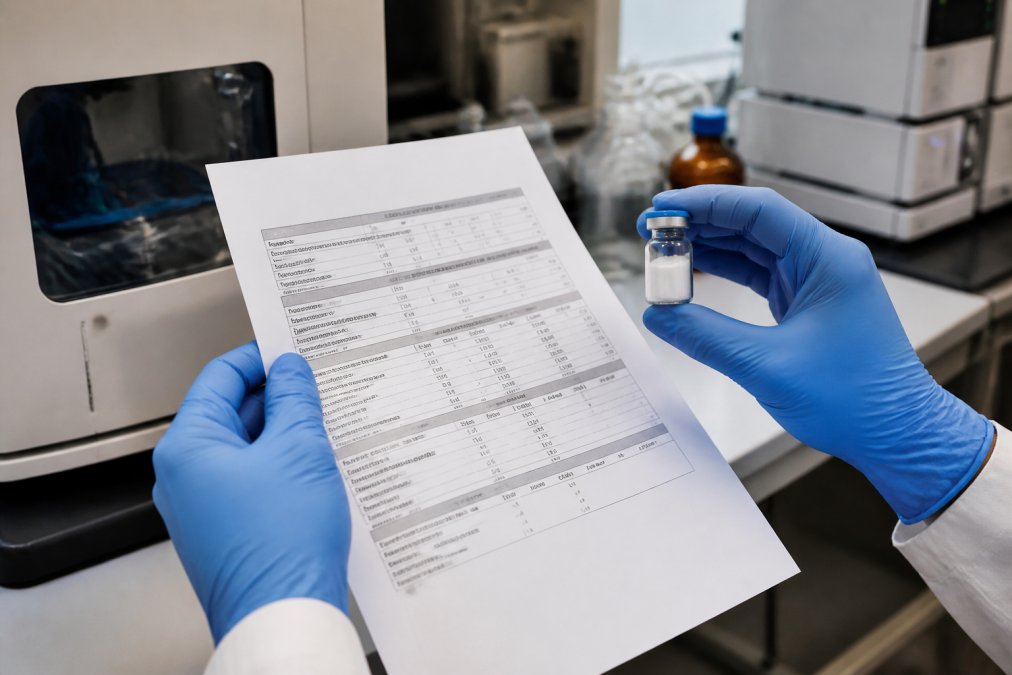
Step 6: Compare to independent standards when possible. If you’re working with a peptide from multiple suppliers, obtain samples from each and analyze them side-by-side using the same HPLC method.
Step 7: Document all results. Keep detailed records of purity testing, storage conditions, and stability data. This documentation supports the validity of your research and is essential if regulatory submissions are planned.
Identifying peptide synthesis impurities is a technical discipline that sits at the intersection of analytical chemistry and quality assurance. The methods are well-established, LC-hrMS, RP-HPLC, and chiral chromatography are industry standards, but their application requires understanding both the chemistry of impurity formation and the regulatory context of your work.
Canada BioGenix is committed to providing peptides that meet the highest purity standards. We invest in advanced analytical equipment, work with carefully selected manufacturing partners, and maintain rigorous quality control for every batch. When you order from us, you’re accessing transparent, verifiable documentation that supports your research and meets regulatory expectations. Our free shipping on orders over $250 and credit card payment options make premium-quality research compounds accessible to Canadian researchers. Contact us to discuss your specific purity requirements and learn how our quality-assured peptides can support your research outcomes.
A: The most frequently encountered impurities include truncation sequences (incomplete peptide chains), oxidative degradation products (especially from cysteine oxidation), racemerization (stereoisomers), and cyclic byproducts like diketopiperazine and succinimide. Process-related impurities from incomplete deprotection, solvents, and reagents also appear regularly. Identifying these early through proper analytical techniques ensures your research peptides meet required purity standards and perform reliably in your applications.
A: LC-hrMS (liquid chromatography-high resolution mass spectrometry) is the gold standard for peptide impurity identification. The technique separates impurities by reversed-phase chromatography, then determines their exact molecular weight and structure. Each impurity type produces a distinct mass signature: truncations show lower mass values, oxidized peptides display +16 mass units per oxidation event, and cyclic byproducts reveal characteristic fragmentation patterns. Comparing your peptide's mass spectrum against reference standards confirms purity and identifies specific degradation pathways.
A: Impurities directly affect experimental reproducibility and safety. Even small percentages of truncated sequences, racemerized forms, or oxidative degradation products can skew results, invalidate dose-response curves, and introduce confounding variables. For drug development workflows, regulatory bodies expect rigorous impurity profiling and characterization. High-purity peptides (typically >90%) ensure consistent biological activity, reduce batch-to-batch variability, and provide confidence in your research outcomes or manufacturing process.
A: A credible Certificate of Analysis should specify the overall peptide purity percentage, list detected impurities by type and concentration, include the analytical method used (LC-hrMS, HPLC), show batch-specific data (not generic claims), and provide mass spectrometry results or chromatographic traces. Verify that the CoA is dated recently, matches your batch number, and comes from an independent analytical lab. Red flags include vague purity claims, missing impurity details, or identical CoAs across multiple batches, these suggest the document may not reflect actual product quality.
This article was written using GrandRanker