
Last Updated: September 1, 2026
Lyophilization, commonly called freeze-drying, is a dehydration process that removes water from peptides while preserving their molecular structure and biological activity. The resulting powder becomes dramatically more stable, resisting degradation far longer than reconstituted counterparts. Hydrolysis, oxidation, and bacterial growth, the primary mechanisms destroying peptide integrity, all slow dramatically when water is removed.
The freeze-drying process works through three stages: freezing the peptide solution, primary drying under vacuum to remove ice crystals, and secondary drying to eliminate residual moisture. For researchers deciding whether upfront costs justify extended shelf life and reduced waste, the answer depends on your storage timeline, batch size, and sensitivity to peptide purity degradation. For long-term storage, repeated experiments, or quality-critical applications, lyophilized peptide stability is worth the cost.
Reconstituted peptides, those dissolved in buffer solutions, typically maintain acceptable purity for 2-4 weeks at 4°C and only days at room temperature before oxidation and hydrolysis degrade the amino acid sequence (peer-reviewed research). Lyophilized peptides, stored properly, remain stable for 12-24 months or longer depending on storage temperature and environmental conditions.
This extended shelf life creates significant downstream savings. Reconstituted peptides require frequent reordering, causing shipping delays, higher cumulative costs, and greater risk of receiving degraded material. Lyophilized forms let you purchase in bulk during favorable pricing windows, store with confidence, and reconstitute only what you need when you need it.
The molecular stability advantage comes from removing the solvent environment where chemical reactions occur. Without water, peptide molecules cannot undergo hydrolysis, the breaking of peptide bonds that destroys biological activity. Oxidation, which damages sensitive amino acids like methionine and tryptophan, also slows dramatically in the absence of dissolved oxygen. For researchers working with delicate peptide sequences, this protection is essential.
Reconstituted peptides do offer one advantage: immediate usability without reconstitution time. But once you factor in the cost of wasted degraded peptides and emergency reorders, the economics shift decisively toward lyophilized forms for any research spanning more than a few weeks.
The environment where you store lyophilized peptides determines whether you get 6 months or 2 years of usable material. Temperature, moisture, light exposure, and vial integrity all work together to either preserve or destroy peptide purity.
Temperature is the dominant factor controlling peptide degradation kinetics. Every 10°C increase in storage temperature roughly doubles the rate of chemical degradation, a principle known as the Arrhenius effect (peer-reviewed research). A peptide stored at room temperature (20-25°C) degrades twice as fast as one stored at 4°C, and four times faster than one stored at -20°C.
Most researchers store lyophilized peptides at -20°C, which provides a practical balance between stability and accessibility. At this temperature, properly packaged peptides remain stable for 12-24 months. For longer preservation, particularly for rare or expensive peptide sequences, cryogenic storage at -80°C extends shelf life to 3-5 years or beyond. Liquid nitrogen storage at -196°C offers indefinite preservation but introduces additional complexity and cost.
The choice between -20°C and -80°C storage depends on your research timeline and budget. A -20°C freezer costs far less and consumes less electricity, making it suitable for most research groups. For multi-year studies or expensive custom syntheses, the incremental cost of -80°C storage becomes negligible compared to the value of guaranteed long-term stability.
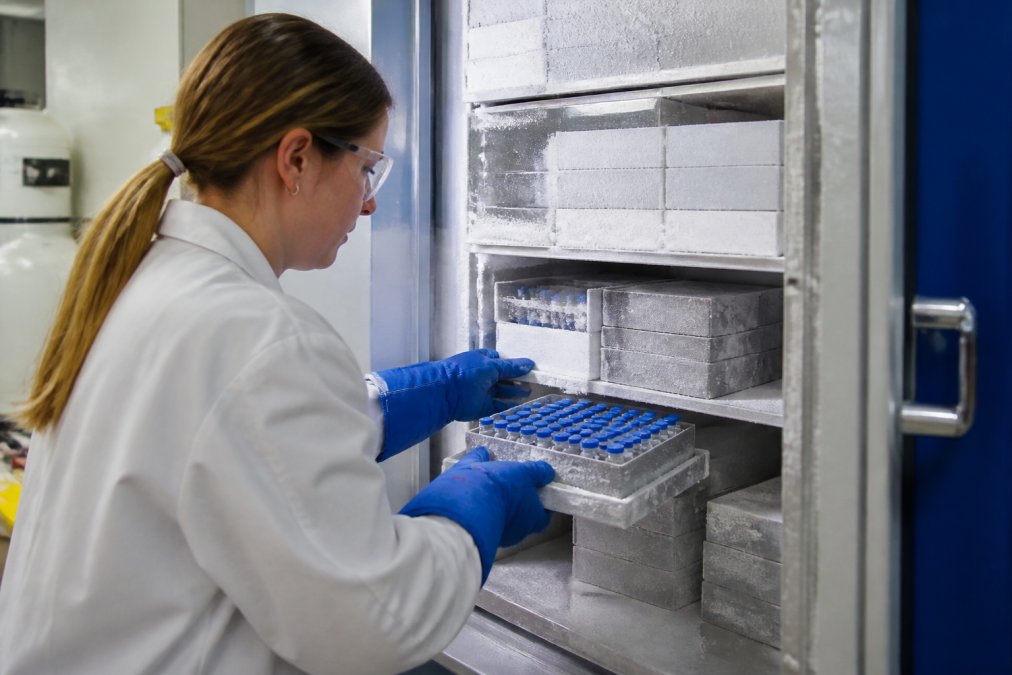
Moisture is the silent killer of peptide stability. Even trace amounts of water reactivate the hydrolysis reactions that lyophilization was designed to prevent. Peptides come in sealed vials with desiccant packets that absorb any residual moisture.
Once you open a vial to reconstitute your peptide, moisture becomes your enemy. Always use sterile, dry syringes and needles. Never let the vial sit open at room temperature. If you’re not using the entire vial, reseal it immediately and store the remainder at -20°C or colder. Leaving opened vials in a regular refrigerator, where humidity is higher and temperature fluctuates, accelerates degradation significantly.
Light exposure degrades peptides through photochemical reactions, particularly affecting aromatic amino acids like tyrosine and tryptophan. This is why peptides ship in amber or opaque vials. Store your vials in their original packaging or in opaque storage boxes. If you transfer peptides to new containers, use amber vials and keep them in a dark location within your freezer.
Humidity control matters most during transport and temporary storage outside the freezer. Keep peptides in sealed, moisture-proof containers during shipping or short-term room-temperature storage.
Before you invest in long-term storage, verify that you’re actually storing high-purity material. A Certificate of Analysis (COA) documents the peptide’s purity, identity, and quality metrics at the time of manufacture.
A legitimate COA includes purity percentage, typically measured by high-performance liquid chromatography (HPLC), which tells you what fraction of the vial contains your target peptide versus impurities. Mass spectrometry data confirms that the peptide’s molecular weight matches your specification, ruling out synthesis errors or contamination. The COA should also document the batch number, synthesis date, and storage recommendations specific to that batch.
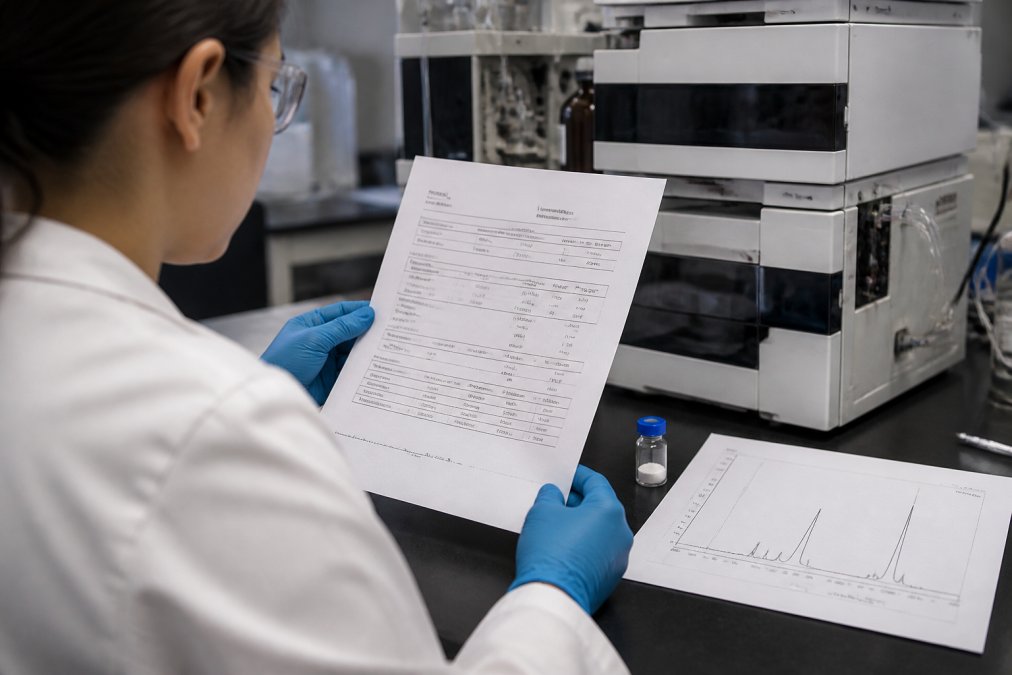
A critical detail many researchers overlook is the COA’s test date. If the COA is dated months before you receive the peptide, the actual purity may be lower due to degradation during storage and shipping. A trustworthy supplier provides COAs dated within days of shipment, proving the peptide was tested in its current condition.
Verify that the COA includes HPLC chromatograms and mass spectrometry data, not just summary numbers. These raw analytical results let you see the actual purity profile and identify any unexpected peaks that might indicate impurities or degradation products. If a supplier offers only summary percentages without supporting analytical data, treat that COA with skepticism.
The decision to invest in lyophilized peptides hinges on comparing the upfront cost against downstream savings from reduced waste, fewer reorders, and extended research timelines.
Lyophilized peptides typically cost 15-25% more than reconstituted forms. This premium reflects the additional manufacturing step and the longer shelf life you’re purchasing. For a single small experiment, this premium feels unnecessary. But for researchers planning 6-12 months of ongoing work with the same peptide sequence, the math changes rapidly.
Reconstituted peptides degrade predictably, typically losing 5-10% potency per week at 4°C (peer-reviewed research). If you order a vial expecting to use it over 8 weeks, you’ll actually use material that’s progressively less pure. Lyophilized peptides, reconstituted fresh each time you need them, maintain consistent purity across your entire research timeline. This consistency reduces failed experiments and the need for repeat batches.
Emergency reordering costs add up quickly. If a reconstituted peptide degrades faster than expected, you need to reorder immediately, often paying expedited shipping fees. Lyophilized peptides eliminate this risk. You can purchase 3-6 months’ worth during a favorable pricing window, knowing with confidence that material will remain usable when you need it.
For researchers managing multiple peptide sequences, the storage density advantage matters too. Lyophilized peptides take up a fraction of the space of reconstituted solutions, reducing infrastructure costs and making it practical to maintain a larger peptide library.
Understanding how peptides degrade helps you make smarter storage decisions and reduce wasted material. Hydrolysis, the breaking of peptide bonds, accelerates dramatically in the presence of water and at higher temperatures. Removing water through lyophilization essentially stops hydrolysis. In reconstituted solutions, hydrolysis proceeds at a rate that roughly doubles for every 10°C temperature increase.
Oxidation affects peptides containing sensitive amino acids like methionine, tryptophan, and cysteine. These residues react with dissolved oxygen in solution, progressively destroying the peptide’s biological activity. Lyophilized peptides experience oxidation much more slowly because there’s no dissolved oxygen in the solid state.
Bacterial growth represents a third degradation pathway, particularly for reconstituted peptides stored at 4°C over extended periods. Bacteria produce enzymes that break down peptides, rapidly destroying purity. Lyophilized peptides are essentially immune to bacterial growth because bacteria cannot survive in the dry state.
Waste mitigation starts with accurate forecasting. Calculate how much peptide you actually need for your research timeline, then add 20% for experimental repeats and troubleshooting. Order lyophilized material for this total quantity, knowing it will remain usable throughout your project.
For expensive or rare peptide sequences, consider fractional vial storage. Some suppliers can provide peptides in smaller vial sizes or distribute a single synthesis across multiple vials. This approach lets you open one vial at a time, minimizing exposure of unused material to air and moisture.
Lyophilized peptide stability worth the cost becomes obvious in specific research scenarios. Multi-month research programs benefit immediately. If your study spans 6 months or longer and requires consistent peptide purity, lyophilized forms eliminate the degradation problem.
Researchers managing peptide libraries, maintaining multiple sequences for comparative studies or screening applications, should strongly consider lyophilized forms. The stability advantage compounds across dozens of different peptides. You can purchase economical quantities of each sequence, store them confidently for 12-24 months, and conduct experiments knowing all materials are equally fresh.
Quality-critical applications demand lyophilized peptides. If you’re using peptides for cell signaling studies, receptor binding assays, or any application where small changes in purity significantly affect results, the consistency of lyophilized material justifies the cost.
Custom peptide syntheses almost always should be lyophilized. If you’ve invested in custom synthesis, protecting that investment through lyophilization makes obvious economic sense. The synthesis cost dwarfs the lyophilization premium, and the extended shelf life lets you conduct follow-up experiments months or years later using identical material.
Reconstituted peptides make sense for short-term studies, single-use experiments, or situations where you need immediate usability without reconstitution time.
Lyophilized peptide stability worth the cost depends on your research timeline, budget constraints, and how you value consistency and waste reduction. For researchers planning studies longer than 8-12 weeks, managing peptide libraries, or conducting quality-critical applications, the answer is unambiguously yes. The extended shelf life, reduced degradation, and simplified storage justify the premium cost.
Canada BioGenix provides premium-quality lyophilized peptides with batch-specific Certificates of Analysis that document purity and stability at the time of shipment. Our carefully selected manufacturing partners ensure that every peptide meets strict quality standards, and our free shipping on orders over $250 makes it practical to purchase economical quantities for long-term storage. Get started with Canada BioGenix and eliminate the guesswork from peptide storage stability.
| Storage Condition | Lyophilized Shelf Life | Reconstituted Shelf Life | Temperature Requirement |
|---|---|---|---|
| Freezer storage | 12-24 months | 2-4 weeks | -20°C |
| Cryogenic storage | 3-5 years | Not recommended | -80°C |
| Refrigerated storage | Not recommended | 1-2 weeks | 4°C |
| Room temperature | Not recommended | 2-5 days | 20-25°C |
A: Lyophilized peptides are significantly more stable than reconstituted forms, but room temperature storage accelerates degradation through hydrolysis and oxidation. Proper lyophilized peptide shelf life extends to 12-24 months at -20°C or colder, compared to days or weeks for reconstituted peptides at ambient temperature. For maximum stability, store lyophilized peptides in a freezer (-20°C minimum, -80°C ideal) with desiccant and in sealed vials away from light. Room temperature storage reduces shelf life to weeks and increases the risk of bacterial growth and chemical degradation.
A: A peptide certificate of analysis documents purity, identity, and molecular integrity through HPLC, mass spectrometry, and other analytical testing. It verifies the amino acid sequence, confirms purity percentages, and identifies potential contaminants or degradation products. Before purchasing, verify that the COA matches the batch number on your vial and specifies storage conditions. This documentation ensures you’re paying for actual quality, not just a supplier’s claim, and provides baseline data to detect degradation during long-term storage.
A: Peptide degradation occurs through hydrolysis (water breaks peptide bonds), oxidation (chemical reactions with oxygen), or bacterial growth in reconstituted solutions. Signs include discoloration, precipitation, reduced solubility, or loss of biological activity. Degraded peptides produce unusable results in research, wasting time and resources. Lyophilized peptides in sealed vials with desiccant minimize these risks by removing water and oxygen exposure. Proper storage at -20°C to -80°C slows degradation kinetics significantly, protecting your investment and ensuring consistent results across batches and timeframes.
A: Higher purity (>95% vs. <90%) reduces contamination-related variability in research results and extends shelf life by limiting impurities that accelerate degradation. While initial costs are higher, purity above 90% provides measurable benefits: fewer failed experiments, longer usable storage windows, and reduced waste from batch degradation. For multi-month or multi-year projects, the cost-per-usable-dose often favors premium lyophilized peptides over cheaper alternatives that degrade faster. Calculate your project timeline and batch size; if you’re storing peptides beyond 3-6 months, higher purity lyophilized peptides typically deliver better long-term value.
This article was written using GrandRanker