
Semaglutide peptide is a synthetic GLP-1 receptor agonist approved in Canada for type 2 diabetes management and chronic weight loss. The industry standard term for this compound is semaglutide, classified pharmacologically as a glucagon-like peptide-1 (GLP-1) receptor agonist. More than 1 million Canadians currently use semaglutide medications, and that number is growing rapidly following Health Canada’s landmark 2026 generic approvals. Canada became the first G7 country to approve generic semaglutide injections, a development that signals a significant shift in how Canadians access and afford this treatment. Canadabiogenix provides this guide to help Canadians understand the science, regulations, and safe access pathways for semaglutide peptide in Canada.
Semaglutide targets GLP-1 receptors in the pancreas and brain to regulate blood sugar and appetite simultaneously. This dual action is what makes it clinically distinct from older diabetes medications that address only one pathway at a time.
In the pancreas, semaglutide promotes insulin secretion from beta-cells in response to elevated blood glucose. It also suppresses glucagon release, which prevents the liver from dumping excess glucose into the bloodstream. The combined effect produces tighter glycaemic control than many earlier drug classes.

In the hypothalamus, semaglutide acts on appetite-regulating centres to reduce hunger signals and slow gastric emptying. Patients report feeling full sooner and staying satisfied longer after meals. This mechanism is the pharmacological basis for semaglutide’s approved use in chronic weight management.
| Mechanism | Clinical outcome |
|---|---|
| GLP-1 receptor activation in pancreas | Increased insulin secretion, reduced glucagon |
| Hypothalamic appetite suppression | Reduced caloric intake, earlier satiety |
| Delayed gastric emptying | Slower glucose absorption, lower post-meal spikes |
| Sustained weekly plasma levels | Consistent glycaemic and weight control |
Pro Tip: Semaglutide’s once-weekly injection schedule produces steadier plasma concentrations than daily medications. This pharmacokinetic profile reduces the peaks and troughs that often cause side effects with shorter-acting agents.
Canada approved its first generic semaglutide injections in june 2026, making it the first G7 nation to do so. Health Canada conducted a thorough review confirming safety, efficacy, and quality for adult use in both diabetes and weight management before granting these approvals.
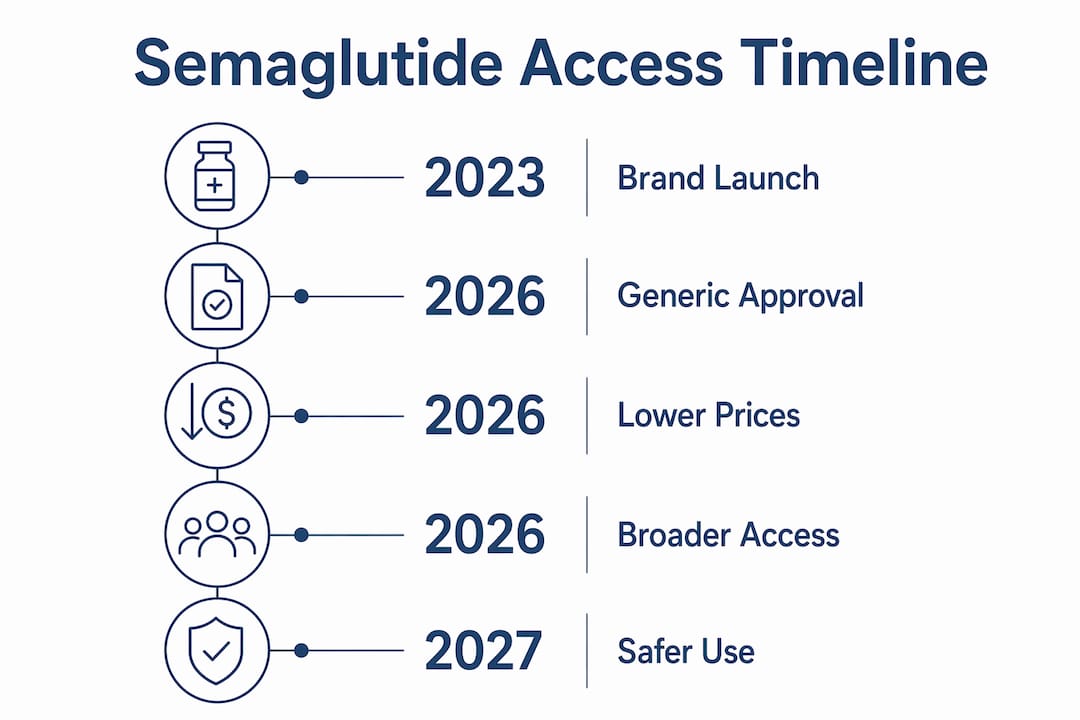
The approved generics include products from manufacturers such as Dr. Reddy’s Labs and Apotex, as well as the product Sevmia. Generic drug submissions began entering Canadian pharmacies starting june 2026. This regulatory milestone matters because it breaks the pricing monopoly that brand-name products held for years.
Generic semaglutide costs are anticipated to fall to less than a third of brand-name prices. That reduction translates directly into improved affordability for patients who previously faced significant out-of-pocket expenses. Brand-name products like Ozempic and Wegovy remain available by prescription, but the generic market now provides a lower-cost alternative within the same regulatory framework.
The practical implication for Canadians is clear. Patients who previously could not afford brand-name semaglutide now have a regulated, clinically equivalent option. Canada’s position as the first G7 country with approved generics gives Canadian patients an access advantage that patients in the United States and most of Europe do not yet have.
Safe and legal access to semaglutide in Canada requires a prescription from a licensed Canadian healthcare provider. No regulated pathway exists for obtaining pharmaceutical-grade semaglutide without medical evaluation and a valid prescription.
A prescribing physician will typically conduct the following before initiating treatment:
Medical oversight is critical for therapeutic effectiveness and adverse effect management. Purchasing semaglutide without a prescription, whether through unregulated online sources or grey-market suppliers, bypasses these safety steps entirely.
A critical distinction applies here. Pharmaceutical-grade semaglutide is a regulated medication approved for human use. Research-grade semaglutide peptides are laboratory compounds sold strictly for scientific investigation and are not approved for human administration. Confusing the two categories carries genuine health risks. Canadians seeking therapeutic semaglutide must obtain it through licensed pharmacies with a valid prescription.
Pro Tip: Ask your prescribing physician to document your treatment rationale clearly in your medical record. This documentation supports insurance coverage claims and provides a clinical reference point if you change healthcare providers during treatment.
Semaglutide is administered as a once-weekly subcutaneous injection, with dosage titrated upward over several weeks to minimise gastrointestinal side effects. The titration protocol is a standard feature of semaglutide therapy, not optional.
Common dosing considerations for Canadian patients include:
Medical reviews during semaglutide therapy serve two purposes. They confirm the treatment is producing the intended metabolic improvements, and they catch adverse effects before they become serious. Patients who skip follow-up appointments lose both benefits.
Semaglutide peptide in Canada is a regulated GLP-1 receptor agonist requiring a valid prescription, now more affordable than ever following Health Canada’s 2026 generic approvals.
| Point | Details |
|---|---|
| Regulatory status | Health Canada approved generic semaglutide in 2026, making Canada the first G7 country to do so. |
| Mechanism of action | Semaglutide activates GLP-1 receptors to regulate insulin, suppress appetite, and slow gastric emptying. |
| Cost impact of generics | Generic versions are expected to cost less than a third of brand-name prices, improving patient affordability. |
| Prescription requirement | A licensed Canadian healthcare provider must prescribe semaglutide; no legal unregulated pathway exists. |
| Research vs. pharmaceutical grade | Research-grade semaglutide peptides are not approved for human use and must not be substituted for prescribed medication. |
Canada’s decision to approve generic semaglutide ahead of every other G7 nation is not a minor regulatory footnote. It reflects a deliberate policy choice to prioritise patient access over market exclusivity, and the downstream effects on affordability are real.
What concerns me more than the pricing debate is the misconception that semaglutide is simply a “weight loss peptide” available through any online supplier. The research peptide market and the pharmaceutical market are legally and scientifically distinct. Conflating them puts patients at risk. Research-grade compounds are not manufactured to pharmaceutical standards, are not subject to the same quality controls, and are not intended for human administration.
The 2026 generic approvals actually reduce the pressure to seek unregulated alternatives. When brand-name semaglutide cost several hundred dollars per month, the temptation to find cheaper, unregulated sources was understandable, if still inadvisable. With generic prices expected to drop substantially, the cost argument for bypassing medical channels weakens considerably.
The other misconception worth addressing is that semaglutide works independently of lifestyle changes. Clinical data consistently shows that patients who combine semaglutide therapy with dietary adjustments and physical activity achieve better outcomes than those who rely on the medication alone. Semaglutide is a pharmacological tool, not a substitute for the broader work of metabolic health management.
Canadians exploring semaglutide for weight management or diabetes control deserve accurate information about both the opportunity and the boundaries. The 2026 regulatory changes expand access. They do not change the requirement for medical supervision.
— Canada
Canadabiogenix is a trusted Canadian source for research peptides and peptide supplies, serving researchers and informed Canadians who understand the distinction between pharmaceutical-grade medications and laboratory-grade compounds.

For Canadians researching the broader peptide science context, Canadabiogenix offers a catalogue of research-grade peptides alongside essential supplies including bacteriostatic water and injection equipment. Every product is clearly categorised to support informed, responsible sourcing decisions. Canadabiogenix does not supply pharmaceutical-grade semaglutide for human use. Therapeutic semaglutide requires a prescription through a licensed Canadian pharmacy. For research purposes, the Canadabiogenix peptide catalogue provides quality-verified compounds with transparent product information to support legitimate scientific investigation.
Semaglutide is approved in Canada for the management of type 2 diabetes and chronic weight management in adults. Health Canada has authorised both brand-name and, as of 2026, generic versions for these indications.
A valid prescription from a licensed Canadian healthcare provider is required to obtain pharmaceutical-grade semaglutide. No legal pathway exists to purchase therapeutic semaglutide without medical evaluation and a prescription.
Generic semaglutide is expected to cost less than a third of brand-name prices following Health Canada’s 2026 approvals. Exact costs vary by pharmacy, province, and insurance coverage.
Pharmaceutical-grade semaglutide is a regulated medication approved for human use and dispensed by licensed pharmacies. Research-grade semaglutide peptides are laboratory compounds not approved for human administration and sold strictly for scientific investigation.
The standard starting dose is 0.25 mg once weekly, escalating in four-week intervals toward a maintenance dose of 1 mg or higher depending on the clinical indication and patient tolerance. Dose titration is managed by the prescribing physician.