
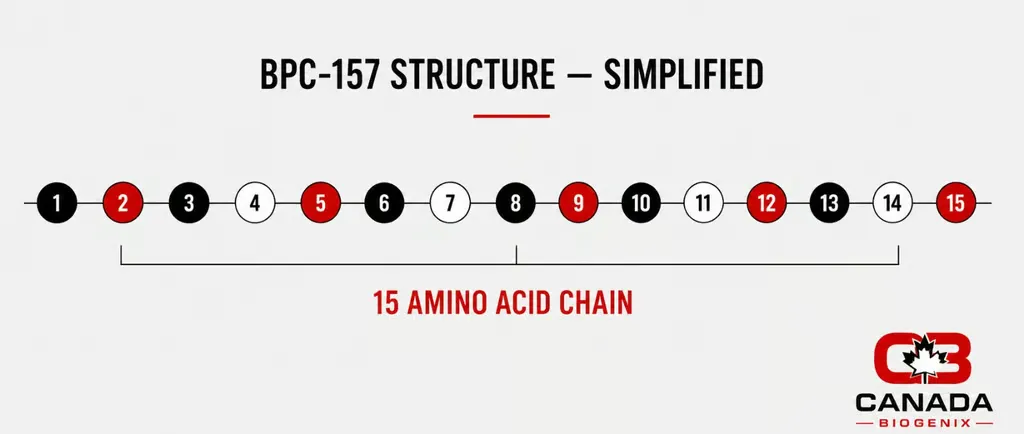
BPC-157 short for Body Protective Compound 157 has become one of the most talked-about research peptides in the wellness and fitness world, including here in Canada. From athletes exploring faster recovery to researchers studying tissue repair mechanisms, the interest in this 15-amino-acid chain is growing rapidly.
In this post, we break down what current science says about BPC-157, how it is studied, and why Canadians are paying attention to this compound. As always, this is purely educational all information here is based on preclinical research and is intended for informational purposes only.
BPC-157 is a synthetic peptide a short chain of amino acids that researchers originally derived from a protein naturally found in gastric juice. Scientists became interested in it because of early observations suggesting it may play a role in how the stomach lining protects and repairs itself.
The ‘BPC’ stands for Body Protective Compound, and the ‘157’ refers to its specific sequence. Its molecular structure gives it an unusual stability compared to many other peptides, which makes it a popular subject in research settings.
Molecular formula: C62H98N16O22 | Molecular weight: 1419.53 g/mol
Preclinical research involving BPC-157 has explored several areas. Here is a summary of the key focus areas from the scientific literature:
Several studies in rodent models have examined whether BPC-157 may support the healing process in tendons and ligaments. Research suggests it may stimulate fibroblast activity — the cells responsible for producing collagen, which is the main structural protein in connective tissue. Preliminary animal findings indicate potential relevance to musculoskeletal recovery support research.
Given that BPC-157 was first identified in gastric juice, a significant portion of research has focused on the GI tract. Animal models have explored its potential interaction with gut tissue integrity and inflammation markers. Researchers have noted that this peptide appears to influence pathways related to cellular repair in the gastrointestinal lining.
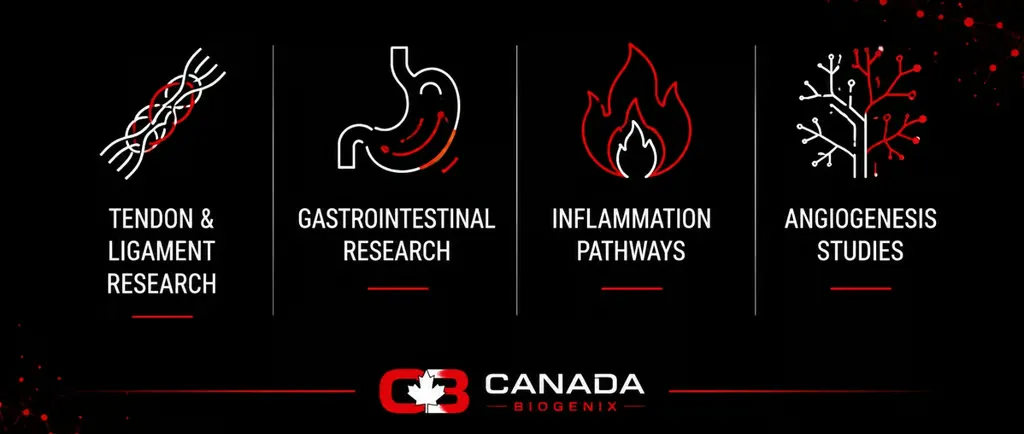
A number of animal studies have examined how BPC-157 interacts with inflammatory markers. Some preclinical findings suggest it may modulate certain inflammatory signalling pathways, which has driven interest among researchers studying recovery and wellness compounds.
Angiogenesis the formation of new blood vessels is a natural part of how tissue heals. BPC-157 has been studied in this context, as new capillary growth is associated with bringing nutrients and growth factors to damaged areas. Animal research has shown some association between BPC-157 and angiogenic activity.
Interest in research peptides like BPC-157 has grown significantly across Canada over the past two years. Here are some of the key reasons researchers and wellness-focused individuals are paying attention:
It is important to interpret the research accurately. Here is an honest look at what the science currently says:
If you are a researcher or someone exploring research peptides in Canada, here are some important points to be aware of:
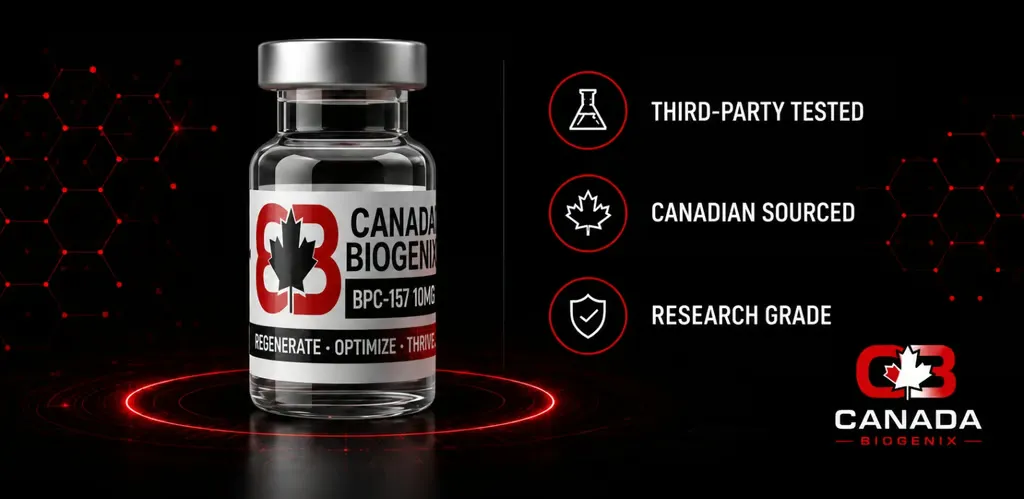
BPC-157 is classified as a research compound in Canada and is available for laboratory and research purposes. It is not approved as a pharmaceutical drug by Health Canada for human use. Canadians purchasing research peptides should ensure they are sourcing from suppliers who provide third-party tested, high-purity compounds.
One of the biggest challenges in the research peptide space is product quality. Poorly manufactured peptides may contain contaminants, incorrect concentrations, or degraded compounds. This is why purity verification and supplier transparency are essential when sourcing compounds for research.
At Canada Biogenix, every batch we carry is sourced from manufacturers we have personally vetted through rigorous testing because quality is something we refuse to compromise on.
The research peptide market has grown quickly — and unfortunately, not all suppliers maintain the same standards. Here is what to look for when choosing a research peptide source in Canada:
Canada Biogenix was founded not by corporate interests, but by a family searching for quality compounds during a personal health journey. That motivation drives our commitment to offering only the highest-purity products to fellow Canadians navigating similar paths.
BPC-157 is available in Canada as a research compound. It is not approved by Health Canada as a pharmaceutical product for human use. It is sold and purchased for laboratory and research purposes.
Researchers have studied BPC-157 primarily in preclinical animal models for its potential interactions with tissue repair pathways, gastrointestinal health mechanisms, inflammation markers, and angiogenesis processes.
As of 2025, only a small number of preliminary human pilot studies have been published all with limited sample sizes. Large-scale human clinical trials are still needed to draw any definitive conclusions.
BPC-157 stands out for its stability and its origin derived from a protective protein found in gastric juice. It has a broader range of preclinical research compared to many other research peptides, which has contributed to the scientific interest it attracts.
Canada Biogenix offers BPC-157 for research purposes, sourced from rigorously vetted manufacturers. We prioritize purity, transparency, and the trust of our Canadian customers above all.

BPC-157 is one of the most researched peptides in the preclinical space and for good reason. The animal study findings are genuinely compelling, and the growing body of research continues to attract attention from scientists, athletes, and wellness researchers alike.
At the same time, it’s important to approach this science with honest expectations. We are still in the early stages of understanding how these findings translate if they do to human physiology. The science is promising, not proven. And that distinction matters.
What we can offer Canadians is this: a reliable, transparent source for high-quality research peptides backed by rigorous testing, personal vetting, and a genuine commitment to the community we serve.
Explore our research-grade BPC-157 and other peptide compounds at canadabiogenix.com trusted by Canadians, tested for quality.