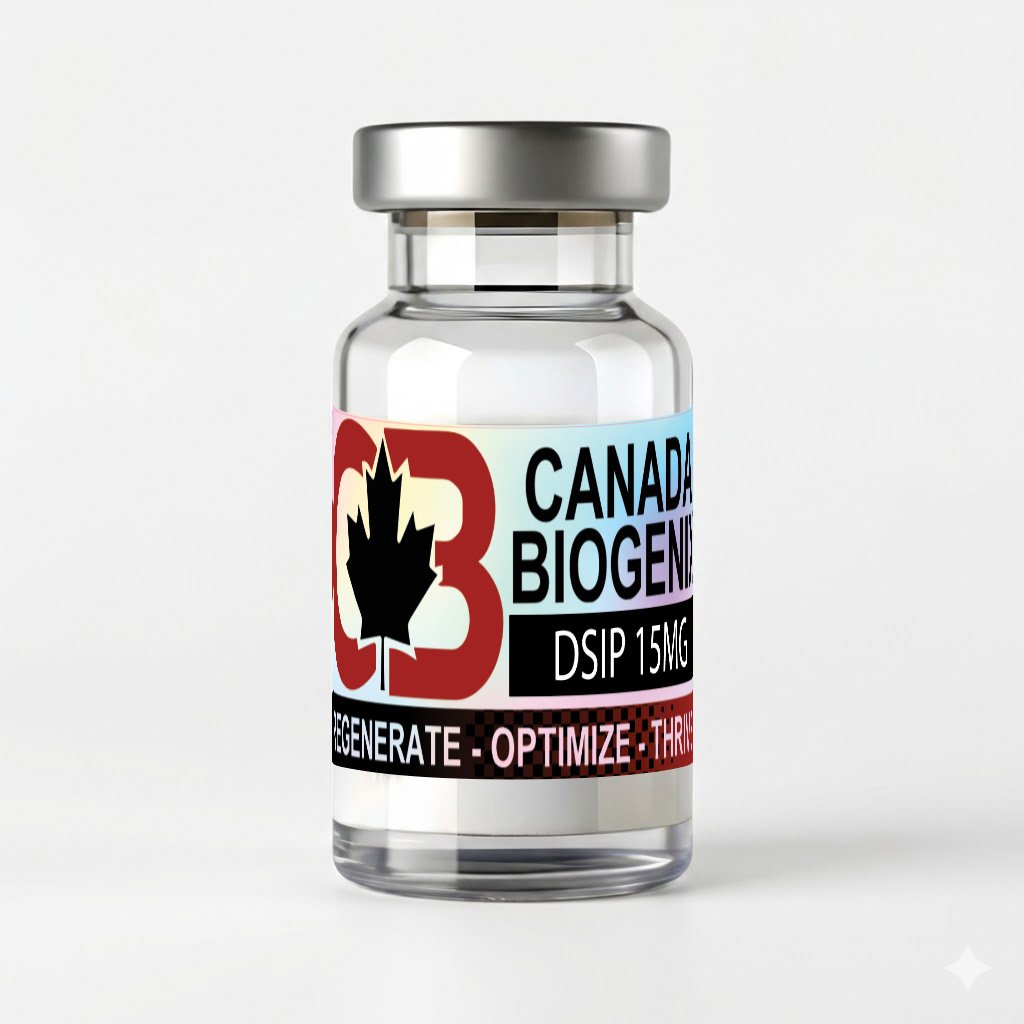
DSIP 15 mg is a research-grade nonapeptide attracting interest for its potential influence on sleep organization, stress signalling and wider neuroendocrine pathways.
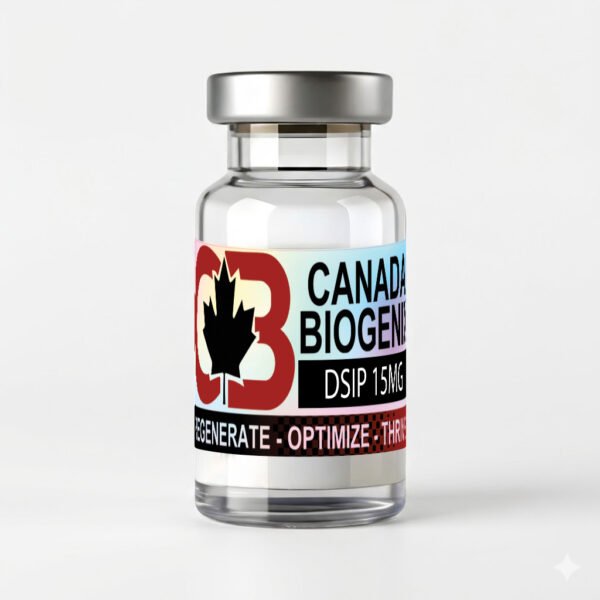
Delta sleep-inducing peptide, commonly shortened to DSIP and also called emideltide, is a nine-amino-acid research peptide. It was first isolated from the cerebral venous blood of rabbits during early sleep experiments. Its sequence is tryptophan–alanine–glycine–glycine–aspartic acid–alanine–serine–glycine–glutamic acid.
Early findings connected the peptide with delta-wave or slow-wave sleep. Later research expanded into stress adaptation, pain signalling, endocrine rhythms and neuroprotection. These findings make DSIP 15 mg an intriguing laboratory subject. However, its natural synthesis, primary receptor and exact biological role remain unresolved.
Several small human studies reported encouraging changes in sleep efficiency, sleep latency and slow-wave sleep. Researchers have therefore explored DSIP as a possible modulator of sleep structure rather than a conventional sedative.
Preclinical work has associated DSIP-like activity with stress adaptation, circadian biology and cortisol-related pathways. These signals support further study, although a defined human mechanism has not been confirmed.
Animal research has explored antioxidant activity, neural recovery and motor-function outcomes after experimental injury. These findings broaden interest in DSIP beyond sleep while remaining preclinical.
| Research area | Encouraging observation | Evidence level | Important limitation |
|---|---|---|---|
| Chronic insomnia | Some studies reported higher sleep efficiency, shorter sleep latency and improved sleep structure. | Small historical human studies | Older methods, small samples and inconsistent findings limit certainty. |
| Slow-wave sleep | Several early experiments observed more total sleep or slow-wave sleep after DSIP exposure. | Human and animal research | Other experiments did not reproduce a clear or uniform sleep effect. |
| Pain signalling | A seven-patient pilot study reported lower pain scores in six participants. | Uncontrolled human pilot | The study was extremely small and did not provide controlled confirmation. |
| Neural recovery | A rat stroke model found promising motor-function and oxidative-stress signals. | Preclinical animal study | Animal findings do not establish neurological benefits in humans. |
The positive scientific interest around DSIP extends across several connected systems:
These findings support continued investigation. They do not prove that DSIP 15 mg treats insomnia, anxiety, pain, addiction, stroke or any other condition.
DSIP has more historical human research than many newer experimental peptides. That is a positive starting point. In small insomnia studies, researchers observed potential improvements in sleep efficiency, sleep onset and slow-wave sleep. Some reports also described improved daytime mood or performance.
However, the evidence base has not developed into large, modern, controlled clinical trials. A later scientific review described DSIP’s identity and role as an endogenous sleep factor as unresolved. Researchers have not identified a definitive DSIP gene, precursor or receptor.
Therefore, the most accurate conclusion is that DSIP produced encouraging signals in selected experiments, while its mechanism, reproducibility and clinical relevance require much stronger confirmation.
Historical studies used different routes, quantities and schedules. Much of the human literature involved supervised intravenous research, while later commercial discussions often describe other routes without comparable clinical validation.
No standardized human dose, timing schedule or cycle has been established for this product. The 15 mg designation describes the total laboratory quantity in the vial. It should not be interpreted as an administration instruction.
Modern safety information for DSIP is limited. Historical reports do not establish long-term safety, interactions, reproductive effects or risks in people with neurological, psychiatric, endocrine, cardiovascular, liver or kidney conditions.
The FDA lists emideltide, or DSIP, among bulk substances with unresolved compounding concerns. It notes possible immunogenicity, peptide impurities and characterization challenges. The agency has not identified enough safety information for proposed administration routes to determine whether harm could occur.
Health Canada specifically includes DSIP in its warning about unauthorized injectable peptide products. It also states that “research use only” wording does not make an unauthorized product approved or exempt from Canadian drug requirements.
| Research product | Primary research theme | Main distinction |
|---|---|---|
| DSIP 15 mg | Sleep architecture and neuroregulation | Nine-amino-acid peptide linked to historical slow-wave-sleep research |
| Epitalon 10 mg | Pineal, circadian and cellular-aging research | Tetrapeptide studied in melatonin, telomere and aging-related models |
| Selank 10 mg | Stress, anxiety and neuroimmune research | Tuftsin-derived peptide studied for anxiolytic and cognitive signalling |
| Semax 10 mg | Cognition and neuroprotection | ACTH-derived peptide studied in neurotrophic and neurological pathways |
Research-use notice: DSIP 15 mg is presented for laboratory research and analytical discussion only. It is not approved by Health Canada to diagnose, treat, cure or prevent disease, and it is not approved for human or animal use. This information is not medical advice or an administration guide.