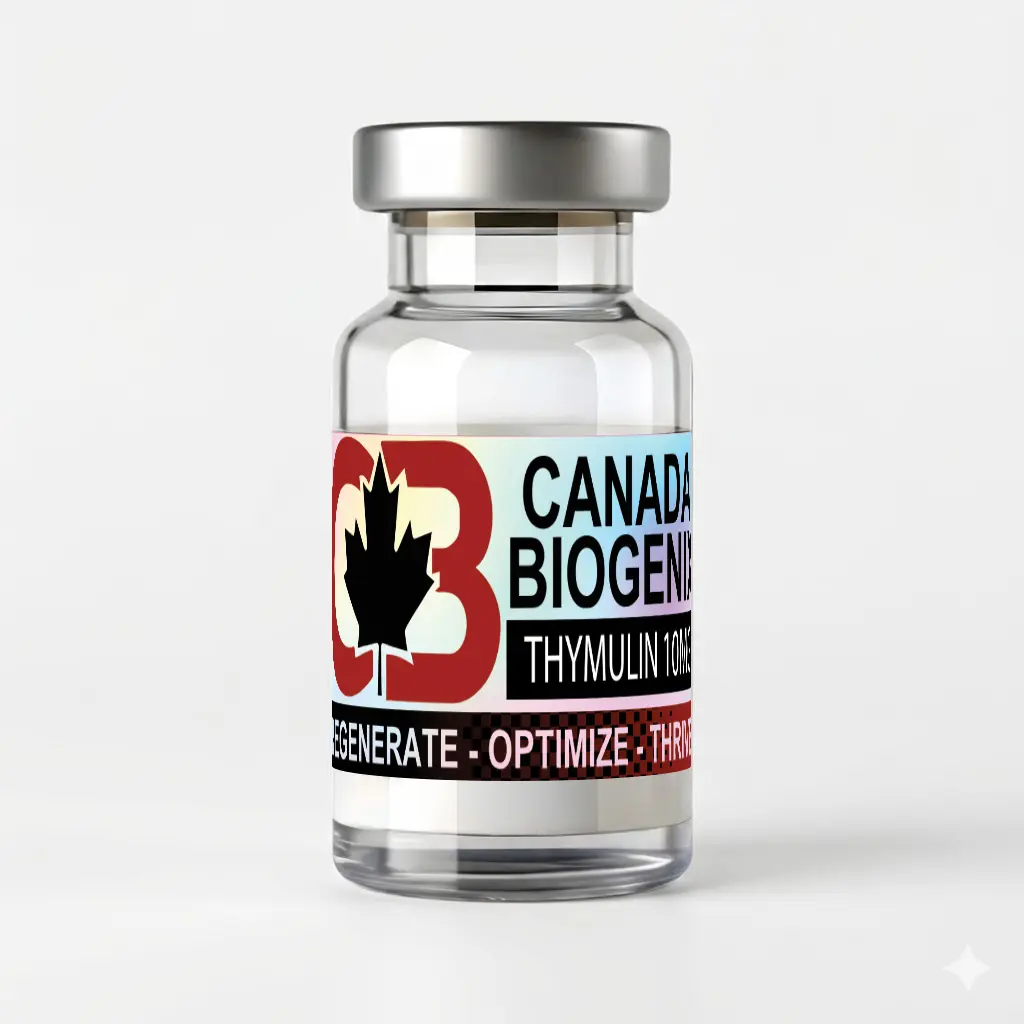
Thymulin 10 mg is a defined nine-amino-acid thymic peptide studied for its zinc-dependent influence on T-cell differentiation, immune balance, inflammatory signalling and communication between the immune and neuroendocrine systems.
Thymulin, historically called serum thymic factor or FTS, is a nine-amino-acid peptide produced by thymic epithelial cells. Its sequence is pyroglutamyl–alanine–lysine–serine–glutamine–glycine–glycine–serine–asparagine. The molecule was identified in the 1970s as a circulating thymic signal involved in T-lymphocyte development.
A defining feature is its dependence on zinc. The peptide’s biologically active form is associated with zinc, linking thymic immune signalling with trace-mineral status. Research interest has expanded from T-cell differentiation to inflammation, pain signalling, thymic aging and communication among the thymus, pituitary and broader neuroendocrine system.
Thymulin has long been investigated for supporting the maturation and differentiation of thymus-dependent lymphocytes and influencing T-cell markers and activity.
Its biological dependence on zinc provides a defined model for studying how micronutrient availability can influence thymic signalling and immune competence.
Experimental work suggests bidirectional signalling between thymulin, inflammatory mediators and the hypothalamic–pituitary axis.
Thymalin and Thymulin both originate from thymic research, so they share themes involving immune aging, T-cell biology and inflammatory regulation. They are nevertheless different research materials and should not be treated as interchangeable.
| Feature | Thymulin | Thymalin |
|---|---|---|
| Composition | One defined nine-amino-acid peptide | A multi-peptide extract historically derived from calf thymus |
| Defining biology | Requires zinc for characteristic biological activity | Multiple peptide fractions may influence several regulatory pathways |
| Primary research emphasis | T-cell differentiation, thymic endocrinology, inflammation and neuroimmune signalling | Broader thymic restoration, hematopoiesis, immune aging and peptide-bioregulator research |
| Evidence interpretation | Findings apply to the specific thymulin molecule or its analogues | Extract-level findings cannot identify which component produced an effect |
The biological foundation is well described, while proposed applications remain largely preclinical. This makes Thymulin especially suitable for mechanistic research rather than definitive clinical claims.
| Research Area | Positive Finding | Evidence Context |
|---|---|---|
| T-cell biology | Foundational studies associate thymulin with T-lymphocyte differentiation and enhancement of selected T- and NK-cell functions. | The most established biological role, supported primarily by laboratory and animal research. |
| Zinc-dependent activity | Research demonstrated a zinc-dependent epitope and linked zinc availability with circulating thymulin activity. | A distinctive mechanistic feature that separates Thymulin from other thymic peptides. |
| Inflammatory signalling | Thymulin and related analogues have produced encouraging anti-inflammatory and analgesic signals in experimental models. | Promising preclinical work; effects of an analogue cannot automatically be assigned to native Thymulin. |
| Neuroendocrine communication | Experimental studies describe interactions with pituitary signalling and the hypothalamic–pituitary–adrenal axis. | Supports study of the thymus as both an immune and endocrine organ. |
| Immune aging | Circulating thymulin activity has been observed to decline alongside thymic involution and in some immune-dysregulated states. | A compelling longevity-research rationale, but not proof that supplementation reverses human aging. |
The thymus is most active early in life and gradually involutes with age. This process is associated with reduced output of naïve T cells and changes in thymic hormones, including circulating thymulin activity.
This age-linked decline provides a strong research rationale for examining Thymulin in immunosenescence models. Current evidence supports pathway investigation, while claims of restored youth, longer lifespan or protection from illness remain unproven in humans.
Experimental research has connected thymulin signalling with reduced production or action of selected pro-inflammatory mediators. Peptide analogues inspired by thymulin have also shown analgesic and neuroprotective effects in animal models.
These findings make the pathway interesting for neuroinflammation and pain research. They do not establish Thymulin 10 mg as a pain medicine or clinical treatment.
Thymic and immune peptides may address related biological questions while using very different structures and mechanisms.
| Research Compound | Primary Research Focus | Research Distinction |
|---|---|---|
| Thymulin 10 mg | T-cell differentiation, zinc biology and neuroimmune signalling | A defined zinc-dependent nonapeptide produced by thymic epithelial cells. |
| Thymosin Alpha-1 10 mg | Dendritic cells, TLR signalling and adaptive immune responses | A 28-amino-acid immunomodulator with substantially more human clinical research. |
| KPV 10 mg | Inflammatory and epithelial signalling | A three-amino-acid α-MSH fragment studied in barrier tissue and inflammation models. |
| Epitalon 10 mg | Pineal, circadian and cellular-aging research | A tetrapeptide associated with a separate Soviet peptide-bioregulator research tradition. |
A comparative thymic model may examine Thymulin as a zinc-dependent regulator alongside Thymosin Alpha-1 as a more clinically studied immune-response modifier. The compounds overlap at the level of immune balance but engage different molecular pathways.
Broader aging research may also compare thymic signalling with the pineal and circadian focus of Epitalon. These are research concepts rather than validated stacks, and combined effects should not be assumed from the individual literature.
The 10 mg label describes the total quantity of research material in the vial. It is not a suggested dose, schedule, protocol or frequency.
Research protocols described for Thymalin extracts or other thymic products do not transfer directly to Canada Biogenix Thymulin 10 mg. The compounds differ in composition, molecular definition and evidence base.
Thymulin 10 mg is presented as research material for qualified laboratory investigation. This educational overview summarizes published findings and does not provide medical advice, diagnosis, treatment instructions, dosing guidance or a guarantee of outcomes.