
Last Updated: August 3, 2026
Understanding the benefits of high purity peptides requires more than a surface-level glance at amino acid sequences. At Canada BioGenix, we’ve spent years helping Canadian researchers navigate peptide selection, and one truth emerges consistently: purity isn’t just a specification on a certificate, it’s the foundation that determines whether your research succeeds or stalls. When peptides contain contaminants, degradation products, or off-target molecules, even a well-designed experiment can produce unreliable results. This guide breaks down what high purity peptides actually deliver, how to verify them, and why the difference matters far more than most suppliers acknowledge.
Peptides are short chains of amino acids linked by peptide bonds. Unlike proteins, which typically contain 50 or more amino acids, peptides usually consist of 2-50 amino acid residues. The specific sequence of these amino acids determines the peptide’s biological function.
Purity directly affects peptide function. When a batch contains even small percentages of impurities, incomplete synthesis byproducts, oxidized forms, or unrelated compounds, those contaminants can interfere with cellular signaling, mask therapeutic effects, or produce misleading data. A peptide marked as 95% pure still carries 5% of unknown material that might actively compete with the target peptide for receptor binding sites. Contaminated batches force researchers to repeat experiments, delaying timelines and inflating costs. For those using peptides in injury recovery protocols, impurities can trigger unexpected immune responses or reduce tissue repair benefits. Canada BioGenix prioritizes purity because every percentage point above 90% translates to more reliable results and fewer false starts.
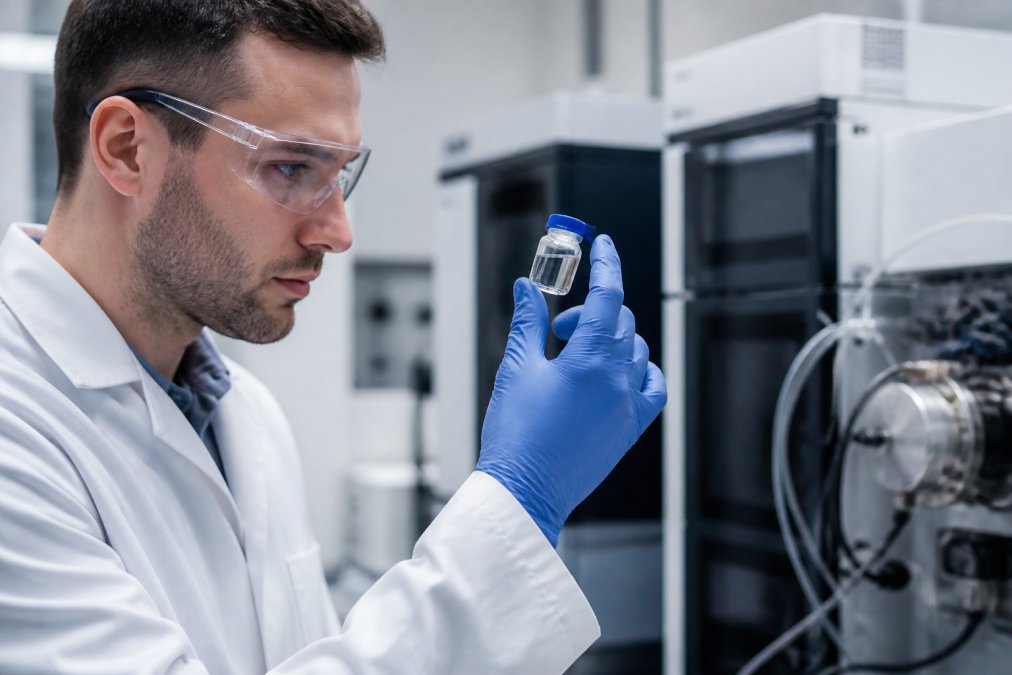
The order of amino acids in a peptide chain determines the molecule’s three-dimensional shape, electrical charge, and ability to bind to specific cellular targets. A single amino acid substitution can completely alter the peptide’s biological activity, which is why synthetic peptides require precise manufacturing controls. Collagen-stimulating peptides used in dermatological applications work by signaling fibroblasts to increase collagen production. If the amino acid sequence is even slightly off due to synthesis errors, the peptide may fail to activate those fibroblasts, resulting in no tissue regeneration benefit. High purity ensures that molecules in your batch match the intended sequence consistently, maximizing the percentage of peptides that perform their intended function.
Impurities carry hidden costs. In research settings, contaminated peptides force protocol modifications and repeat experiments. For individuals using peptides in recovery or fitness contexts, impurities reduce bioavailability, meaning a smaller fraction of what you’re administering actually reaches its target tissue. Many suppliers claim purity levels without independent verification. Canada BioGenix insists on third-party testing for every batch.
The therapeutic efficacy of peptides in tissue repair depends directly on purity. When peptides trigger cellular signaling pathways that activate fibroblasts, osteoblasts, or other regenerative cells, contaminating molecules can interfere with these signals or produce competing effects. Collagen production represents one of the clearest examples of purity’s impact. Peptides derived from collagen hydrolysates work by stimulating fibroblasts, the cells responsible for synthesizing new collagen. A high-purity collagen peptide reaches these cells efficiently, while contaminants can block receptor sites or trigger inflammatory responses that inhibit collagen synthesis. Research shows that high-purity peptides maintain their therapeutic efficacy longer when stored correctly at 2-8°C and protected from light.
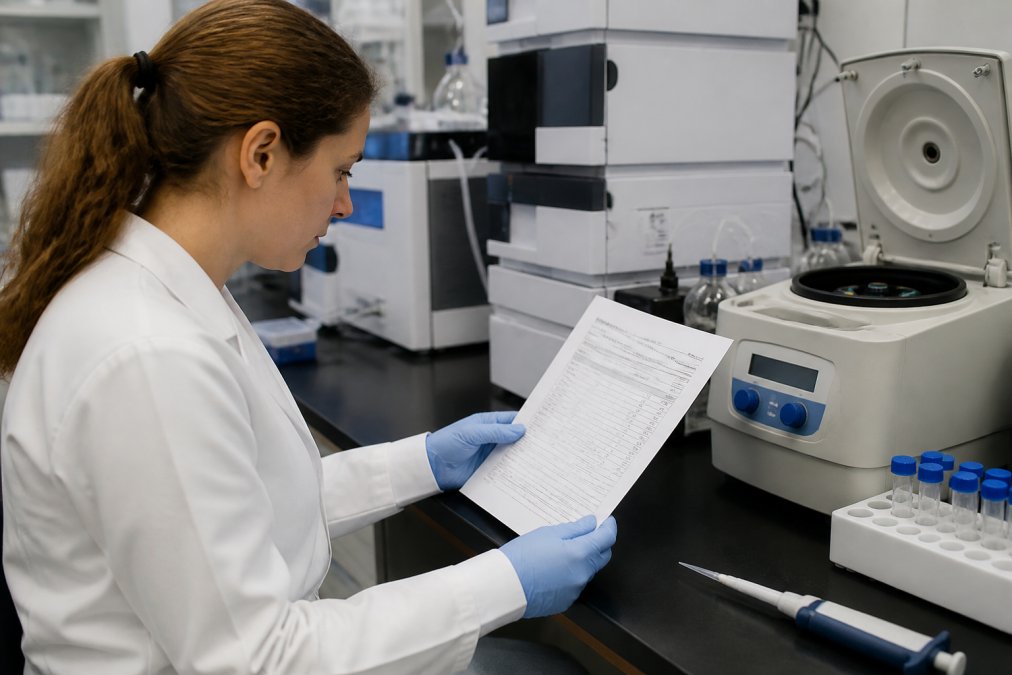
Peptides that influence growth hormone secretion or insulin-like growth factor (IGF-1) signaling can support muscle protein synthesis and metabolic efficiency. These effects depend entirely on the peptide reaching its target receptors in sufficient concentration and undamaged form. When muscle-growth peptides contain impurities, the effective dose of active peptide is lower than labeled, contaminants may trigger inflammatory responses that counteract anabolic effects, and repeated administration can lead to tolerance or immune sensitization.
Peptides act as chemical messengers in the body, binding to specific receptors on cell surfaces and triggering cascades of cellular responses. When a peptide binds to its target receptor, it initiates intracellular events: enzyme activation, gene expression changes, or metabolic adjustments. Contaminants that structurally resemble the target peptide can partially activate these receptors, producing incomplete or off-target effects. Hormone regulation through peptides involves exquisite specificity. Growth hormone-releasing peptides stimulate the pituitary gland to increase growth hormone secretion, requiring precise molecular recognition. A contaminated batch loses this specificity. The immunomodulatory and anti-inflammatory properties of certain peptides also depend on purity, impurities can provoke the opposite response, triggering inflammation rather than suppressing it.
High-purity peptides are only as good as their condition when you use them. Store lyophilized (freeze-dried) peptides at 2-8°C in a standard refrigerator, or at -20°C for longer-term storage. Peptides stored at room temperature degrade rapidly, within days, purity can drop from 98% to 85% or lower. Once reconstituted in solution, peptides are even more fragile and should be used within a few hours to a few days. Canada BioGenix ships peptides with ice packs and insulated packaging to maintain cold chain integrity from preparation through delivery.
How you reconstitute a lyophilized peptide affects its bioavailability. Use sterile, bacteriostatic water or the solvent specified by your supplier. Add the solvent slowly to the lyophilized peptide vial, allowing it to dissolve gradually rather than injecting it forcefully. Allow the solution to rest for 15-30 minutes after mixing to ensure complete dissolution. Once reconstituted, store the solution at 2-8°C and use it within the timeframe specified by your supplier, typically 24-72 hours for most peptides.
| Storage Condition | Lyophilized Shelf Life | Reconstituted Shelf Life | Bioavailability Retention |
|---|---|---|---|
| 2-8°C (refrigerator) | 12-24 months | 24-72 hours | 95%+ |
| -20°C (freezer) | 24+ months | 7-14 days | 95%+ |
| Room temperature (20-25°C) | 2-4 weeks | 2-4 hours | Degrades rapidly |
| Above 25°C | Days | Hours | Significant loss |
Determining purity requires laboratory analysis. Two methods dominate: high-performance liquid chromatography (HPLC) and mass spectrometry (MS). HPLC separates peptide molecules based on their chemical properties, primarily hydrophobicity and charge. A detector measures the signal, producing a chromatogram that shows peaks corresponding to different compounds. If your target peptide represents 98% of the total peak area, the batch is 98% pure by HPLC. Mass spectrometry measures the molecular weight of individual peptide molecules. A pure peptide has a single, specific molecular weight. If your target peptide has a molecular weight of 1,234 Da (Daltons), a pure batch shows a dominant peak at m/z 1,234.
The most rigorous purity verification combines both methods. HPLC identifies what percentage of the batch is the target peptide versus other compounds. MS identifies what those other compounds actually are. When evaluating a supplier’s purity claims, ask for both HPLC and MS data. A Certificate of Analysis should specify the HPLC purity percentage, MS confirmation of molecular weight, identification of any significant contaminant peaks, batch number and manufacturing date, and expiration date or stability data. Canada BioGenix provides batch-specific CoAs with both HPLC and MS data for every product.
In Canada, peptides marketed as research chemicals are subject to regulatory oversight. Health Canada’s regulations distinguish between approved pharmaceutical peptides (which undergo rigorous clinical trials) and research-grade peptides (which are sold for laboratory use with specific restrictions).
Canadian suppliers of research peptides must comply with Good Manufacturing Practice (GMP) standards established by Health Canada. These standards cover facility design, equipment maintenance, personnel training, quality control, and documentation. A GMP-compliant facility maintains detailed records of every batch, including raw materials, synthesis parameters, quality testing results, and storage conditions. We work exclusively with manufacturing partners who meet these regulatory requirements, ensuring that every product meets strict quality and purity standards. Research peptides are for investigational use only.
A peptide marked as 95% pure does not automatically deliver 95% bioavailability. Purity measures chemical composition, the percentage of your sample that is the target peptide versus other molecular species. Bioavailability measures biological activity, the fraction of an administered peptide that reaches its target tissue in active form and produces the intended effect. Bioavailability depends on purity, but also on peptide stability in the gastrointestinal tract, absorption efficiency across tissue barriers, metabolism and clearance rates, receptor binding affinity, and intracellular signaling efficiency.
Consider a practical example. You order a peptide marked as 95% pure and receive 10 grams of material. That material contains 9.5 grams of target peptide and 0.5 grams of contaminants. When you reconstitute and administer this, several factors determine how much benefit you experience. Contaminants might include molecules that compete with your target peptide for receptor binding. The peptide might degrade during storage or reconstitution. Not all of the peptide that reaches your target tissue produces an effect. This calculation illustrates why high purity is necessary but not sufficient. You need both high purity AND optimal storage, reconstitution, and administration practices.
A Certificate of Analysis is your primary tool for verifying purity. Look for an independent, accredited laboratory (ISO 17025 accreditation), specified testing methods (HPLC, MS, etc.), batch traceability with specific batch number and manufacturing date, contaminant identification, and a signature and date from the testing laboratory. Canada BioGenix provides CoAs that meet all these criteria. Every batch ships with documentation that specifies the testing laboratory, methods used, batch number, manufacturing date, and detailed contaminant profiles.
Certain peptides exert powerful immunomodulatory effects, shifting immune system activity toward or away from inflammation depending on the peptide’s structure and mechanism. These benefits depend critically on purity. Peptides designed to modulate cytokine production work by binding to immune cell receptors and triggering signaling cascades that increase or decrease inflammatory responses. A high-purity peptide reaches immune cells efficiently and produces predictable, dose-dependent effects. Antioxidative peptides, which scavenge free radicals and reduce oxidative stress, also require high purity. The anti-inflammatory benefits of high purity peptides are most pronounced when administered consistently over time.
Choosing high-purity peptides for research or recovery isn’t about paying a premium for a marketing claim. It’s about ensuring that what you’re administering actually delivers the therapeutic or research benefit you’re pursuing. Canada BioGenix has built our reputation on this principle: every product meets strict quality and purity standards, backed by independent third-party testing and transparent documentation. When you order from Canada BioGenix, you receive not just a product, but verified assurance that your peptides are what they claim to be. Explore our current inventory and request batch-specific Certificates of Analysis to see the difference transparency makes.
High purity peptides deliver consistent results because contaminants cannot interfere with cellular signaling or therapeutic efficacy. Pure peptides show reliable pharmacokinetics, meaning they behave predictably in the body. This consistency is critical for injury recovery, muscle growth, and tissue repair applications. Impurities can trigger unwanted immune responses or reduce bioavailability, making pure peptides essential for reproducible outcomes in both laboratory and fitness contexts.
Purity directly determines whether your results are repeatable. When peptides contain contaminants or degradation byproducts, batch-to-batch variation increases dramatically. This makes it impossible to know whether changes in your results come from the peptide itself or from impurities. High purity peptides (typically 90%+ verified by HPLC or mass spectrometry) ensure that amino acid sequences remain intact and that cellular signaling pathways respond consistently. This is why researchers and athletes pursuing serious results demand verified purity standards and batch-specific Certificates of Analysis.
Low-purity peptides carry several risks: contaminants can trigger anti-inflammatory or immunomodulatory side effects, degradation products may accumulate in tissue, and you may not receive the dose you actually paid for. Impurities also reduce bioavailability, meaning your body absorbs less of the active peptide. For injury recovery and fitness goals, low purity means slower results and unpredictable outcomes. Additionally, unverified suppliers may claim high purity without third-party testing, leaving you with no way to confirm what you received.
Two primary methods confirm purity: HPLC (High-Performance Liquid Chromatography) separates peptides by molecular weight and identifies contaminants through chromatography, while mass spectrometry measures exact molecular weight to confirm the correct amino acid sequence. Reputable suppliers provide batch-specific Certificates of Analysis from independent third-party labs, not internal testing. Health Canada does not mandate specific purity thresholds for research peptides, but professional standards typically require 90%+ purity with documented contaminant profiles. Always request and verify COAs before purchasing.
This article was written using GrandRanker