
Last Updated: August 10, 2026
Peptide quality assurance is the foundation of reproducible, reliable research. When peptides contain impurities, degradation products, or inconsistent purity profiles, experimental results become unreliable regardless of methodology rigor. A batch performing well one month may fail the next if quality standards slip, the difference between publishable data and wasted work.
At Canada BioGenix, we’ve seen researchers troubleshoot experiments doomed from the start due to unverified peptide quality. Establishing rigorous quality assurance protocols before purchase eliminates this risk entirely.
In Canada’s competitive research environment, every substandard batch represents lost time and resources. Verifying analytical validation before purchasing protects your timeline and funding.
Peptide purity directly determines research validity. A sample claiming 95% purity but containing 85% introduces a 10% variable into every experiment, compounding across replicates and skewing statistical significance.
Research-grade peptides require purity thresholds varying by application: 90% minimum for cell-based assays, 95%+ for mass spectrometry or NMR structural studies, and 98%+ for immunological applications where trace contaminants trigger non-specific responses.
The impurity profile matters as much as overall percentage. A single major impurity at 95% purity differs significantly from five minor contaminants at the same percentage. The profile reveals what’s actually present and whether byproducts might interfere with your application.
Reproducibility is scientific credibility’s cornerstone. When peptide batches vary in purity, results vary for reasons unrelated to experimental design, introducing noise that obscures real effects and inflates false positives.
In dose-response studies, Batch A at 92% purity versus Batch B at 88% purity means testing different effective concentrations. Your dose-response curve distorts, IC50 values shift, and mechanism conclusions become unreliable. Multi-laboratory collaborations amplify this problem, data from different suppliers won’t integrate cleanly, and reviewers will flag inconsistencies.
Canada BioGenix is committed to consistency in product standards. Every product meets our strict quality and purity standards, enabling reproducible research across time and collaborations.
A Certificate of Analysis documents testing performed, findings, and whether the peptide meets specifications. Not all COAs are equal, and many researchers skim without understanding what they’re reading.
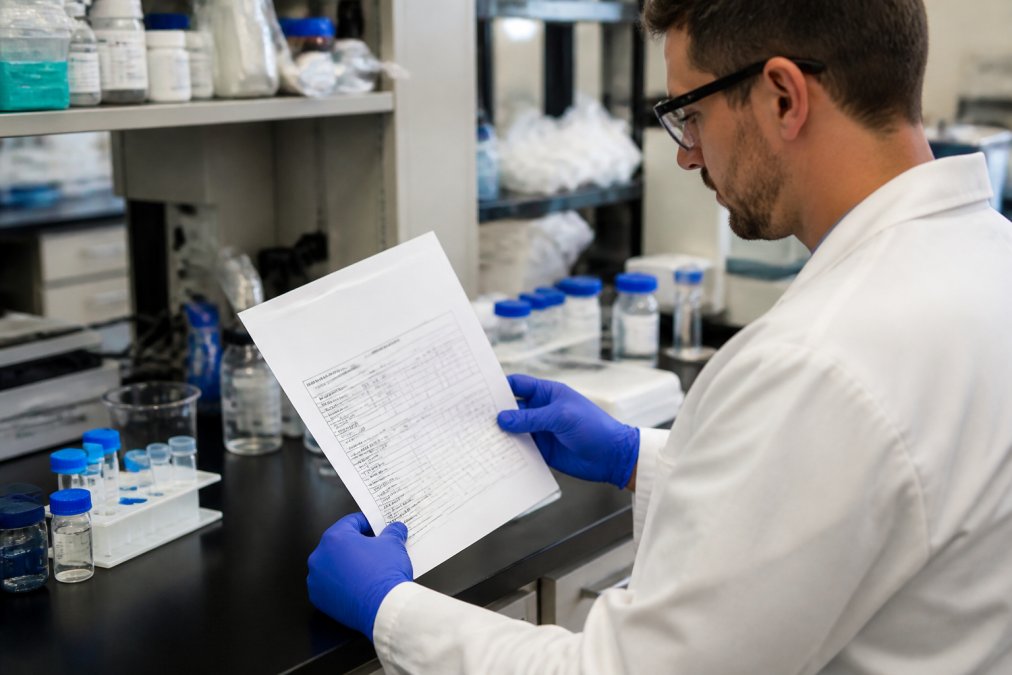
A complete COA contains critical sections. The Peptide Identity section confirms amino acid sequence and molecular weight via mass spectrometry or HPLC-MS, measuring exact mass within acceptable tolerance (typically ±0.1%). The Purity Analysis section reports target peptide percentage versus contaminants through HPLC peak area integration. The Impurity Profile lists detected contaminants by retention time and abundance, a single 3% peak differs from three 1% peaks. The Moisture Content and Residual Solvents sections document water or organic solvents remaining from synthesis, affecting stability and accuracy.
A supplier-signed COA means little without third-party testing. Independent laboratories provide verification that peptides actually meet specifications, unlike supplier internal QC departments with financial incentives to inflate numbers.
Check the testing laboratory name on your COA. Is it independent and accredited, or the supplier’s internal department? Batch traceability is equally critical, your COA should include batch numbers linking directly to your vial, allowing independent verification. Generic COAs without batch-specific data are worthless.
Canada BioGenix provides batch-specific COAs, offering documented proof of purity for regulatory or publication purposes.
HPLC is the gold standard for peptide purity assessment. It separates compounds by chemical properties as they flow through a column, measuring your target peptide’s peak area relative to all others. The result is a purity percentage and impurity profile showing what’s present and at what concentration.
HPLC’s limitation is measuring abundance by area, not mass. Two compounds with identical retention times but different molecular weights appear as a single peak. For simple peptides this rarely matters; for complex peptides with multiple byproducts, HPLC alone may not provide complete characterization.
Mass spectrometry measures exact peptide mass, confirming identity with precision HPLC cannot match. A correct amino acid sequence has specific molecular weight; measured mass matching theoretical mass within ±0.1% confirms the sequence is correct.
MS is particularly valuable for confirming your peptide is actually what you ordered, not a synthesis error. It also detects post-translational modifications or unexpected chemical changes like oxidation or cyclization.
HPLC should be baseline quality control for every batch, providing purity percentage and impurity profile. Request HPLC analysis on every COA.
MS should be used for identity confirmation, particularly for novel peptides or sequences you haven’t worked with before, and for structural studies requiring absolute sequence certainty.
Many suppliers combine both methods. HPLC provides purity data; MS confirms identity.
Peptides degrade through oxidation, hydrolysis, cyclization, and aggregation. Degradation rate depends on temperature, humidity, light exposure, and chemical composition. Proper storage slows degradation to negligible levels; poor storage renders peptides unusable within weeks.
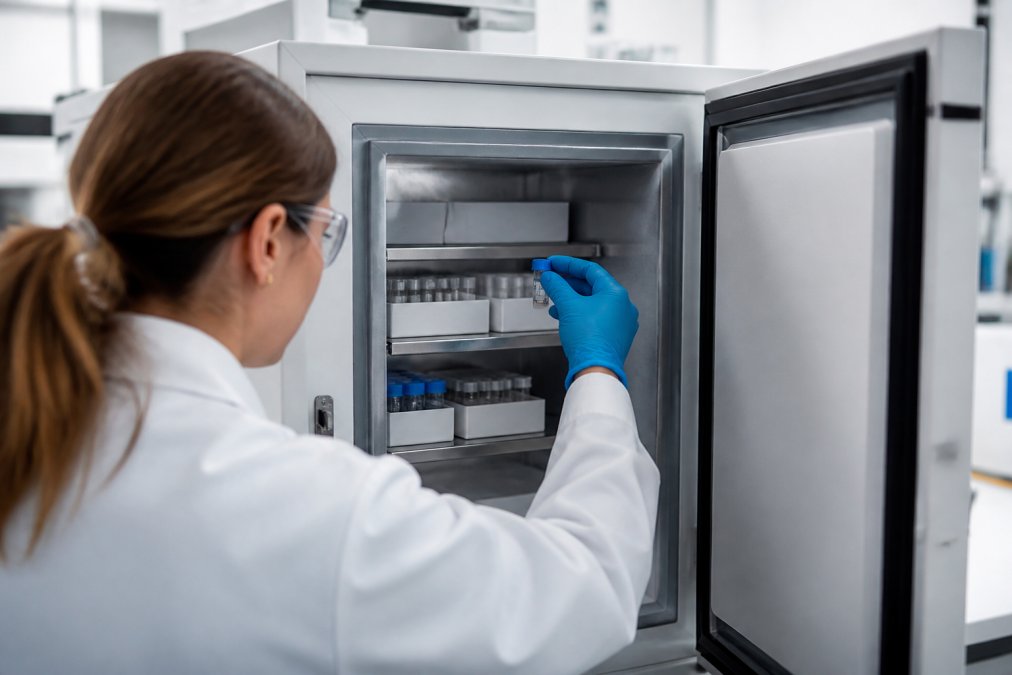
Lyophilized peptides should be stored at -20°C or colder. At this temperature, degradation proceeds so slowly peptides remain stable for years. Every 10°C temperature increase roughly doubles degradation rate. Protect peptides from light, particularly UV, which accelerates oxidation. Store in opaque or amber vials. Humidity control is critical, lyophilized peptides are hygroscopic and absorb water, accelerating hydrolysis. Store in desiccated environments using desiccant packs or desiccator cabinets.
Proper reconstitution determines usability and stability. Start with appropriate solvents, PBS or distilled water for most peptides, DMSO or DMSO-water mixtures for hydrophobic peptides. Use sterile, pyrogen-free solvents, particularly for cell-based experiments. Add solvent slowly while gently vortexing; vigorous vortexing introduces air bubbles causing oxidation.
Reconstituted peptides are significantly less stable than lyophilized powder. Most remain stable at -20°C for 2-4 weeks or at 4°C for 1-2 weeks. Prepare fresh solutions regularly rather than relying on long-term storage. Document reconstitution protocols: date, solvent, concentration, and storage conditions for troubleshooting.
Good Manufacturing Practice ensures products are consistently produced according to quality standards. GMP compliance is mandatory for pharmaceutical manufacturing in Canada but optional for research-grade peptide suppliers.
GMP compliance indicates supplier commitment to quality and consistency. GMP-compliant facilities maintain documented procedures for every synthesis, purification, and testing step, conduct regular audits, and maintain equipment calibration records.
For research peptides, GMP compliance isn’t always necessary, many excellent research peptides come from non-GMP suppliers. But for therapeutic development transition or absolute batch consistency, GMP becomes important.
Canada BioGenix partners with carefully selected facilities maintaining rigorous quality standards. While not all operate under full GMP certification, all follow documented standard operating procedures with analytical validation for every batch.
Supply chain transparency means tracking your peptide from synthesis through delivery. You should know manufacturing location, testing laboratory, results, and handling history.
Request traceability documentation including manufacturing facility location and credentials, synthesis date and batch number, testing laboratory name and accreditation, quality testing results with specific data, shipping conditions, and storage history.
Traceability verifies your peptide wasn’t exposed to temperature extremes during shipping, wasn’t stored suboptimally, and hasn’t been warehoused for months before dispatch.
Canada BioGenix maintains complete traceability for every batch, providing synthesis date, manufacturing location, third-party testing results, and shipping conditions documentation.
Peptide degradation occurs through multiple chemical pathways producing different byproducts. Recognizing degradation signs in HPLC chromatograms or experimental results helps identify whether poor performance stems from peptide quality or experimental design.
Oxidation is the most common pathway, particularly for peptides containing methionine or tryptophan. Oxidized peptides show slightly higher molecular weight (+16 Da per oxidized methionine) and appear as separate HPLC peaks with longer retention times. Hydrolysis breaks peptide bonds, fragmenting peptides into smaller pieces appearing as multiple HPLC peaks at earlier retention times. Cyclization creates cyclic structures with different mass and retention time, appearing as distinct peaks. Aggregation causes peptides to clump into insoluble particles, appearing as cloudiness or precipitation.
A chromatogram shows what’s in your sample. The x-axis shows retention time; the y-axis shows signal intensity. Your target peptide appears as a single peak; impurities appear as additional peaks at different retention times.
Baseline noise (small signal fluctuations) is normal and expected. Ghost peaks appearing unpredictably typically result from HPLC system contamination or residual compounds from previous injections. Tailing (peaks with long tails) can indicate column interaction or incomplete separation. Multiple small peaks (<1% each) are more favorable than single large impurities, suggesting normal synthetic byproducts rather than synthesis problems.
Before ordering peptides, decide what purity your application requires based on assay sensitivity, background noise tolerance, and statistical power. Most cell-based assays need 90% purity; binding assays or dose-response studies prefer 95%; structural studies or high-sensitivity assays often require 98%+.
Document your purity benchmark in lab standard operating procedures, ensuring consistency across experiments and team members. Specify minimum acceptable purity as a requirement when ordering.
Never purchase peptides without reviewing COAs first. Request COAs before placing orders to verify specifications before financial commitment.
Check for critical sections: peptide identity confirmed by MS, HPLC purity percentage, impurity profile, moisture content, and residual solvents. Verify independent laboratory testing. Request supplementary analysis if COAs are incomplete.
Research suppliers before first orders. Look for those publishing testing standards, maintaining third-party accreditation, and providing transparent documentation.
Ask suppliers specific questions about analytical methods, independent testing laboratories, batch consistency records, and quality issue handling. Suppliers answering directly with documentation are more trustworthy than those giving vague assurances.
After receiving peptides, document batch numbers, purity percentages, and storage conditions in lab notebooks or databases. Note batch numbers in experimental records.
If performance varies between batches, correlate with COA purity data. Document storage conditions: arrival date, storage method, and vial opening date. This history helps troubleshoot unexpected performance changes.
Peptide quality assurance isn’t a one-time checklist but an ongoing reproducibility commitment. Every decision from supplier selection through storage affects results. Implementing rigorous quality assurance protocols eliminates major experimental variability sources, ensuring data reflects actual science rather than contamination or degradation.
Canada BioGenix supports this commitment through batch-specific analytical validation and complete supply chain transparency. When ordering from Canada BioGenix, you receive documented peptide quality proof and confidence that your research is built on a reliable foundation. Get started with Canada BioGenix and access research-grade peptides backed by batch-specific traceability, and transparent quality documentation supporting publication standards.
Research-grade peptides typically require minimum purity levels of 85-95%, depending on the application and analytical method used. Health Canada does not mandate a single universal standard, but academic institutions and contract research organizations generally expect peptides to meet ISO 17034 accreditation or equivalent third-party validation. The specific purity benchmark depends on your research protocol, identity verification may require higher purity than some structural studies. Always confirm your institution's requirements before procurement and request batch-specific Certificates of Analysis to verify compliance.
A COA contains five critical sections: batch number and date of analysis, peptide sequence and molecular weight, purity percentage (typically shown as HPLC area %), water content, and test methods used. The purity figure is your primary quality indicator, this represents the percentage of the desired peptide versus contaminants. Check that the COA includes the testing laboratory's credentials, accreditation status, and signature. Cross-reference the batch number on your vial with the COA to confirm you received the tested material. Red flags include missing analytical methods, undated results, or purity claims without supporting chromatogram data.
HPLC (High-Performance Liquid Chromatography) separates peptide components by size and charge, giving you a purity percentage and identifying major impurities through retention time. It excels at measuring overall purity but cannot confirm the peptide's exact molecular identity. Mass Spectrometry (MS) measures the exact molecular weight of your peptide, confirming correct sequence and detecting structural anomalies. HPLC is faster and less expensive; MS provides absolute identity verification. Premium suppliers use both methods, HPLC for routine batch quality and MS to confirm sequence integrity, especially for critical research applications.
Peptides degrade through oxidation, hydrolysis, and microbial contamination. Proper storage, typically -20°C or -80°C in sealed vials with desiccant, slows degradation dramatically. Room-temperature storage can reduce usable shelf life from years to weeks. Freeze-thaw cycles damage peptide structure, so store in small aliquots to minimize repeated warming. Lyophilized (freeze-dried) peptides are more stable than liquid solutions. Always document storage conditions and note the reconstitution date on your vial. If a peptide has been stored improperly or exceeded its recommended shelf life, request a fresh batch or retest before use to avoid compromised results.
Synthetic peptides commonly contain truncated sequences (incomplete chains), N-terminal or C-terminal modifications, trifluoroacetic acid (TFA) residue from synthesis, and acetate salts. Water content and residual organic solvents are also typical. A quality COA will quantify these impurities. HPLC chromatograms should show one dominant peak (your target peptide) with minor peaks representing known byproducts at predictable retention times. Unexpected peaks in your chromatogram may indicate oxidation, dimerization, or contamination. If impurity profiles exceed your protocol's tolerance, contact your supplier for batch-specific data or request a replacement.
Health Canada does not publish a single standard for research-grade peptides, but procurement should follow ISO 17034 (accreditation for reference materials) and Good Manufacturing Practice (GMP) principles where applicable. Your institution's research ethics board or quality assurance team may have specific requirements. For peptides used in clinical research leading to regulatory submissions, stricter standards apply. Always verify that your supplier holds relevant accreditations, provides third-party testing, and maintains documented standard operating procedures. Confirm compliance with your institution's procurement policy before ordering.
Verify COA authenticity by checking that the testing laboratory is independently accredited (ISO 17025 or ISO 17034). Contact the testing laboratory directly to confirm they performed the analysis, many suppliers use third-party labs, which adds credibility. Request batch-specific chromatograms or mass spectrometry data, not just summary numbers. Legitimate suppliers provide raw analytical data and are transparent about their testing methods. Cross-check batch numbers and dates against your physical vial. If a supplier refuses to provide detailed analytical support or uses only in-house testing without external accreditation, this is a red flag for quality control.
This depends on the supplier's policy. Premium suppliers provide batch-specific Certificates of Analysis regardless of order size because quality assurance protects both researcher and supplier. Smaller orders may incur additional documentation fees, or suppliers may offer a general COA covering a production run. Always ask upfront whether batch-specific testing is included. If you're using peptides for fitness or injury recovery goals rather than formal research, the same quality standards apply, purity, storage stability, and third-party verification protect your safety and results. Reputable suppliers serve all customer types with the same analytical rigor.
This article was written using GrandRanker