
Last Updated: August 26, 2026
The foundation of a reliable peptide supply chain starts with defining what "quality" actually means for your specific research needs. Many organizations treat purity as a single metric, but the reality is more nuanced. A peptide at 95% purity might be perfect for one application and completely unsuitable for another. The difference between research-grade and therapeutic-grade peptides, for instance, reflects different manufacturing standards and testing requirements.
When you establish quality standards upfront, you eliminate ambiguity later. This means documenting the minimum acceptable purity level, specifying which analytical methods must be used to verify it, and defining what contaminants are tolerable in your workflow. Most research teams find that defining these parameters before sourcing saves months of back-and-forth negotiation with suppliers.
Canada BioGenix emphasizes this principle by working with manufacturing partners who meet consistent quality benchmarks across every batch. Rather than treating quality as a checkbox, this approach treats it as a foundational commitment. Your peptide supply chain becomes predictable when every stakeholder understands the same standards from the start.
Documentation matters here too. Keep records of what purity levels you’ve used successfully in past experiments. This creates a reference point for future orders and helps you justify why certain specifications matter to your suppliers. When you can say "our previous work showed that anything below 92% purity introduced inconsistent results," you’re speaking the language suppliers understand.
A Certificate of Analysis (COA) is your primary verification tool, but not all COAs are created equal. The document itself is only as reliable as the laboratory that issued it and the methods used to generate the results. Understanding what you’re looking at separates informed procurement from wishful thinking.
Start by identifying which analytical techniques were used. High-performance liquid chromatography (HPLC) is the standard for purity assessment, often paired with mass spectrometry for identity confirmation. When you see these methods listed on a COA, you know the testing followed established protocols. If a supplier provides only a purity percentage without specifying the method, that’s a red flag worth addressing directly.
The COA should include specific information: the peptide sequence, molecular weight, batch number, testing date, and the name of the laboratory that performed the analysis. Each of these details matters. A batch number ties the certificate to the physical product you receive. The testing date tells you how fresh the data is. The laboratory name allows you to verify independently if needed.
Look for evidence of traceability in the documentation. Some suppliers include batch-specific COAs with direct access to lab reports through QR codes. This level of transparency means you can verify the data without relying solely on the supplier’s word.
Compare the COA against your established standards. If you’ve specified that 92% minimum purity is acceptable, a COA showing 94% passes. If it shows 87%, you have grounds to reject the batch before it arrives. This verification step is your last quality gate before accepting delivery.
Independent verification provides confidence that supplier claims are accurate. When you rely solely on a supplier’s internal testing, you’re trusting their equipment, their protocols, and their integrity. Third-party testing removes that single point of failure.
Organizations like ResolveMass Laboratories and ARSI Canada specialize in peptide characterization services. These facilities use advanced analytical techniques including HPLC, LC-MS/MS, capillary electrophoresis, and NMR to provide comprehensive purity and identity assessments. For research peptides, this level of analysis goes beyond basic purity percentages to identify specific impurities and their concentrations.
The decision to use third-party testing depends on your risk tolerance and budget. If you’re working with a new supplier or receiving large quantities for critical research, the cost of independent verification often justifies itself by catching problems early. If you’ve worked with a supplier for years and their track record is solid, third-party testing might be less essential for routine orders.
When you do commission third-party testing, communicate clearly with the lab about your requirements. Different applications need different analytical depth. A screening test for basic purity costs less than a comprehensive characterization package suitable for regulatory submissions. Know what you’re paying for.
The results from third-party testing become part of your supply chain documentation. If a batch fails independent verification, you have objective data to support rejecting it and requesting replacement. This protects both your research integrity and your relationship with the supplier, the data is neutral, not accusatory.
Peptides are temperature-sensitive molecules. Exposure to heat, freeze-thaw cycles, or improper storage conditions degrades their structure and reduces their potency. Cold chain logistics means maintaining precise temperature control from the moment a peptide leaves the manufacturer until it arrives at your facility.
Most research peptides should be stored and shipped at temperatures between 2°C and 8°C (peer-reviewed research). Some formulations require freezing at -20°C or lower. The key is understanding your specific peptide’s requirements and ensuring every step of the supply chain respects those parameters.
The responsibility for cold chain management doesn’t end when the package arrives. Your internal storage procedures matter equally. A peptide that survives perfect shipping can degrade in a standard laboratory refrigerator if that refrigerator experiences temperature fluctuations or isn’t maintained properly. Many research teams invest in dedicated peptide storage units with temperature logging and alarm systems.
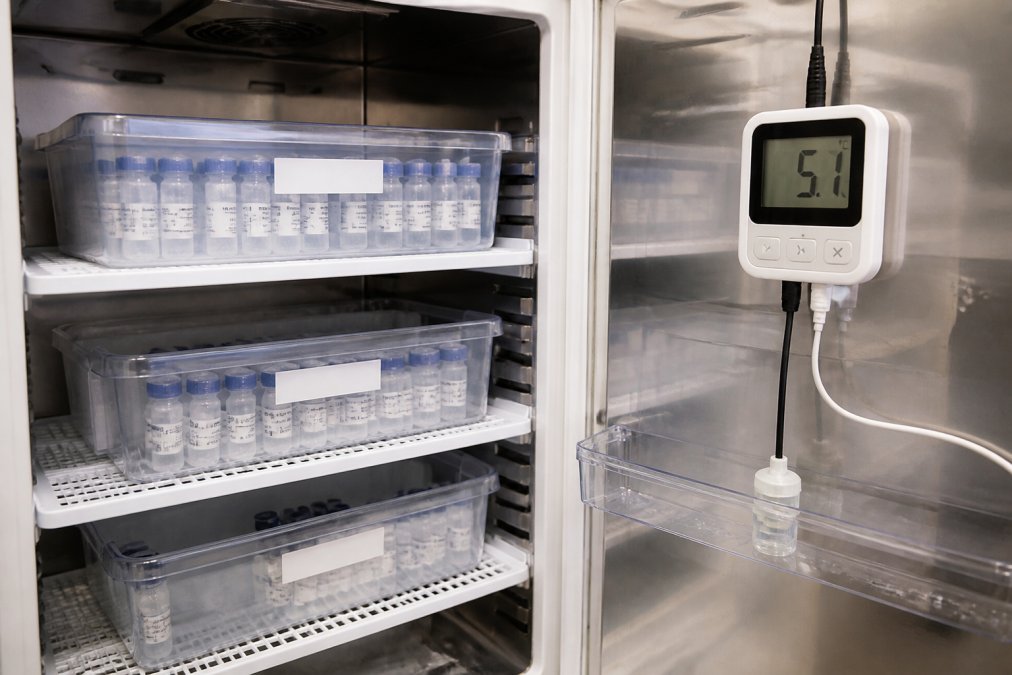
Temperature monitoring during transit is increasingly common. Some suppliers include data loggers in shipments that record temperature throughout delivery. When you receive the package, you can verify that temperatures stayed within acceptable ranges. If the log shows excursions, periods where the package got too warm, you have documentation to support rejecting that batch.
Plan for contingencies in your cold chain. What happens if your freezer fails? Do you have backup storage? What’s your protocol for a delayed shipment during warm weather? These aren’t theoretical concerns. Supply chain disruptions happen, and teams without contingency plans end up losing expensive inventory.
For injury recovery and fitness applications, peptide selection depends on your specific research goals. Different peptides target different physiological pathways. Some support collagen synthesis and tissue repair. Others modulate inflammatory responses. Understanding these distinctions helps you choose peptides that align with your research objectives.
When sourcing premium peptides for injury research, prioritize suppliers who provide detailed product information beyond just purity percentages. You need to know the peptide sequence, the intended research applications, any known stability considerations, and recommended storage conditions. This information helps you evaluate whether a particular peptide is suitable for your work.
The term "premium peptides for injury research" reflects a market segment focused on supporting tissue repair and recovery processes. Suppliers serving this segment typically offer peptides with documented research supporting their use in injury models. However, ensure you’re evaluating the research quality. Marketing claims about "clinically proven" benefits sometimes overstate what the actual research demonstrates.
Cost considerations matter, but they shouldn’t be the primary driver. A peptide at a lower price point might have lower purity, less rigorous testing, or less reliable supply consistency. Over time, these factors create hidden costs through failed experiments, repeated orders, and research delays. Canada BioGenix focuses on consistency and quality specifically to avoid these downstream problems.
Batch consistency is particularly important for injury research applications. If you’re running longitudinal studies comparing outcomes over time, you need confidence that peptides from different batches perform identically. Suppliers who maintain detailed records and use consistent manufacturing processes provide this assurance.
Choosing suppliers is among the most consequential decisions in peptide procurement. A reliable supplier becomes a partner in your research success. An unreliable one introduces constant uncertainty and delays.
Start by evaluating supplier credentials. How long have they been operating? Do they have documented quality management systems? Are they transparent about their manufacturing partners? Suppliers who can clearly explain their supply chain demonstrate professional operations. Those who deflect questions about sourcing or quality control raise legitimate concerns.
Request references from other researchers who’ve worked with the supplier. Ask specific questions: Did shipments arrive on schedule? Were COAs detailed and accurate? How did the supplier handle problems when they occurred? Direct feedback from users reveals patterns that marketing materials won’t show.

Evaluate their quality control procedures. Do they test every batch or only samples? Which analytical methods do they use? Do they maintain stability data showing how their peptides perform over time? Suppliers who invest in comprehensive QC demonstrate commitment to reliability. Those who cut corners on testing typically cut corners elsewhere too.
Establish clear communication channels. You should know who to contact with questions, how quickly they respond, and what their escalation process is for problems. A supplier who’s hard to reach when everything’s fine will be impossible to reach when issues arise.
Build redundancy into your supplier relationships. Relying on a single source creates vulnerability. If that supplier experiences manufacturing problems, you’re stuck. Developing relationships with multiple qualified suppliers, even if you primarily use one, provides insurance against supply chain disruptions.
Traceability means being able to track a peptide from its synthesis through to your research application. Every batch should have a unique identifier linking it to manufacturing records, quality test results, storage conditions, and shipping history. This creates accountability and enables rapid problem identification if issues arise.
Modern supply chains increasingly use digital systems for traceability. Blockchain-based approaches, while still emerging in peptide supply chains, offer immutable records of batch history. More commonly, suppliers use laboratory information management systems (LIMS) to track batches through manufacturing and testing. These systems generate the COAs and maintain historical records.
Data integrity means ensuring that records haven’t been altered or falsified. This matters because regulatory bodies and research institutions increasingly require verified audit trails. When you purchase from suppliers who maintain compliant data systems, you’re getting assurance that documentation is trustworthy.
Digitalization of COA verification is becoming standard. QR codes on certificates link to digital records that can be verified independently. This prevents the scenario where a supplier provides a fabricated COA on paper. Digital verification creates transparency and deters fraud.
Maintain your own records linking supplier batches to your research outcomes. Document which batch you used in which experiment and what results you achieved. This internal traceability helps you identify if quality variations correlate with outcome variations. Over time, this data becomes invaluable for understanding your peptide performance patterns.
Ready to build a peptide supply chain you can trust? Canada BioGenix provides premium-quality research peptides with carefully selected manufacturing partners, comprehensive COAs, and cold-chain logistics designed to maintain product integrity. Every batch meets strict quality and purity standards, and free shipping on orders over $250 makes scaling your research more economical. Access the consistency and dependable service your research deserves, explore Canada BioGenix’s product catalog and request batch-specific documentation for your next order.
=== FAQ ANSWERS (audit these too, same rules) ===
[1] Q: What documentation should accompany a peptide shipment?
A: Every peptide shipment must include a Certificate of Analysis (COA) that documents purity, identity, and batch-specific testing results. The COA should specify the analytical methods used (HPLC, mass spectrometry, etc.), purity percentage, and any contaminant testing. Additionally, shipping documentation should include batch numbers, storage instructions, and expiration dates. This traceability ensures you can verify quality and track the peptide supply chain from synthesis through delivery.
[2] Q: How does third-party lab testing verify peptide purity?
A: Third-party laboratories use advanced analytical techniques like HPLC (high-performance liquid chromatography) and mass spectrometry to independently measure peptide purity. These methods quantify the percentage of the target peptide versus impurities and degradation products. Independent verification from labs like Janoshik or Kovera Labs provides unbiased confirmation that purity claims are accurate. Dual-laboratory verification adds an extra layer of assurance, reducing the risk of inflated purity claims.
[3] Q: What are the common red flags when vetting a peptide supplier?
A: Red flags include suppliers who cannot provide batch-specific COAs, claim extremely high purity (99%+) without independent verification, offer no cold chain logistics documentation, lack transparency about manufacturing methods, or refuse to disclose their quality control processes. Avoid suppliers with inconsistent batch results, no clear regulatory compliance documentation, or those unwilling to provide references from other researchers. Legitimate suppliers are transparent about their processes and testing.
[4] Q: Why is batch-to-batch consistency critical for research outcomes?
A: Batch-to-batch consistency ensures reproducible research results. Variations in purity, potency, or contaminant levels between batches can invalidate your findings or make it impossible to replicate experiments. Suppliers committed to rigorous quality control maintain tight specifications across batches. This consistency is especially important for peptide therapeutics research and injury recovery applications, where even small variations in peptide quality can affect efficacy and safety outcomes.
[5] Q: How do storage conditions affect peptide stability during transit?
A: Peptides are temperature-sensitive compounds that degrade rapidly when exposed to heat, light, or humidity. Cold chain logistics maintain peptides at optimal temperatures (typically 2-8°C or frozen at -20°C) during transit. Improper storage accelerates degradation, reducing purity and efficacy. Suppliers using insulated packaging, temperature monitoring devices, and expedited shipping protect peptide integrity. Always verify that your supplier uses temperature-controlled storage and can document transit conditions to ensure the peptides arrive in their original state.
A: Every peptide shipment must include a Certificate of Analysis (COA) that documents purity, identity, and batch-specific testing results. The COA should specify the analytical methods used (HPLC, mass spectrometry, etc.), purity percentage, and any contaminant testing. Additionally, shipping documentation should include batch numbers, storage instructions, and expiration dates. This traceability ensures you can verify quality and track the peptide supply chain from synthesis through delivery.
A: Third-party laboratories use advanced analytical techniques like HPLC (high-performance liquid chromatography) and mass spectrometry to independently measure peptide purity. These methods quantify the percentage of the target peptide versus impurities and degradation products. Independent verification from labs like Janoshik or Kovera Labs provides unbiased confirmation that purity claims are accurate. Dual-laboratory verification adds an extra layer of assurance, reducing the risk of inflated purity claims.
A: Red flags include suppliers who cannot provide batch-specific COAs, claim extremely high purity (99%+) without independent verification, offer no cold chain logistics documentation, lack transparency about manufacturing methods, or refuse to disclose their quality control processes. Avoid suppliers with inconsistent batch results, no clear regulatory compliance documentation, or those unwilling to provide references from other researchers. Legitimate suppliers are transparent about their processes and testing.
A: Batch-to-batch consistency ensures reproducible research results. Variations in purity, potency, or contaminant levels between batches can invalidate your findings or make it impossible to replicate experiments. Suppliers committed to rigorous quality control maintain tight specifications across batches. This consistency is especially important for peptide therapeutics research and injury recovery applications, where even small variations in peptide quality can affect efficacy and safety outcomes.
A: Peptides are temperature-sensitive compounds that degrade rapidly when exposed to heat, light, or humidity. Cold chain logistics maintain peptides at optimal temperatures (typically 2-8°C or frozen at -20°C) during transit. Improper storage accelerates degradation, reducing purity and efficacy. Suppliers using insulated packaging, temperature monitoring devices, and expedited shipping protect peptide integrity. Always verify that your supplier uses temperature-controlled storage and can document transit conditions to ensure the peptides arrive in their original state.
This article was written using GrandRanker