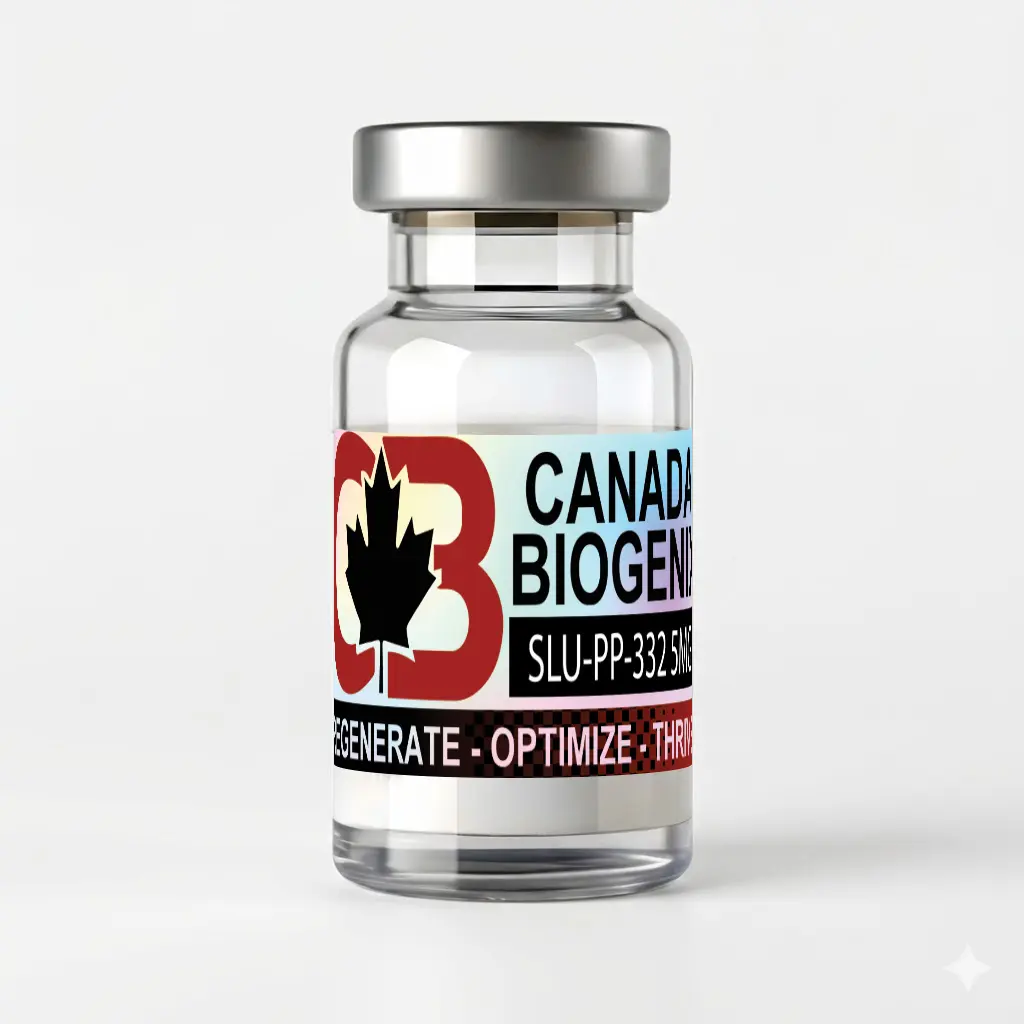
SLU-PP-332 5 mg is a synthetic pan-ERR agonist attracting research interest for its potential influence on mitochondrial activity, oxidative metabolism, fatty-acid utilization, energy expenditure and exercise endurance.
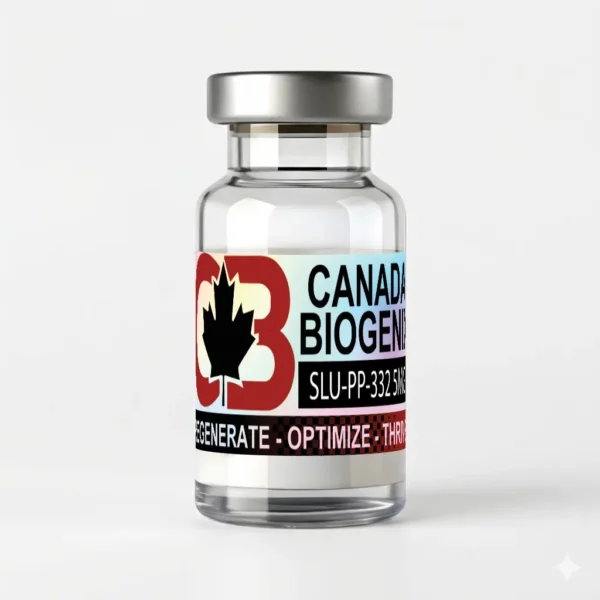
SLU-PP-332 is an experimental small molecule developed as an agonist of all three estrogen-related receptors: ERRα, ERRβ and ERRγ. It is strongest at ERRα, a nuclear receptor closely involved in mitochondrial biogenesis, cellular respiration, fatty-acid oxidation and the transcriptional response to aerobic exercise.
Despite sometimes being described online as a peptide, SLU-PP-332 is not a peptide. It is a synthetic non-peptide research compound. The “SLU” name reflects its development at Saint Louis University.
ERRs are also not the same as classical estrogen receptors. They are called estrogen-related receptors because of structural similarity, but they are orphan nuclear receptors that regulate energy metabolism rather than receptors directly activated by estrogen.
Preclinical research found activation of aerobic-exercise programs, increased oxidative muscle fibres and substantially greater running endurance.
Obesity models reported increased fatty-acid oxidation and energy expenditure alongside reduced fat accumulation and improved metabolic markers.
Studies in muscle, kidney and aging models suggest that coordinated ERR activation may improve mitochondrial function and cellular stress responses.
| Research action | Observed biological response | Why it matters |
|---|---|---|
| Pan-ERR activation | Stimulates ERRα, ERRβ and ERRγ, with the greatest potency at ERRα. | Coordinates multiple energy-metabolism pathways through one research compound. |
| Mitochondrial transcription | Increases expression of genes associated with respiration, oxidative metabolism and mitochondrial adaptation. | Provides a molecular route to stronger cellular energy production. |
| Oxidative muscle remodelling | Promotes a greater proportion of fatigue-resistant type IIa oxidative fibres in mice. | Supports endurance and more efficient use of lipid fuel. |
| Fatty-acid oxidation | Raises oxidation of fatty acids and whole-body energy expenditure in metabolic-disease models. | Supports investigation of fat accumulation, glucose handling and metabolic flexibility. |
| Compound class | Synthetic non-peptide small molecule and pan-ERR agonist |
| Molecular formula | C18H14N2O2 |
| Molecular weight | 290.32 g/mol |
| CAS number | 303760-60-3 |
| Reported receptor potency | ERRα EC50 98 nM; ERRβ EC50 230 nM; ERRγ EC50 430 nM |
| Physical format | Hydrophobic raw powder in vial; not lyophilized |
| Research model | Encouraging finding | Evidence level | Research significance |
|---|---|---|---|
| Exercise-capacity study | Treated mice ran approximately 70% longer and 45% farther, with more type IIa oxidative muscle fibres. | Mouse research | Strong evidence that ERR agonism can reproduce part of an aerobic-training transcriptional program. |
| Diet-induced obesity study | Obese mice lost about 12% of body weight and accumulated roughly ten times less fat over 28 days, without a measured change in food intake or activity. | Mouse research | Highlights energy expenditure and fat oxidation rather than appetite suppression as the central mechanism. |
| Glucose and insulin markers | Metabolic-syndrome models showed improved glucose tolerance and insulin sensitivity. | Mouse research | Supports study of metabolic flexibility alongside changes in adiposity. |
| Aging kidney model | ERR agonism improved mitochondrial function and reduced inflammatory features in aging mouse kidneys. | Mouse research | Extends interest beyond skeletal muscle into organ-level mitochondrial aging. |
| Aging and inactive muscle cells | Cellular research reported better mitochondrial markers, lower oxidative stress and improved myotube formation. | Human-cell laboratory research | Adds a promising mechanistic basis for healthy-muscle-aging research. |
Studying oxidative muscle-fibre programming, aerobic capacity, cellular respiration and fatigue resistance.
Exploring energy expenditure, lipid oxidation, glucose handling, insulin sensitivity and reduced fat accumulation.
Investigating coordinated transcription of mitochondrial, respiratory and oxidative-metabolism pathways.
Examining muscle quality, cellular resilience, oxidative stress and age-related mitochondrial decline.
An exercise mimetic activates selected molecular pathways that normally respond to physical activity. In the case of SLU-PP-332, the strongest evidence involves ERR-dependent mitochondrial transcription, oxidative muscle characteristics, fat utilization and endurance in mice.
This makes the compound especially interesting for mechanistic research, including models where physical activity is limited. It does not mean that one molecule reproduces every effect of exercise. Bone loading, balance, motor learning, cardiovascular conditioning and many neurological effects still arise from the physical act of exercise itself.
| Research product | Primary pathway | Research emphasis |
|---|---|---|
| SLU-PP-332 5 mg | ERRα, ERRβ and ERRγ agonism | Exercise-like transcription, mitochondrial respiration, endurance and fat oxidation |
| MOTS-C 10 mg | Mitochondrial peptide and AMPK-related signalling | Metabolic flexibility, glucose handling and cellular stress adaptation |
| SS-31 10 mg | Mitochondrial cardiolipin interaction | Mitochondrial efficiency, redox balance and cellular resilience |
| AOD-9604 5 mg | Modified growth-hormone fragment | Adipose metabolism, lipolysis and fat-mass research |
The 5 mg designation describes the total quantity of SLU-PP-332 supplied in the vial. It is not a dose, cycle length or administration instruction.
This product is supplied as a hydrophobic raw powder and is not lyophilized. It should not be treated like a water-soluble peptide vial and is not expected to dissolve in bacteriostatic water. Published laboratory work commonly prepares SLU-PP-332 stock solutions in compatible organic-solvent systems such as DMSO.
Solvent selection, concentration, assay compatibility, storage and stability must be validated for the specific laboratory system. This page does not provide a reconstitution method or human administration protocol.
The findings surrounding SLU-PP-332 are unusually consistent across exercise, obesity, mitochondrial and aging models. Together, they support ERR agonism as a promising strategy for studying metabolic flexibility and exercise-responsive biology.
However, the major efficacy findings remain preclinical. Published human trials have not established safety, pharmacokinetics, tolerability or beneficial outcomes. The original compound also has limited drug-like properties and lacks useful oral bioavailability, which has encouraged development of newer analogues such as SLU-PP-915.
These limitations do not reduce the value of SLU-PP-332 as a benchmark chemical probe. They define its best-supported role: a well-characterized research tool for testing how coordinated ERR activation influences mitochondrial and metabolic adaptation.
SLU-PP-332 5 mg is supplied for qualified laboratory research and analytical applications. It is not represented as an approved therapeutic product, and this page does not provide medical advice, a treatment recommendation or a human administration protocol.