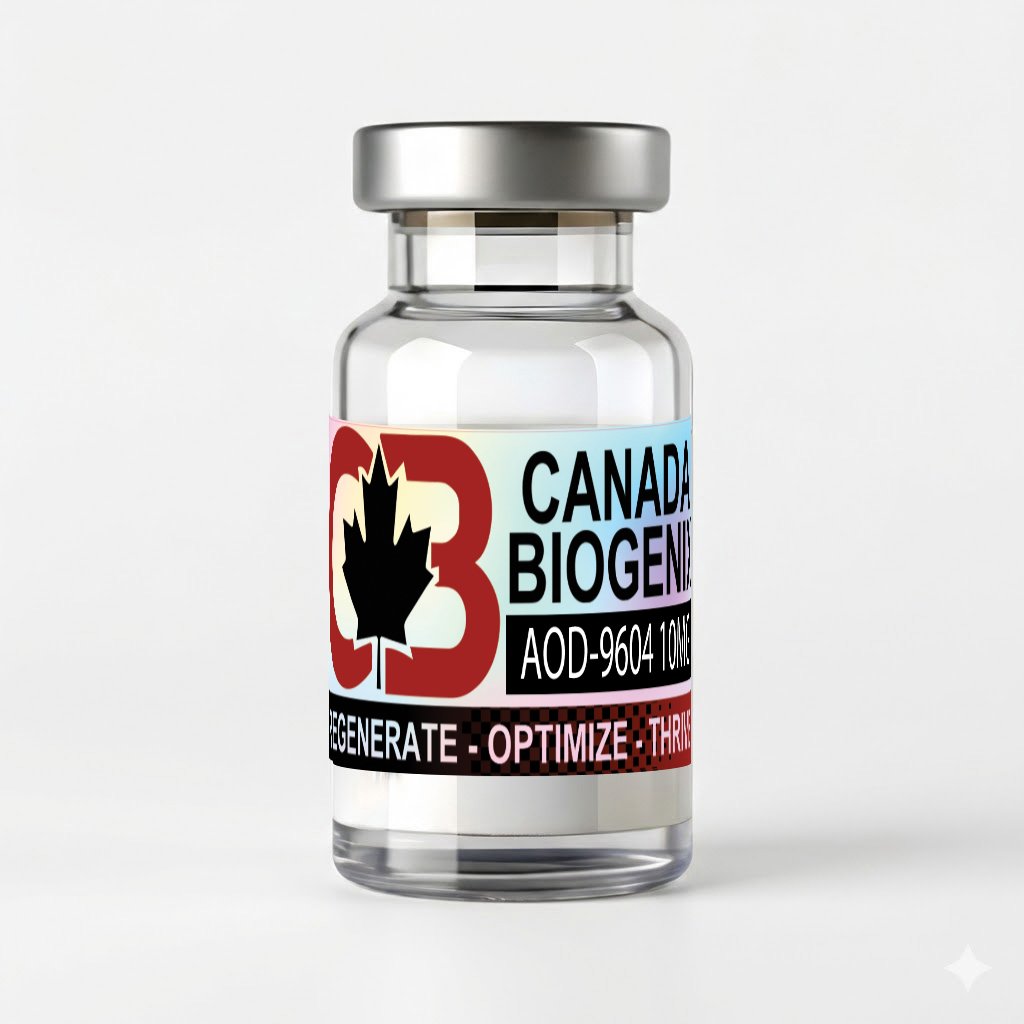
AOD-9604 10 mg is a modified human growth hormone fragment attracting research interest for its potential influence on fat metabolism, lipolytic signalling and emerging cartilage-repair pathways.
AOD-9604 is a synthetic peptide based on the C-terminal region of human growth hormone. It contains the hGH 177–191 sequence with an additional tyrosine added for stability. It is also commonly described as a modified hGH fragment 176–191.
Researchers developed this fragment to explore the fat-metabolism activity associated with growth hormone while separating it from many of the growth-promoting effects of the complete hormone.
Preclinical findings suggest that AOD-9604 may influence two related metabolic processes:
Animal studies produced encouraging findings involving fat oxidation and reduced body-weight gain. Additionally, research suggests that beta-3 adrenergic receptor signalling may contribute to these effects.
However, the precise human mechanism remains under study. AOD-9604 is not believed to work primarily through appetite suppression, unlike compounds that directly target appetite and satiety pathways.
Early animal models showed positive changes in fat oxidation and body-weight gain. These results helped establish AOD-9604 as a peptide of interest in metabolic research.
An earlier 12-week study reported an average loss of approximately 2.6 kg with a 1 mg oral dose, compared with approximately 0.8 kg for placebo. Therefore, the early signal appeared encouraging.
In contrast, a later and larger 24-week study did not find a statistically significant advantage over placebo. This mixed result means AOD-9604 remains an experimental metabolic compound rather than an established weight-management treatment.
Unlike full-length growth hormone, AOD-9604 did not stimulate IGF-1 production in the experimental systems examined. Animal findings also suggested that its metabolic activity could occur without the same glucose-related effects observed with complete hGH.
A rabbit osteoarthritis model produced promising cartilage-regeneration findings after intra-articular administration. Furthermore, combining AOD-9604 with hyaluronic acid produced stronger results than hyaluronic acid alone in that model. Human joint-repair trials are still required.
Subcutaneous use of AOD-9604 is widely discussed in experimental settings. Common practitioner protocols frequently reference approximately 250–500 mcg per administration, often using a once-daily schedule.
Published human dose-finding research primarily examined oral doses of 0.25 mg, 0.5 mg and 1 mg daily. Earlier trials also examined higher oral doses. Results varied between studies.
Therefore, administration route matters when reviewing dose information. Oral, intravenous, intra-articular and subcutaneous quantities cannot be treated as interchangeable. The 10 mg vial size represents total research quantity and not an individual dose.
| Research Area | Promising Finding | Current Evidence |
|---|---|---|
| Fat metabolism | Lipolytic and anti-lipogenic activity | Strongest in laboratory and animal models |
| Body weight | Encouraging signal in an earlier trial | Not confirmed in the later large trial |
| IGF-1 signalling | No stimulation in studied systems | Preclinical and early human safety research |
| Cartilage | Improved cartilage regeneration scores | Rabbit osteoarthritis model |
| Subcutaneous dosing | Growing experimental interest | No validated human protocol |
Researchers comparing metabolic pathways can also explore
5-Amino-1MQ
and
Retatrutide 20 mg.
Laboratory supplies are available through the
Canada Biogenix research-supplies section.