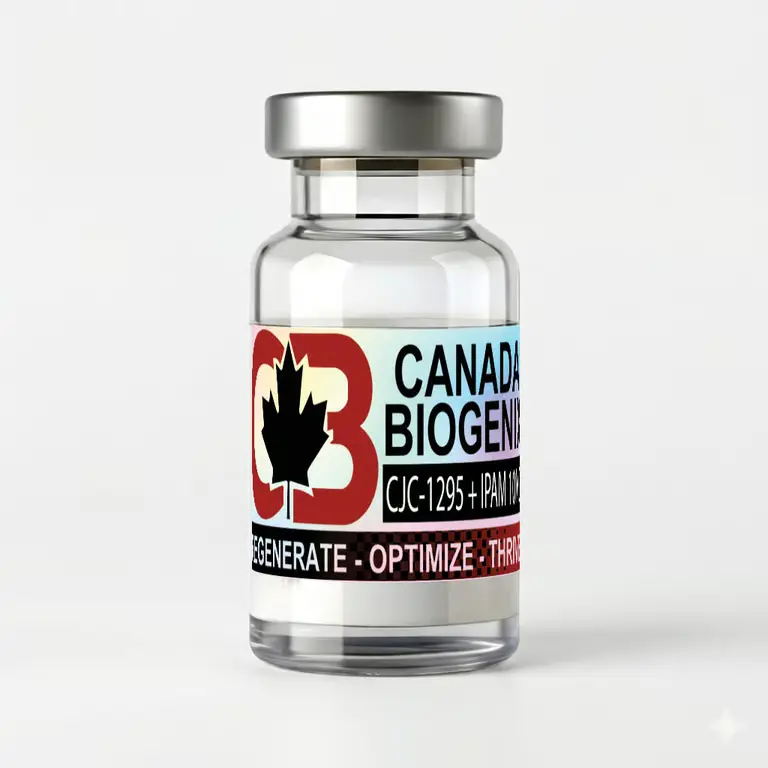
CJC-1295 + Ipamorelin 10 mg combines two complementary growth-hormone signalling strategies. The blend is attracting research interest for its potential to support a more coordinated, pulse-focused GH response.
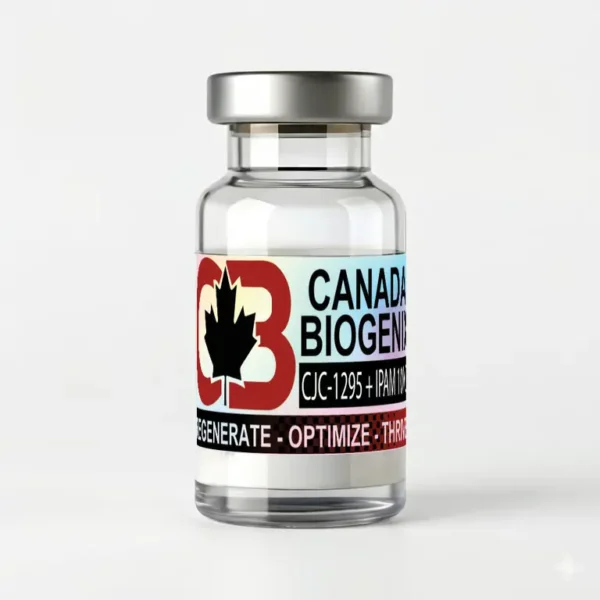
CJC-1295 + Ipamorelin is a research blend designed around two separate pituitary signalling routes. CJC-1295 is a synthetic analogue of growth hormone-releasing hormone, or GHRH. Ipamorelin is a five-amino-acid growth hormone secretagogue that activates the ghrelin receptor, also called GHSR-1a.
Because the two compounds approach GH release through different receptors, researchers have proposed that they may produce a complementary signal. This makes the blend especially interesting for studies of GH pulses, endocrine feedback and downstream IGF-1 biology. However, a plausible mechanism is not the same as a proven clinical benefit.
CJC-1295 is intended to engage the GHRH receptor. This pathway helps prime pituitary somatotroph cells and supports the physiological framework through which GH pulses occur.
Ipamorelin activates GHSR-1a. Early studies describe it as a selective GH secretagogue, which gives researchers a second route for examining pituitary GH release.
Together, the pathways may create a stronger or more coordinated experimental GH signal than either pathway alone. That possibility is promising, but controlled human combination studies are still lacking.
| Component | Primary target | Positive research finding | Important limit |
|---|---|---|---|
| CJC-1295 | GHRH receptor | Human studies of CJC-1295 with DAC found sustained increases in GH and IGF-1 while preserving pulsatile secretion. | Those human results involve the DAC form and cannot be transferred directly to a No-DAC blend. |
| Ipamorelin | GHSR-1a | Preclinical work found potent GH release with greater hormonal selectivity than several earlier secretagogues. Human pharmacology studies also confirmed a GH response. | Available human work does not establish body-composition, sleep or recovery outcomes for this retail blend. |
| Combined blend | Dual receptor model | A 2026 narrative review highlighted encouraging murine findings involving muscle-force measures under glucocorticoid-induced muscle loss. | The finding is animal-level evidence. Indications, dose, frequency and duration remain unresolved. |
The positive scientific interest around CJC-1295 + Ipamorelin centres on GH-axis biology. Current areas of investigation include:
These are research directions, not established treatment outcomes. In particular, current evidence does not prove that the blend improves sleep, recovery, fat loss or muscle growth in humans.
Published research has examined CJC-1295 and Ipamorelin separately using different formulations, routes and experimental designs. However, there is no validated human protocol for this specific 10 mg blend. The evidence does not establish a standard dose, frequency, cycle length or administration schedule.
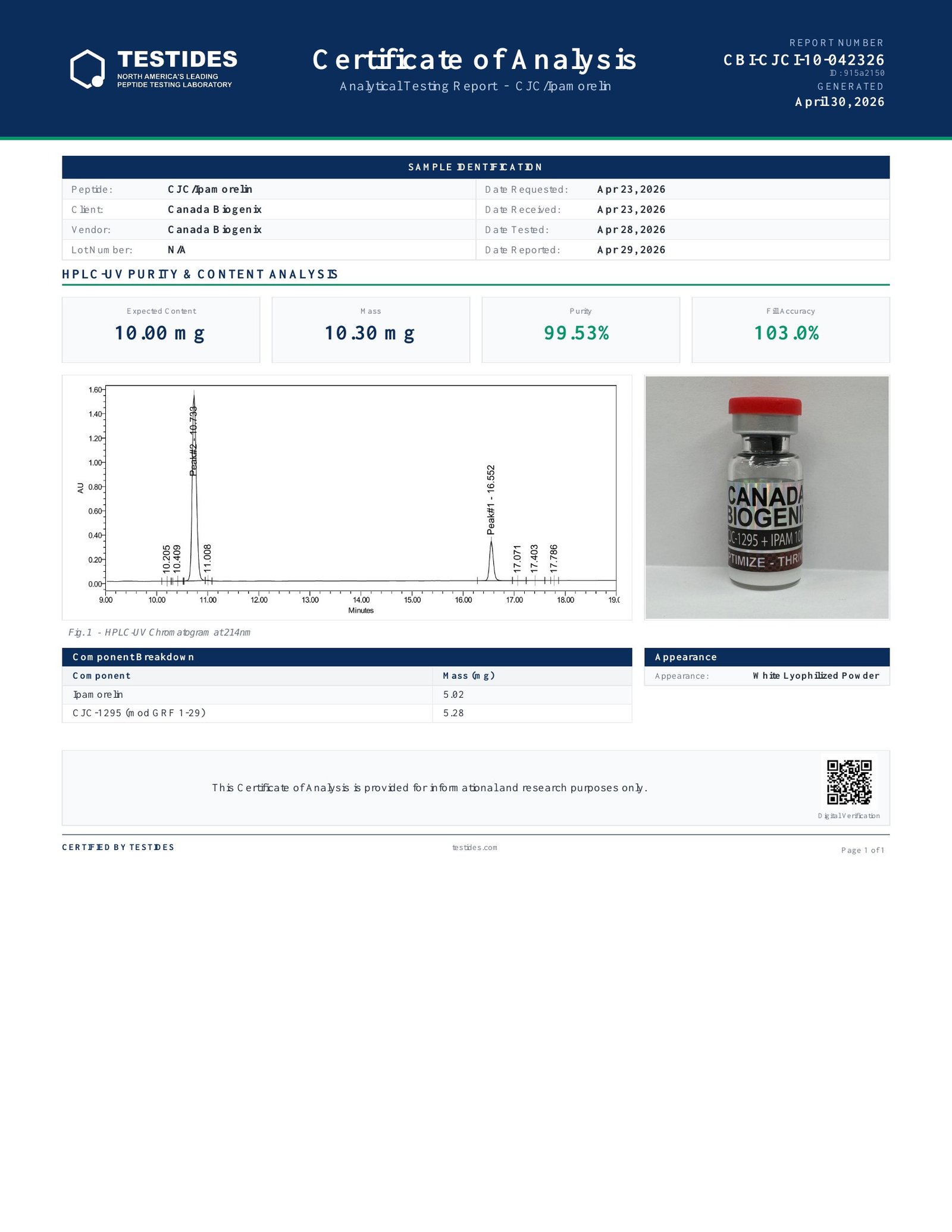
Therefore, the vial quantity should be read as a laboratory product specification rather than a dosing instruction. Researchers should confirm compound identity, component ratio, purity and applicable institutional requirements before designing any study.
Growth-hormone signalling affects several body systems. As a result, possible research concerns include changes in glucose regulation, fluid balance, heart rate, IGF-1 levels and local tissue response. The long-term safety of the combined blend has not been established.
The FDA notes limited clinical data and potential impurity or immunogenicity concerns for compounded CJC-1295 and Ipamorelin. It has also identified serious adverse-event signals associated with CJC-1295 and with intravenous Ipamorelin research. These reports do not define the risk of every formulation or route, but they reinforce the need for caution and proper research oversight.
Health Canada also warns that an online “research use only” label does not make an unauthorized injectable peptide product approved for human use.
| Research product | Main distinction | Best suited to research on |
|---|---|---|
| CJC-1295 10 mg | GHRH-side signalling without a second secretagogue | Short-acting GHRH analogue biology |
| Ipamorelin 10 mg | Selective GHSR agonist without a GHRH analogue | Ghrelin-receptor and GH-secretagogue biology |
| CJC-1295 + Ipamorelin 10 mg | Two complementary receptor pathways in one blend | Coordinated, pulse-focused GH signalling |
| CJC-1295 with DAC 5 mg | Albumin-binding DAC modification and prolonged exposure | Long-acting CJC pharmacology and sustained GH/IGF-1 signalling |
Research-use notice: CJC-1295 + Ipamorelin 10 mg is presented for laboratory research and analytical discussion only. It is not approved by Health Canada to diagnose, treat, cure or prevent disease, and it is not approved for human or animal use. This information is not medical advice or an administration guide.