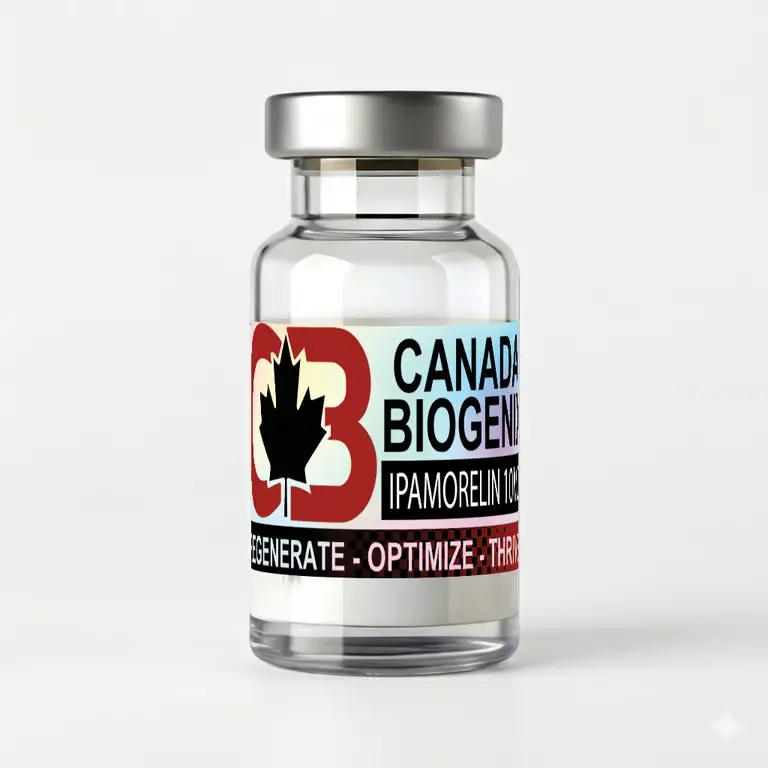
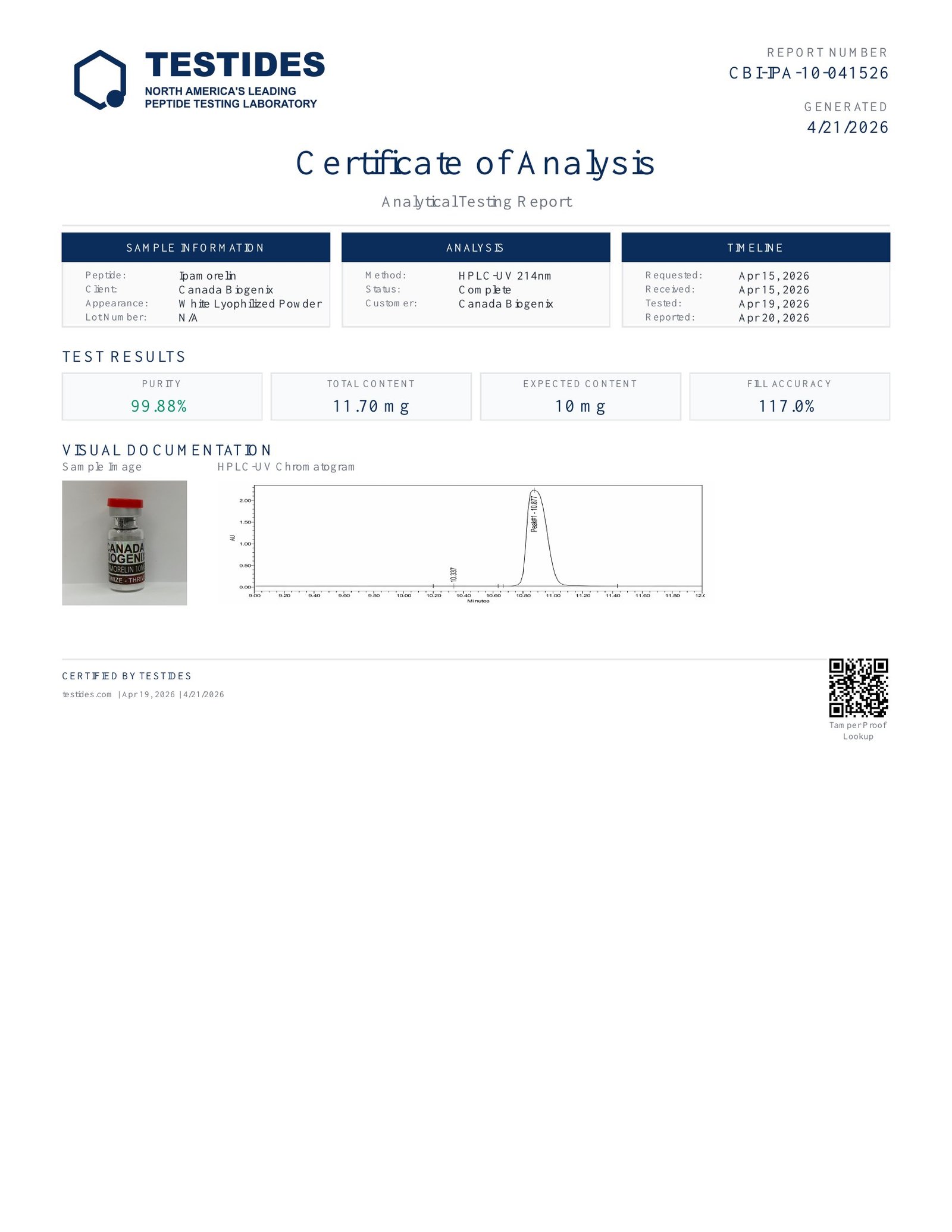
Ipamorelin 10 mg is a synthetic pentapeptide attracting research interest for selective ghrelin-receptor signalling, pulsatile growth hormone release and a narrower endocrine profile than earlier growth hormone-releasing peptides.
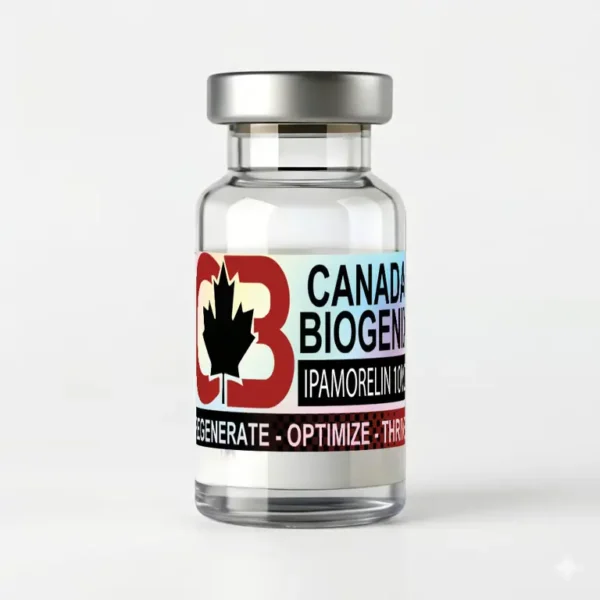
Ipamorelin is a synthetic peptide containing five amino-acid residues. Its sequence is Aib–His–D-2-Nal–D-Phe–Lys-NH2, and it is classified as a growth hormone secretagogue.
It acts as an agonist of growth hormone secretagogue receptor type 1a, or GHSR-1a. This is commonly called the ghrelin receptor. By engaging receptors at the hypothalamus and pituitary, Ipamorelin can trigger the release of stored growth hormone rather than supplying growth hormone directly.
What makes Ipamorelin 10 mg particularly interesting is selectivity. Comparative research found a strong GH signal with less activation of ACTH, cortisol and prolactin pathways than GHRP-2 or GHRP-6.
Human pharmacokinetic and pharmacodynamic research reported dose-related growth hormone responses following experimental Ipamorelin exposure.
Preclinical comparisons found strong GH release without the same ACTH, cortisol and prolactin responses observed with older GHRPs. This cleaner signal improves experimental specificity.
Ipamorelin targets GHSR-1a, while CJC-1295 targets the GHRH receptor. This creates a positive rationale for dual-pathway endocrine research.
Growth hormone is normally released in pulses rather than at a constant rate. Ipamorelin acts as a pulse-triggering secretagogue through GHSR-1a. This differs from GHRH analogues, which stimulate the GHRH receptor. Activating distinct receptor systems provides a mechanistic basis for combination research, although product-specific synergy and outcome benefits require direct testing.
| Research area | Encouraging observation | Evidence level | Important context |
|---|---|---|---|
| Growth hormone release | Human volunteer research demonstrated dose-related GH responses that could be described with a pharmacokinetic-pharmacodynamic model. | Controlled human pharmacology study | A hormonal response does not establish muscle, fat-loss, sleep or recovery outcomes. |
| Endocrine selectivity | Comparative studies reported GH release with less ACTH, cortisol and prolactin stimulation than GHRP-2 or GHRP-6. | Preclinical comparative research | “More selective” does not mean side-effect-free or completely GH-specific in every setting. |
| Bone-growth signalling | An animal study reported increased longitudinal bone growth and GH-related markers. | Rat study | The result cannot be translated into human bone or height claims. |
| Gastrointestinal motility | Ipamorelin has been studied as a ghrelin-receptor agonist in postoperative-ileus models and a human proof-of-concept trial. | Animal and phase-2 human research | This separate research indication does not establish general digestive benefits. |
| Body composition, sleep and recovery | GH and IGF-1 biology creates a plausible rationale for examining these areas. | Mechanistic and indirect evidence | Direct controlled trials have not established these outcomes for Ipamorelin 10 mg. |
The positive research interest surrounding Ipamorelin 10 mg spans several connected areas:
These findings make Ipamorelin an especially useful compound for selective GH-axis research. They do not establish anti-aging, muscle-building, fat-loss, sleep, injury-recovery or performance benefits.
Older growth hormone-releasing peptides can stimulate several pituitary and adrenal pathways at the same time. In the landmark comparative study, GHRP-2 and GHRP-6 increased ACTH and cortisol alongside GH, while Ipamorelin produced a more focused GH response in the tested models.
This selectivity is valuable experimentally because it reduces hormonal variables that may complicate interpretation. It also helps explain why Ipamorelin is often compared favourably with GHRP-6 when appetite or broader endocrine activation is not the desired research focus.
However, the strongest selectivity data are preclinical. Human pharmacology confirms GH release, but larger controlled studies are still needed to define cortisol, prolactin, appetite, glucose and long-term responses across diverse populations.
Published Ipamorelin research includes animal experiments, human pharmacology studies and gastrointestinal-motility trials. These investigations used different routes, quantities, infusion or exposure patterns and outcome measures.
No standardized human dose, cycle length, injection schedule or product-specific administration protocol has been established. The 10 mg designation describes the total laboratory quantity in the vial and should not be interpreted as a dose or administration instruction.
Although Ipamorelin has a comparatively selective research profile, a complete long-term safety profile has not been established. Human exposure data exist, but they do not validate prolonged use for body composition, performance, recovery or healthy aging.
GH and downstream IGF-1 signalling can influence glucose regulation, fluid balance, connective tissue and cellular growth. These pathways are biologically important and context dependent. Responses may also vary with age, nutritional state, endocrine function and experimental duration.
Overall, the evidence strongly supports Ipamorelin as a selective GH-secretagogue research compound. More controlled human research is needed before conclusions can be drawn about long-term safety or downstream health and performance outcomes.
| Research product | Primary pathway | Main distinction |
|---|---|---|
| Ipamorelin 10 mg | GHSR-1a / ghrelin receptor | Selective GH release with reduced hormonal spillover in comparative models |
| GHRP-6 10 mg | GHSR-1a / ghrelin receptor | More prominent appetite signalling and broader endocrine activity |
| CJC-1295 No DAC | GHRH receptor | Shorter-acting GHRH-pathway research analogue |
| CJC-1295 + Ipamorelin | GHRH receptor + GHSR-1a | Dual-pathway blend for complementary secretagogue research |
| CJC-1295 with DAC | Long-acting GHRH receptor signalling | Extended experimental exposure rather than a short pulse trigger |
These products act through related but distinct pathways. Combining research compounds does not guarantee additive or synergistic outcomes, and validated human stacking protocols have not been established.
Research-use notice: Ipamorelin 10 mg is presented for laboratory research and analytical discussion only. It is not intended to diagnose, treat, cure or prevent disease, or for human or animal use. This information is not medical advice or an administration guide.