
Last Updated: September 3, 2026
Testing accuracy depends entirely on how well you’ve collected, stored, and shipped your material. Proper preparation cuts weeks off your turnaround time.
Here’s what you need in place:
At Canada BioGenix, we emphasize that sample integrity directly impacts how long does professional peptide testing take. A degraded sample requires additional validation steps, adding days or even weeks to your results.
Typical turnaround time ranges from 5 to 15 business days for standard analytical purity testing, though clinical diagnostic testing can extend significantly longer (the FDA).
Standard analytical testing typically completes in 7 to 10 business days from sample receipt, assuming your material arrives in good condition with proper documentation and the lab isn’t at maximum capacity.
Expedited testing can compress the timeline to 3 to 5 business days, but only when the lab has available instrument time and your sample requires straightforward analysis. Complex samples or those requiring method development cannot be rushed without compromising accuracy.
Clinical diagnostic testing operates on a different timeline entirely. Expect 10 to 21 business days. These tests require additional regulatory compliance checks, quality assurance steps, and often involve external validation through third-party accreditation bodies.
The distinction matters because analytical purity testing answers: “Is this compound what we think it is, and how pure is it?” Clinical testing answers: “Is this safe and effective for human use?” The second question requires significantly more documentation and verification.
Sample volume is the first constraint. Larger samples require more time for incubation, reagent preparation, and chromatographic separation. However, extremely small samples (under 1 milligram) sometimes require additional handling steps that slow the process.
Shipping time is often invisible yet represents a major variable. A sample shipped Monday afternoon might not arrive until Thursday morning, three days consumed before analysis begins. Overnight shipping compresses the total duration significantly.
Lab capacity fluctuates seasonally. During peak research periods (September through November, January through March), many laboratories operate at 80-90% capacity. During slower periods, your material moves through faster, representing a 2 to 5 day variable.
Method validation is required when your peptide is unusual or when the lab hasn’t tested that specific compound before. This adds 3 to 7 days to your timeline. Always ask whether the lab has tested your specific peptide previously.
Sample integrity issues discovered upon arrival extend timelines unpredictably. If your sample arrived partially degraded or contaminated, the lab must request a new sample. Proper frozen storage and rapid shipping prevent this entirely.
Sample volume directly impacts processing speed. A 10-milligram peptide sample processes faster than a 100-milligram batch because it requires less reagent preparation and shorter incubation periods. Sample integrity determines whether the lab can process your material at all.
Sample contamination forces the lab to repeat analysis or request a fresh sample, adding 5 to 10 business days. Contamination sources include improper storage, humidity exposure, or cross-contamination during collection.
Frozen storage conditions matter more than most researchers realize. Peptides degrade at room temperature and even in standard refrigeration (4°C). Maintaining -20°C or colder preserves sample integrity and prevents the need for repeat testing.
Shipping represents 20-40% of your total timeline when you include transit time plus receiving delays. A sample shipped Monday afternoon arrives Thursday morning, three days consumed before the lab opens your package.
Cold chain integrity during shipping is non-negotiable. Standard overnight shipping with ice packs maintains -15°C to -20°C during transit. A sample that arrives partially degraded requires re-testing, resetting your entire timeline.
Storage conditions at the receiving lab also matter. Professional facilities maintain -20°C or -80°C freezers specifically for sample preservation. Verify the lab’s storage protocol before submitting and ask whether they maintain dedicated ultra-low freezers.
Lab accreditation status directly impacts turnaround time and result reliability. An accredited facility follows strict standard operating procedures, meaning your sample processes predictably.
Accreditation bodies in Canada verify labs meet quality control standards. Labs holding ISO 17025 accreditation have demonstrated their analytical methods are validated and their equipment is properly calibrated. This verification prevents costly delays later when results are questioned.
Lab capacity determines queue time. A small lab with one HPLC instrument processes samples sequentially. A large facility with multiple instruments can run parallel analyses. During peak seasons, even well-equipped labs build backlogs.
HPLC (High-Performance Liquid Chromatography) is the analytical standard for peptide purity verification.
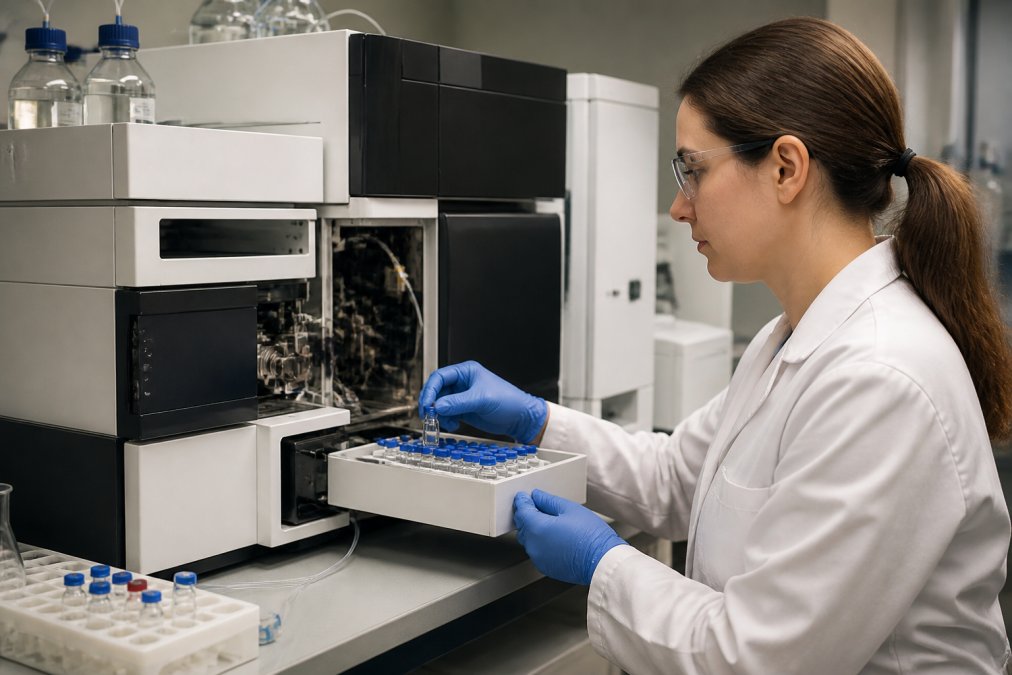
HPLC separates peptide compounds based on their chemical properties. The instrument forces your sample through a column packed with specialized material. Different peptides interact with the column material differently, exiting at different times. This separation creates a chromatogram showing what compounds are present and in what quantities. The process itself takes 15 to 45 minutes per sample.
Before HPLC analysis begins, the lab must prepare reagents, calibrate the instrument, and validate the method. Reagent preparation alone takes 2 to 4 hours. If the lab hasn’t tested your specific peptide before, method validation adds 1 to 2 days.
Sample queuing at the instrument is where most delay occurs. A busy lab might have 10 to 20 samples waiting for HPLC analysis, adding 2 to 5 business days depending on lab capacity.
After HPLC analysis completes, a technician reviews the chromatogram, identifies peaks, calculates purity percentages, and generates the certificate of analysis. This step takes 4 to 8 hours per sample. Quality control review adds another 2 to 4 hours before results are finalized.
The total HPLC turnaround, from sample receipt to final certificate, typically spans 7 to 12 business days for standard analysis. Rush processing compresses this to 4 to 6 business days by prioritizing your sample at the instrument.
A certificate of analysis (COA) is your proof of quality. Understanding what must be included protects you from labs cutting corners.
A complete certificate of analysis contains specific data points that verify your peptide’s identity and purity.
The certificate must state the peptide’s molecular weight and sequence (if applicable). This confirms the lab tested the correct compound. Purity percentage is the central claim, expressed as a range (e.g., 96.2% ± 0.5%) rather than a single number. Detection limits must be specified, telling you the smallest amount of impurity the lab could detect. Lower detection limits mean more thorough testing.
Analytical method should be documented: column type, mobile phase composition, detection wavelength, and flow rate. Date of analysis and sample receipt date establish the timeline. Lot number or batch identifier links the COA to your specific sample. Technician signature and lab director approval confirm the results were reviewed and authorized.
ISO 17025 accreditation is the international standard for testing laboratories (iso.org). A lab holding this accreditation has demonstrated that their analytical methods are validated and their equipment is properly calibrated. Always ask for proof of accreditation before submitting samples.
Third-party validation strengthens your confidence further. Some labs submit their own results to external auditors who verify accuracy. If you’re using peptides for research that will be published or submitted for regulatory approval, third-party validation is essential.
Look for labs that participate in proficiency testing programs. These programs send reference samples to multiple labs simultaneously. Labs participating in these programs demonstrate confidence in their methodology.
Canada BioGenix works with accredited laboratories that maintain these standards. We verify lab credentials before recommending them to our research community.
Your certificate of analysis contains technical data that requires interpretation.
A COA stating “97.5% purity” means 97.5% of your sample is the target peptide and 2.5% is other compounds. But purity percentages can be misleading if detection limits aren’t specified. If the lab’s detection limit is 3%, they cannot reliably report impurities below that threshold. Always check the detection limit before accepting the purity claim.
Higher purity claims require lower detection limits. A lab claiming 99% purity should have detection limits below 0.5%.
Water content and residual solvents are separate from peptide purity. A COA might report “97.5% peptide purity” but also note “contains 2.3% residual water.” This is normal for most research applications.
Qualitative testing answers: “What is this compound?” It identifies which peptide you have and detects major impurities. Quantitative testing answers: “How much of each compound is present?” It measures exact percentages.
Most research applications require quantitative results because you need to know exact purity levels. If your COA includes only qualitative results, ask the lab for quantitative analysis before accepting the report.
Analytical purity testing answers: “How pure is this compound?” The lab measures what percentage of your sample is the target peptide versus impurities. Turnaround time is 7 to 12 business days. Cost is moderate.
Clinical diagnostic testing answers: “Is this compound safe for human use? Does it perform as claimed?” This requires toxicology screening, sterility testing, endotoxin testing, and often animal studies. Turnaround time extends to 10 to 21 business days or longer. Cost is significantly higher.
The regulatory framework differs too. Analytical purity testing follows general laboratory standards. Clinical diagnostic testing must comply with pharmaceutical regulations and often requires approval from health authorities. In Canada, clinical peptide products fall under Health Canada’s jurisdiction.
Most research peptides are analytical-grade, not clinical-grade. If you’re considering any human application, clarify with your lab whether clinical-grade testing is required.
Shipping without proper cold chain management is the number-one mistake. Always use insulated shipping containers with sufficient ice packs to maintain -15°C or colder.
Submitting insufficient sample volume forces the lab to request more material. Ask the lab for minimum sample requirements before shipping. Submitting 5 to 10 milligrams ensures the lab has enough material for analysis plus a backup sample.
Failing to document storage conditions creates disputes later if results are questioned. Record the date your sample was prepared, storage temperature, and storage duration before shipment.
Choosing labs based on price alone is false economy. Verify accreditation, check customer reviews, and confirm they’ve tested similar peptides before.
Misinterpreting purity percentages leads to incorrect conclusions about sample quality. Clarify your purity requirements with the lab upfront.
Not requesting quantitative analysis when you need it. If your research requires knowing exact impurity percentages, don’t accept qualitative-only results.
Ignoring detection limits is another common oversight. A lab reporting 98% purity with a 2% detection limit is hiding impurities they cannot measure.
Peptide testing timelines depend on multiple variables: sample preparation, shipping logistics, lab capacity, and analytical complexity. The fastest results come from proper sample handling, choosing an accredited laboratory, and understanding exactly what testing you need before submitting material.
When you’re ready to verify peptide quality, Canada BioGenix recommends working with laboratories that maintain ISO 17025 accreditation and provide detailed certificates of analysis with quantitative purity data. Our team has vetted multiple accredited facilities across Canada and can guide you toward the right choice for your research needs. Get started with Canada BioGenix and connect with verified testing partners who deliver reliable results on schedule.
A: Professional peptide testing usually takes 5-14 business days from sample submission to final results. HPLC analysis for purity verification typically requires 3-7 days of lab processing, but shipping time before and after testing can add 4-7 days depending on your location and the lab’s processing queue. Expedited testing may be available from some facilities, though this often incurs additional fees. Always confirm turnaround estimates with your lab before submitting samples.
A: Sample volume, lab capacity, and shipping logistics are the primary factors. Larger batches or complex analyses requiring mass spectrometry take longer than simple purity verification. Shipping time is often underestimated, samples sent via standard courier typically add 3-5 days each direction. Lab accreditation and standard operating procedures also matter; accredited facilities follow rigorous quality control protocols that take time. Sample integrity during transit can cause delays if contamination is detected, requiring resampling.
A: A complete COA must list the peptide’s molecular weight, purity percentage (typically determined by HPLC analysis), batch number, testing date, and the analytical methods used. It should include detection limits, reagent information, and the lab’s accreditation status or certifications. The COA must identify who performed the testing and include raw chromatographic data or a reference to it. Third-party verification is critical, the lab should be independent from the supplier to ensure unbiased results and meet quality control standards.
A: Check that the testing lab is accredited by a recognized body and operates under documented standard operating procedures. Request raw chromatographic data or access to the lab’s analytical records, not just a summary report. Verify the lab’s independence from the peptide supplier, third-party testing carries more credibility. Cross-reference the batch number and testing date on the COA with your order records. Be cautious of COAs that lack specific detection limits, method validation details, or the lab’s contact information, as these are red flags for unverified claims.
This article was written using GrandRanker