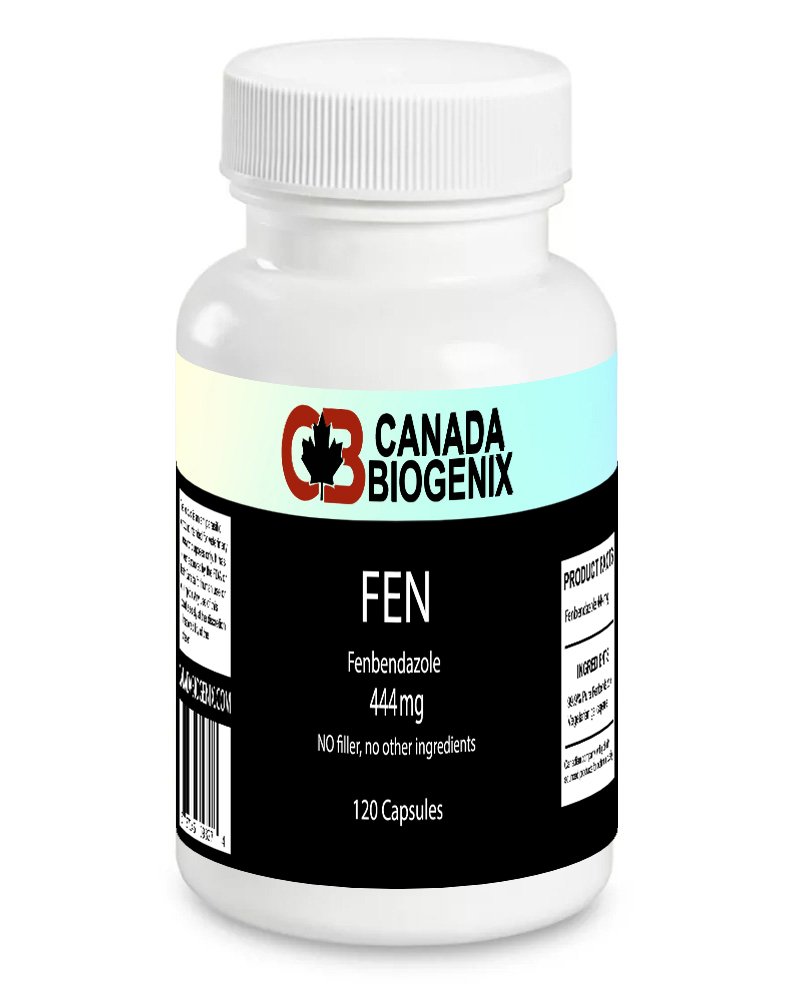
Fenbendazole 444 mg is a benzimidazole compound best known for established veterinary antiparasitic activity. It is also attracting drug-repurposing research for its potential influence on microtubules, cellular energy, cell-cycle control and programmed cell death in preclinical cancer models.
Fenbendazole is a small-molecule benzimidazole carbamate—not a peptide. It has a long-established place in veterinary medicine as a broad-spectrum anthelmintic used against susceptible gastrointestinal and respiratory parasites in specific animal species.
Its best-characterized antiparasitic action involves binding parasite β-tubulin and interfering with microtubule formation. This disrupts nutrient uptake, protein transport, enzyme activity and energy metabolism, progressively depleting the parasite’s ability to survive.
The same broad biological themes—microtubule dynamics, glucose use and cell division—have made Fenbendazole 444 mg an intriguing drug-repurposing research candidate in cancer-cell and animal models.
Fenbendazole shows strong affinity for helminth β-tubulin, a structural protein needed to assemble microtubules.
Reduced microtubule formation interferes with intracellular transport, protein secretion and other processes essential to parasite function.
Inhibited glucose uptake and altered enzyme activity reduce available energy, effectively starving susceptible parasites.
Under validated veterinary conditions, these combined effects support control of susceptible nematodes and certain other labelled parasites.
Regulatory records describe fenbendazole as effective against a variety of nematode parasites in approved veterinary applications. Depending on the animal species, product and label, studied targets include selected roundworms, hookworms, lungworms and other gastrointestinal helminths.
Its usefulness comes from a mechanism that targets parasite microtubule biology more strongly than mammalian tubulin under studied conditions. However, susceptibility is not universal. Parasite species, life stage, exposure, formulation and emerging benzimidazole resistance can all affect experimental outcomes.
This makes fenbendazole valuable both as an established veterinary anthelmintic and as a reference compound for studying parasite metabolism, tubulin-binding selectivity and resistance mechanisms.
Rapidly dividing cancer cells depend on precisely controlled microtubules, energy supply and cell-cycle checkpoints. Preclinical studies suggest that fenbendazole may influence several of these systems at once:
A 2018 study characterized fenbendazole as a moderate microtubule-destabilizing agent in cancer models, supporting investigation of mitotic stress and disrupted cell division.
Laboratory findings have reported altered p53 or p21 signalling, reduced cyclin expression and cell-cycle arrest. The exact response varies by cell type and model.
Cancer-cell studies have observed apoptosis, while resistant colorectal-cell research also reported ferroptosis-related activity.
Some models show reduced glucose uptake or altered metabolic signalling. Other models do not, indicating that this proposed mechanism is context dependent.
Preclinical work in 5-fluorouracil-resistant colorectal cancer cells creates a positive rationale for studying fenbendazole in treatment-resistance biology.
Poor water solubility and limited absorption have led researchers to explore nanoparticle delivery and other formulations intended to improve experimental exposure.
| Research model | Encouraging observation | Evidence level | Important context |
|---|---|---|---|
| EMT6 tumour research (2013) | Fenbendazole was cytotoxic to EMT6 cells in vitro and was investigated alongside radiation and related compounds. | Cells and mouse tumour model | Intensive regimens did not alter EMT6 tumour growth in mice, showing that cell findings do not always translate in vivo. |
| Multiple-pathway study (2018) | Researchers reported microtubule disruption, p53 activation, altered glucose use and cancer-cell death, with activity in a mouse model. | Cancer cells and animals | Promising preclinical evidence; it does not determine human efficacy, safety or exposure. |
| Resistant colorectal cells (2022) | Activity was reported in 5-fluorouracil-resistant cells through ferroptosis-associated and apoptotic pathways. | In-vitro cell study | Useful for resistance-mechanism research, but not evidence of benefit in patients. |
| Liver cancer cells (2022) | Researchers observed p21 changes, reduced cyclins, cell-cycle arrest and apoptosis in actively growing H4IIE cells. | In-vitro cell study | Glucose and oxidative-stress mechanisms were not reproduced in this model, highlighting biological variability. |
| Ovarian tumour delivery (2023) | Fenbendazole-loaded PLGA nanoparticles reduced tumour weight in cell-line and patient-derived xenograft models. | Cells and animal xenografts | Unformulated oral fenbendazole did not reduce tumours in that study; delivery and bioavailability were decisive. |
| Cervical cancer models (2025) | Recent work reported activity in cervical cancer cells, cancer stem-cell populations and xenograft models. | Cells and animals | This broadens the research base but remains preclinical. |
One of the most useful findings in the fenbendazole literature is that biological activity in a dish does not guarantee adequate exposure in a living system. Fenbendazole has low aqueous solubility, and oral absorption can be variable. Consequently, concentration, vehicle, particle size, metabolism and tumour delivery can strongly influence results.
The 2023 ovarian-cancer study illustrates this clearly: unformulated oral fenbendazole did not reduce tumour growth in its mouse model, while a PLGA nanoparticle formulation produced encouraging tumour-weight findings. This supports continued formulation research—not the assumption that commercial veterinary formulations or untested protocols will reproduce laboratory results.
Supported for specific animal species, parasites, formulations and labelled conditions evaluated by veterinary regulators.
Positive signals support further study of microtubules, metabolism, cell-cycle arrest, cell death and improved delivery systems.
Controlled clinical evidence has not established a safe human cancer dose, treatment benefit, combination protocol or long-term safety profile.
Veterinary approval does not establish safety or efficacy as a human cancer therapy. Human oncology evidence remains insufficient, and published case reports have described liver injury associated with self-directed use. Potential interactions with cancer medicines and other drugs have not been adequately defined.
The research is scientifically interesting and continues to expand. However, fenbendazole should not be presented as a substitute for oncology evaluation, evidence-based cancer treatment or appropriately selected antiparasitic care.
No. Fenbendazole is a small-molecule benzimidazole carbamate. Its inclusion beside peptide research products reflects research interest, not chemical classification.
Fenbendazole disrupts susceptible helminth microtubules and energy metabolism. Its established uses are veterinary and depend on the approved animal species, parasite, formulation and label.
Cancer researchers are interested in reported effects on microtubule dynamics, cell-cycle checkpoints, glucose use and programmed cell death. These overlapping mechanisms create a credible repurposing hypothesis for laboratory investigation.
No. Findings are primarily from cell cultures and animal models. Controlled human clinical evidence has not established cancer-treatment efficacy, a safe dose or a validated treatment schedule.
Outcomes may vary with cancer type, cell genetics, concentration, exposure time, formulation, solubility, route, metabolism and tumour model. Negative or mixed animal findings are particularly important when evaluating whether an in-vitro signal can translate.
It identifies the labelled quantity associated with this product unit. It is not a human treatment recommendation, dose or administration protocol.
No. Visual inspection may identify obvious damage or contamination, but it cannot confirm identity, potency or purity. Those questions require suitable analytical testing and lot documentation.
Review the Canada Biogenix product page for current product details and availability.
Research and evidence notice: Fenbendazole 444 mg is discussed here for scientific and educational purposes. Fenbendazole has established veterinary antiparasitic applications; its oncology investigation remains preclinical. This page does not provide medical advice, a human dosing protocol or support replacing standard cancer or antiparasitic care.