
BPC-157 is a synthetic pentadecapeptide derived from a protein found in human gastric juice, and it has drawn significant attention among Canadians researching tissue repair, injury recovery, and muscle growth. The compound, formally known as Body Protective Compound 157, is studied for its preclinical effects on fibroblast activity, angiogenesis, and tendon healing. Despite its popularity, BPC-157 holds no approved medical use in Canada, and WADA banned it in 2022 as a non-exempt substance in competitive sport. Health Canada classifies it as an unauthorized pharmaceutical ingredient. Canadabiogenix provides this guide to help researchers understand the evidence, the regulations, and the real risks before making any decisions.
Preclinical research on BPC-157 is genuinely compelling. Animal studies have documented accelerated tendon healing, reduced inflammation, and improved gastrointestinal repair. These findings come from well-controlled rodent models and represent a consistent pattern across multiple research groups.
The critical limitation is the gap in human clinical data. No large-scale, peer-reviewed human trials have validated the dosing protocols, safety thresholds, or long-term outcomes that animal studies suggest. Researchers emphasize a translational gap, meaning results in rats do not automatically apply to human physiology.

Pharmacokinetics add another layer of complexity. The BPC-157 half-life in animal models is under 15–30 minutes in serum. That figure sounds alarming to anyone hoping for sustained effects, but it does not tell the full story.
The key insight is the pharmacokinetic-pharmacodynamic disconnect. BPC-157 clears the bloodstream quickly, but it triggers signalling cascades, including nitric oxide pathways and growth factor upregulation, that persist well beyond the peptide’s presence in circulation. Downstream tissue repair effects can continue long after serum levels drop to zero.
Pro Tip: Do not interpret a short serum half-life as evidence that BPC-157 is ineffective or requires very frequent dosing. The biological effects operate on a different timeline than the peptide’s clearance from blood. Researchers should evaluate pharmacodynamic endpoints, not just pharmacokinetic data, when assessing dosing frequency.
Key limitations in the current body of evidence include:
BPC-157 is classified by Health Canada as an unauthorized active pharmaceutical ingredient. This classification has direct consequences for anyone purchasing, selling, or administering the compound outside a licensed pharmacy framework.
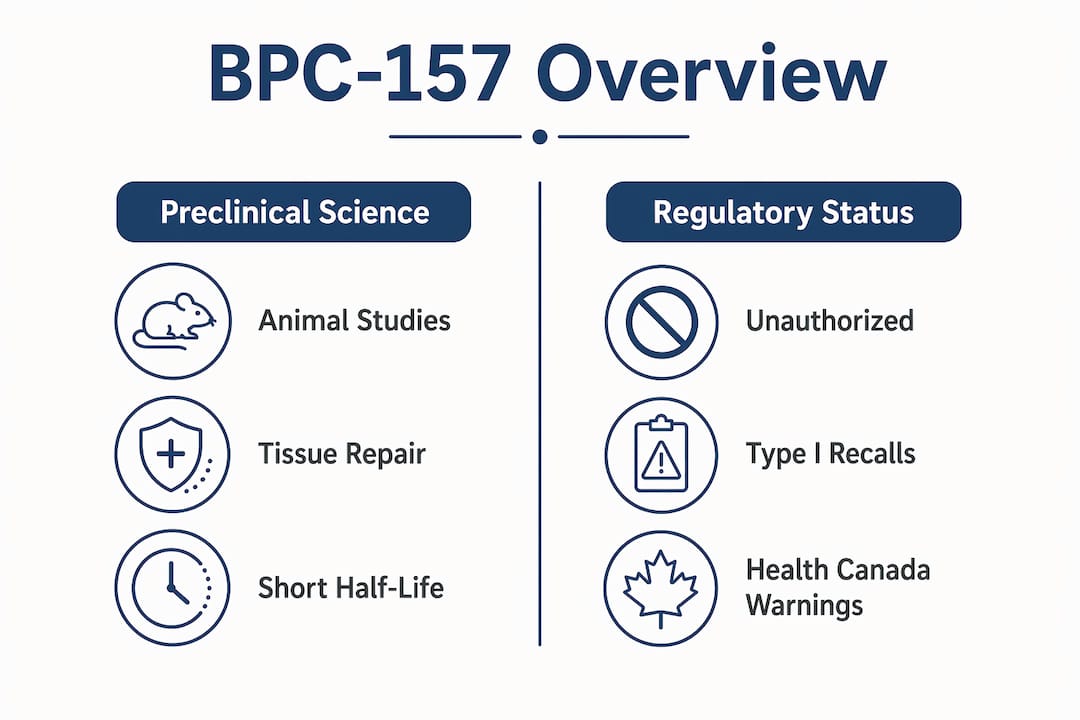
Health Canada has issued multiple public warnings and Type I recalls for injectable BPC-157 powder products. Type I recalls represent the most serious category, reserved for products that pose a risk of serious adverse health consequences. The seizure of these products reflects active regulatory enforcement, not theoretical concern.
Health Canada advises that Canadians purchase peptides only through licensed pharmacies that carry a Drug Identification Number (DIN) label. Products sold through unlicensed online sources lack safety verification, sterility testing, and accurate ingredient confirmation.
The risks of purchasing from unauthorized sources include:
Health Canada’s position is unambiguous: health decisions involving prescription-type peptides require licensed healthcare provider oversight. Researchers in Canada should treat this guidance as a baseline, not a suggestion.
BPC-157 circulates in Canadian research and fitness communities under several administration routes. Understanding each route matters because the pharmacokinetics differ meaningfully depending on how the compound enters the body.
The three most common administration methods are:
The compound earned the nickname “Wolverine Peptide” on social media, a reference to the fictional character’s rapid healing ability. This framing is misleading. The public perception of BPC-157 as a regenerative compound has outpaced the clinical verification needed to support those claims safely.
User anecdotes describe accelerated recovery from tendon injuries, reduced joint pain, and improved muscle repair after resistance training. These reports are widespread but uncontrolled. They cannot substitute for clinical trial data because they lack blinding, control groups, or standardized outcome measures.
Pro Tip: If you are researching oral BPC-157 in Canada, note that the absence of injection risk does not eliminate regulatory concerns. Health Canada’s warnings apply to all unauthorized BPC-157 products regardless of administration route. Always verify the source and legal status before proceeding.
Dosing errors are common among self-administering researchers. The short BPC-157 serum half-life leads some people to dose too frequently, misunderstanding that the pharmacodynamic effects persist longer than the peptide’s blood concentration. This misunderstanding can increase cumulative exposure without proportional benefit.
The most significant theoretical risk involves angiogenesis. BPC-157 promotes the formation of new blood vessels, a process that supports tissue repair but also raises concern in oncology. Angiogenesis promotion carries theoretical cancer risks because tumour growth and metastasis depend on the same vascular formation mechanisms. No long-term human safety data exists to confirm or refute this risk. Researchers with any personal or family history of cancer should treat this gap as a serious consideration, not a minor caveat. The relationship between peptides and cancer wellness is an area where caution and evidence-based review are both warranted.
Contamination from gray market products represents a documented, not theoretical, harm. Independent COA testing can verify purity but may be falsified, and severe injection site infections have been reported from non-sterile illicit products. The absence of pharmaceutical-grade manufacturing standards in unregulated supply chains creates conditions where even a product labelled as BPC-157 may contain harmful adulterants.
“The public demand for BPC-157 has outpaced clinical verification, creating high-risk consumer environments without validated safe dosing protocols. Researchers emphasise a translational gap and caution about premature public use.” Heal or harm: Body Protective Compound 157 in the gray zone
The knowledge gaps that make large-scale clinical trials necessary include:
Until these gaps are addressed through peer-reviewed human trials, BPC-157 remains a compound with genuine scientific interest and genuine unresolved risk.
BPC-157 shows preclinical promise for tissue repair, but the absence of validated human safety data and Health Canada’s active enforcement make responsible, informed sourcing the most critical factor for any Canadian researcher.
| Point | Details |
|---|---|
| Preclinical evidence is real but limited | Animal studies show tissue repair benefits, but no large-scale human trials have validated dosing or safety. |
| Health Canada classifies it as unauthorized | BPC-157 is not approved for medical use in Canada and has been subject to Type I recalls. |
| Short half-life does not mean short effect | The pharmacokinetic-pharmacodynamic disconnect means biological effects persist beyond serum clearance. |
| Contamination is a documented risk | Gray market products have caused severe infections; COAs can be falsified and are not a guarantee of purity. |
| Angiogenesis raises unresolved cancer concerns | BPC-157 promotes blood vessel formation, which carries theoretical oncological risk with no long-term human data to resolve it. |
The gap between what the preclinical literature shows and what the online community claims is wider than most people realise. I have followed the BPC-157 conversation in Canadian research and fitness circles for years, and the pattern is consistent: compelling animal data gets translated into confident human dosing recommendations without the clinical bridge to justify that leap.
What concerns me most is not the peptide itself. The preclinical science is genuinely interesting, and the research on BPC-157’s role in recovery deserves serious attention. What concerns me is the environment in which most Canadians are accessing it. Unregulated supply chains, falsified COAs, and social media dosing advice are a combination that creates real harm.
The angiogenesis question is the one I think gets dismissed too quickly. Promoting blood vessel formation is not a neutral act in a body that may have pre-existing cellular abnormalities. The absence of evidence for harm is not evidence of safety, particularly when no long-term human trials have been conducted.
My position is this: if you are researching BPC-157, do it with the same rigour you would apply to any other pharmaceutical compound. Consult a licensed healthcare provider. Verify your source against Health Canada’s guidelines. Read the peptide research regulations in Canada before purchasing anything. The science may eventually support broader use. Right now, the regulatory and safety framework does not.
— Canada
Canadabiogenix is a trusted Canadian supplier of research peptides and bacteriostatic water, operating with transparency about regulatory frameworks and product quality.
Canadians exploring research-grade peptides can access Canadabiogenix’s catalogue with confidence that product information is presented accurately and without exaggeration. The site also provides educational resources to help researchers understand the regulatory context before purchasing. For those comparing recovery peptides, the TB-500 vs BPC-157 analysis offers a grounded, evidence-based comparison. Responsible research starts with a reliable source. Visit Canadabiogenix to review available peptides and supporting research materials.
BPC-157 is a synthetic pentadecapeptide derived from a protein found in human gastric juice. It is studied in preclinical models for its potential effects on tissue repair, tendon healing, and angiogenesis.
BPC-157 is classified by Health Canada as an unauthorized active pharmaceutical ingredient. It has no approved medical use in Canada and has been subject to Type I recalls for unauthorized injectable powder products.
The serum half-life of BPC-157 in animal models is under 15–30 minutes. However, the pharmacodynamic effects, including tissue repair signalling, persist longer than the peptide’s presence in the bloodstream.
Oral BPC-157 products exist and are sought by some Canadian researchers as an alternative to injection. Health Canada’s warnings on unauthorized BPC-157 apply to all administration forms, including oral products from unlicensed sources.
The primary risks include contamination from non-sterile gray market products, theoretical cancer risk via angiogenesis promotion, dosing errors due to pharmacokinetic misunderstandings, and the complete absence of long-term human safety data.