
Last Updated: August 31, 2026
The solvent you choose for peptide storage fundamentally determines how quickly your compounds degrade. Water alone offers minimal protection against chemical degradation, while alternative solvents can extend shelf-life significantly by altering the molecular environment to slow degradation pathways. A degraded peptide produces unreliable experimental results, and the investment in proper solvent selection pays for itself through reproducibility and reduced waste.
Water is the default solvent for many researchers, but it’s also the most aggressive environment for peptide degradation. Aqueous solutions expose peptides to hydrolytic attack, oxidative stress, and microbial contamination. Organic solvents like DMSO and acetic acid protect peptides by reducing water availability and altering the chemical environment to slow specific degradation pathways.
In water, peptide bonds face constant hydrolytic pressure from abundant water molecules that attack the peptide backbone, breaking the amide linkages holding amino acids together. This process accelerates at elevated temperatures and in the presence of contaminants or extreme pH. Dissolved oxygen enables oxidative degradation, particularly affecting methionine and tryptophan residues.
Bacterial and fungal contamination represents another critical failure mode in aqueous storage. Bacteriostatic water addresses this by including benzyl alcohol as a preservative, but it remains fundamentally vulnerable to hydrolysis. Hydrophobic peptides also tend toward aggregation in water, clustering together to minimize contact with the polar solvent, a process that’s often irreversible.
Hydrolysis occurs when water molecules attack the peptide backbone, cleaving amide bonds and fragmenting the chain. A peptide stored at 37°C in water degrades roughly 10 times faster than one stored at 4°C (peer-reviewed research).
Deamidation is a distinct degradation pathway where asparagine and glutamine residues spontaneously lose their amide groups, converting to aspartate and glutamate. This chemical modification alters the peptide’s charge and often destroys its biological activity, accelerating dramatically at alkaline pH and elevated temperatures.
Oxidation attacks side chains, particularly methionine and tryptophan. Once oxidized, these amino acids lose their original chemical properties, and the peptide’s activity typically drops sharply.
Organic solvents like DMSO and acetic acid dramatically slow all three degradation pathways by reducing water availability and altering the chemical potential of the system. DMSO creates a less polar environment than pure water, suppressing hydrolysis. Acetic acid’s low pH and non-aqueous nature inhibit both hydrolysis and deamidation. Neither solvent eliminates degradation entirely, but both extend peptide shelf-life substantially compared to aqueous storage.
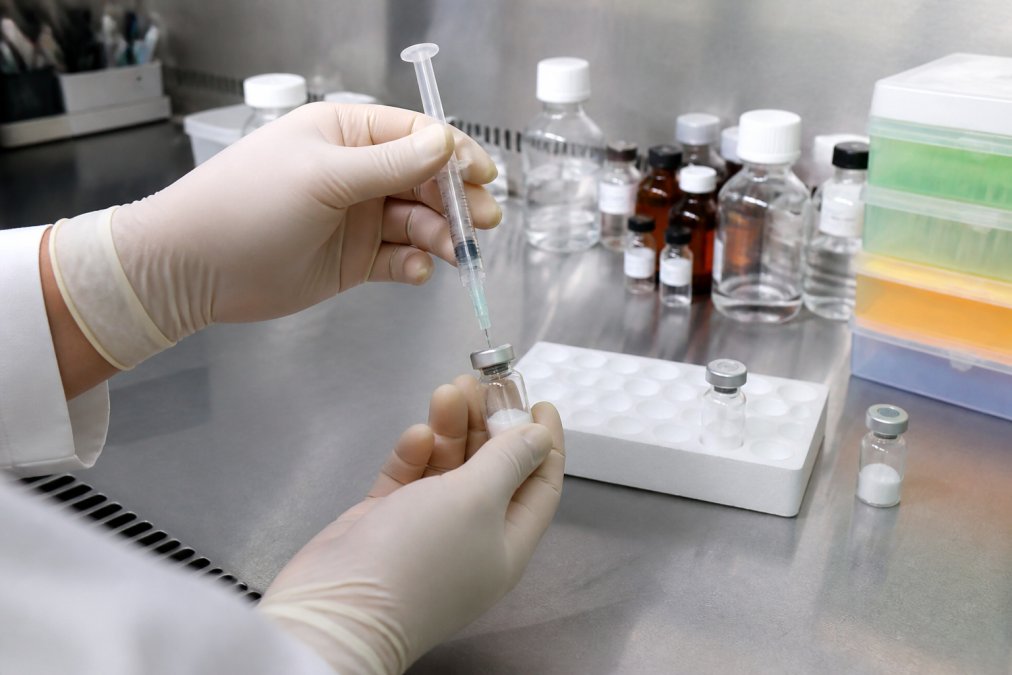
Solvent polarity is the hidden driver of peptide behavior. Polar solvents like water pull peptides into extended, unfolded conformations. Non-polar solvents like DMSO allow peptides to adopt more compact, helical structures that often preserve biological activity better.
Water is highly polar and interacts strongly with charged amino acid side chains and the peptide backbone itself. This solvation is thorough but destabilizing, the peptide backbone becomes highly hydrated, making it vulnerable to hydrolytic attack. Hydrophobic peptides experience strong osmotic pressure to aggregate in water.
DMSO occupies a middle ground. It’s polar enough to dissolve most peptides but less polar than water, creating an environment where hydrophobic residues don’t experience the same aggregation pressure. However, DMSO can penetrate cell membranes and may alter peptide structure in ways that affect downstream applications.
Acetic acid is weakly polar and acidic. At low pH, acidic amino acid residues become protonated and neutral, reducing electrostatic repulsion within the peptide. This can stabilize certain conformations and inhibits deamidation. The trade-off: acetic acid is volatile and can evaporate from open containers, and its low pH may denature some peptides.
The isoelectric point of your peptide, the pH at which it carries no net charge, becomes critical when choosing between solvents. Near the isoelectric point, peptides are least soluble and most prone to aggregation. A well-chosen solvent pH keeps your peptide away from its isoelectric point, maintaining solubility and preventing precipitation.
Reconstituting a lyophilized peptide correctly sets the foundation for stable storage. The solvent you choose, the reconstitution protocol you follow, and the conditions you maintain afterward all determine whether your peptide remains usable.
Bacteriostatic water is sterile, pyrogen-free water containing benzyl alcohol as a preservative. It’s the standard choice for reconstituting peptides that will be used multiple times over days or weeks. Add the appropriate volume slowly to the lyophilized peptide vial, allowing the powder to dissolve gradually. Avoid vigorous agitation, which can denature the peptide or create foam. Once reconstituted, store the vial at 2-8°C. Bacteriostatic water-reconstituted peptides typically remain stable for 2-4 weeks under these conditions, though actual shelf-life depends on the specific peptide sequence and storage conditions.
DMSO (dimethyl sulfoxide) is a powerful solvent that dissolves most peptides readily. It reduces hydration and suppresses aggregation, making it an excellent choice for hydrophobic peptides. DMSO-reconstituted peptides can be stored at -20°C for months or even years with minimal degradation. Use glass vials with PTFE-lined seals, not standard rubber stoppers, as DMSO is volatile and can evaporate if the vial isn’t sealed tightly.
Acetic acid is particularly useful for peptides prone to deamidation or those with acidic amino acid sequences. The low pH (around 2-3) inhibits deamidation and suppresses bacterial growth. Acetic acid-reconstituted peptides can be stored at 2-8°C for weeks or at -20°C for months. The trade-off: acetic acid is volatile and corrosive, and can evaporate from vials, concentrating the remaining solution.
Canada BioGenix can advise on solvent selection based on your peptide’s chemical properties and your intended application.
pH is one of the most powerful levers for controlling peptide stability. The right pH can cut degradation rates in half; the wrong pH can accelerate them dramatically.
Hydrolysis accelerates at both very low and very high pH. Neutral to slightly acidic pH (4-6) is generally optimal for minimizing hydrolysis. Deamidation is suppressed at acidic pH (below 4) and accelerates sharply at neutral to alkaline pH (peer-reviewed research). If your peptide contains asparagine or glutamine residues and you’re concerned about deamidation, keeping the pH below 4 is highly protective.
Oxidation is largely pH-independent but oxygen-dependent. Removing dissolved oxygen through inert gas flushing or storage under nitrogen is more effective than pH adjustment for preventing oxidation.
The isoelectric point of your peptide is critical. Near the isoelectric point, peptides aggregate and precipitate. Storing it at a pH away from this point keeps it soluble. Buffered solutions help maintain pH stability during storage. Acetate buffers (which are also slightly acidic) are often preferable for long-term peptide storage.
For Canada BioGenix customers, we recommend consulting the Certificate of Analysis for your peptide, which typically includes recommended storage pH and conditions. If that information isn’t available, a pH between 3-4 is a safe default for most peptides, particularly those containing asparagine or glutamine.
The rubber or silicone stopper on your peptide vial is a potential contamination source and a chemical compatibility issue. Improper sanitation or incompatible solvents can compromise the seal, introduce bacteria, or leach unwanted compounds into your peptide solution.
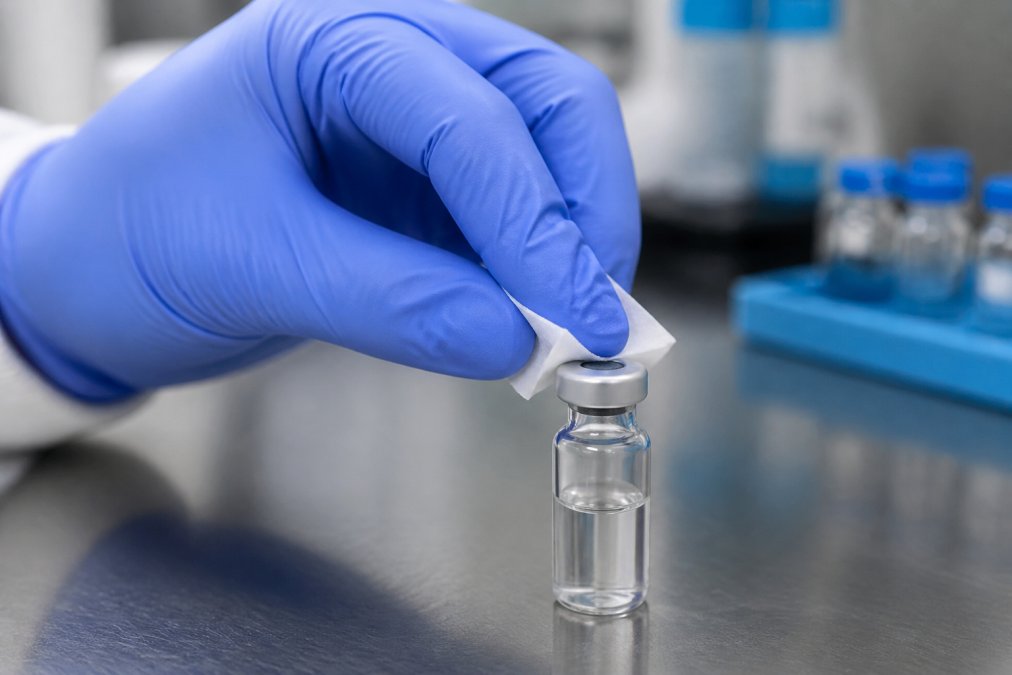
Before each use, sanitize the vial stopper with a 70% ethanol or isopropyl alcohol swab. Wipe in a circular motion for at least 10 seconds, allowing the alcohol to evaporate completely before piercing the stopper with a needle. Never use acetone or other aggressive solvents to clean stoppers, as they can degrade the rubber and cause it to crumble into your peptide solution.
Avoid prolonged contact between the stopper and non-polar solvents like DMSO or hexane, which can swell or soften rubber and compromise the seal. Silicone stoppers are more resistant to organic solvents than natural rubber. If you’re storing peptides in DMSO or other non-aqueous solvents long-term, request silicone-stoppered vials. For multi-use vials, replace the stopper after 10-15 punctures, as each needle insertion creates a small hole that eventually compromises the seal.
Temperature is the most straightforward lever for controlling peptide degradation. A peptide stored at 4°C degrades roughly 10 times slower than one at room temperature, and one stored at -20°C degrades roughly 100 times slower.
However, freeze-thaw cycling, repeatedly freezing and thawing a peptide solution, can be destructive. When a solution freezes, water forms ice crystals. Non-aqueous components become concentrated in the remaining liquid phase. Upon thawing, the peptide experiences osmotic stress and may precipitate or aggregate.
For aqueous solutions, minimize freeze-thaw cycles by aliquoting the peptide into small portions immediately after reconstitution. For DMSO-reconstituted peptides, freeze-thaw cycling is less damaging because DMSO doesn’t form ice crystals in the same way water does. Acetic acid solutions also tolerate freeze-thaw cycling reasonably well.
The ideal storage protocol depends on your solvent:
Even with optimal storage, peptides sometimes degrade faster than expected. Understanding solvent-specific failure modes helps you diagnose problems and adjust your protocol.
Precipitation, the visible formation of solid particles in your peptide solution, indicates that the peptide has exceeded its solubility limit.
In aqueous solutions: Hydrophobic peptides aggregate naturally. The solution may appear cloudy or develop visible particles. This is reversible if caught early; gentle warming and brief sonication can sometimes redissolve aggregated peptide. However, prolonged aggregation becomes irreversible as peptide particles fuse together.
In DMSO: Precipitation is less common because DMSO is an excellent solvent for most peptides. If precipitation occurs, it usually indicates contamination or that the solution has been stored too long.
In acetic acid: Precipitation can occur if the pH rises (acetic acid evaporates) or if water is introduced. Keeping the vial sealed tightly prevents pH drift.
To prevent aggregation in aqueous solutions, store at 2-8°C and minimize time at room temperature. For hydrophobic peptides, consider reconstituting in DMSO or acetic acid instead of water.
Buffer capacity, the solution’s ability to resist pH changes, directly impacts shelf-life. A well-buffered solution maintains stable pH as the peptide ages and minor degradation products accumulate. For aqueous storage, use a buffered solution (phosphate, acetate, or citrate buffer) rather than pure water, aiming for 10-50 mM buffer concentration.
Solvation energy depends on solvent polarity and the peptide’s hydrophobic/hydrophilic character. A solvent that matches the peptide’s polarity minimizes aggregation and extends shelf-life. For hydrophobic peptides, DMSO or acetic acid typically outperforms water. Antioxidants like ascorbic acid or methionine can extend shelf-life by suppressing oxidation. Adding 1-5 mM antioxidant to the storage solution can measurably extend usable shelf-life.
| Solvent | Storage Temperature | Expected Shelf-Life | Best For |
|---|---|---|---|
| Bacteriostatic water | 2-8°C | 2-4 weeks | Multi-use, hydrophilic peptides |
| DMSO | -20°C | 6-12 months | Hydrophobic peptides, long-term storage |
| Acetic acid | 2-8°C | 4-8 weeks | Peptides prone to deamidation |
| Phosphate buffer (aqueous) | 2-8°C | 2-4 weeks | General-purpose aqueous storage |
Selecting the right solvent for peptide storage requires understanding your peptide’s chemical properties, its hydrophobicity, isoelectric point, and vulnerable residues, and matching those properties to a solvent that minimizes the specific degradation pathways most likely to affect your compound. Water is convenient but offers minimal protection. DMSO excels for hydrophobic peptides and long-term storage. Acetic acid is the best choice for peptides prone to deamidation.
Canada BioGenix provides high-quality research peptides with detailed Certificates of Analysis that specify recommended storage solvents and conditions for each compound. Our team can help you select the optimal solvent for your specific peptide and application, ensuring your research compounds remain stable and reliable throughout your experiments. Reach out to discuss your peptide storage needs and discover how the right solvent selection can improve your experimental reproducibility and reduce waste.
Solvent polarity directly influences how peptides fold and interact with their environment. Polar solvents like water increase hydration around hydrophobic amino acid sequences, which can expose peptides to hydrolysis and oxidation. Non-polar solvents reduce water availability, slowing chemical degradation. The choice between polar and non-polar solvents depends on your peptide’s amino acid sequence and isoelectric point. Highly hydrophobic peptides often remain more stable in non-polar or mixed solvents, while hydrophilic sequences may tolerate aqueous storage better when pH and temperature are controlled.
Most peptides remain most stable in slightly acidic to neutral pH ranges, typically between pH 3.5 and 7.5, depending on the specific amino acid composition and isoelectric point. Below pH 3, deamidation accelerates. Above pH 8, oxidation and hydrolysis increase significantly. Using buffered solvents with appropriate pH capacity helps maintain stability throughout the storage period. Acetic acid buffers are commonly used for acidic peptides, while phosphate buffers work well for neutral formulations. Always verify your peptide manufacturer’s recommended pH range before reconstitution.
Reconstituted peptides in bacteriostatic water typically remain stable for 2-4 weeks at 4°C due to the benzyl alcohol preservative preventing microbial growth, though chemical degradation still occurs gradually. Organic solvents like DMSO or acetic acid can extend shelf-life to 8-12 weeks or longer by reducing hydrolysis rates and aggregation. Lyophilized (freeze-dried) peptides in their original sealed vials remain stable for 1-2 years at room temperature and longer when refrigerated. Once reconstituted, the solvent choice becomes critical: aqueous solutions degrade faster than organic or mixed-solvent formulations, especially if exposed to light or temperature fluctuations.
Highly acidic solvents (pH below 2) accelerate deamidation of asparagine and glutamine residues, reducing peptide integrity. Strongly basic solvents (pH above 9) promote oxidation of methionine and cysteine, and can cause unwanted side reactions. However, mildly acidic conditions (pH 3-5) often protect peptides by slowing hydrolysis. The key is matching the solvent pH to your peptide’s isoelectric point and amino acid profile. Acetic acid is widely used because it provides mild acidity without extreme pH shock. Always test stability at your intended storage pH before committing to large quantities, or request stability data from your supplier.
Minimize exposure to air, light, and temperature extremes during reconstitution. Use sterile, degassed solvents to reduce oxidative stress. Add the solvent slowly to the lyophilized peptide rather than the reverse, allowing gentle hydration. Keep vials on ice or at 4°C during reconstitution. Use aseptic technique and sanitize vial stoppers with 70% ethanol before piercing. Avoid repeated freeze-thaw cycles by preparing smaller aliquots if you need to store reconstituted peptides long-term. If using bacteriostatic water, ensure the vial is sealed immediately after reconstitution to prevent contamination and oxidation. Document the exact reconstitution time and conditions for reproducibility.
This article was written using GrandRanker