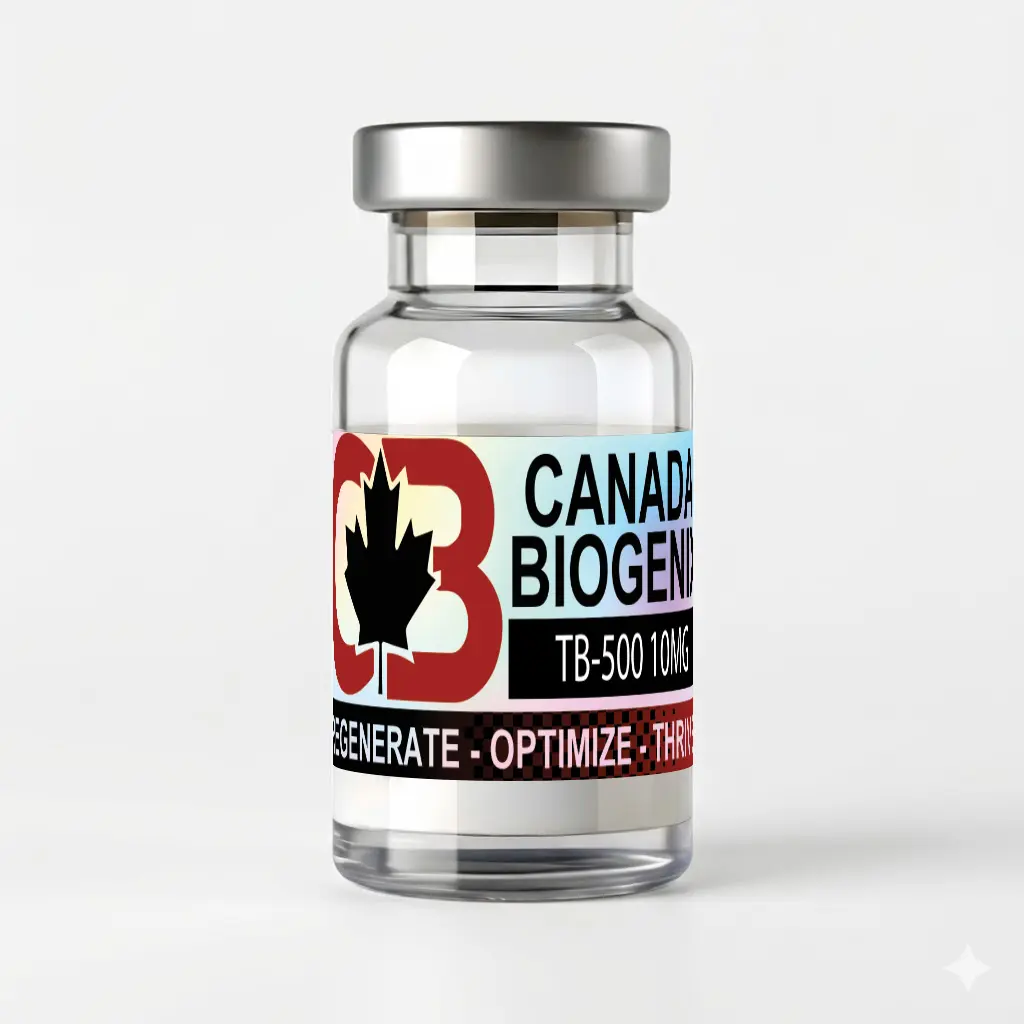
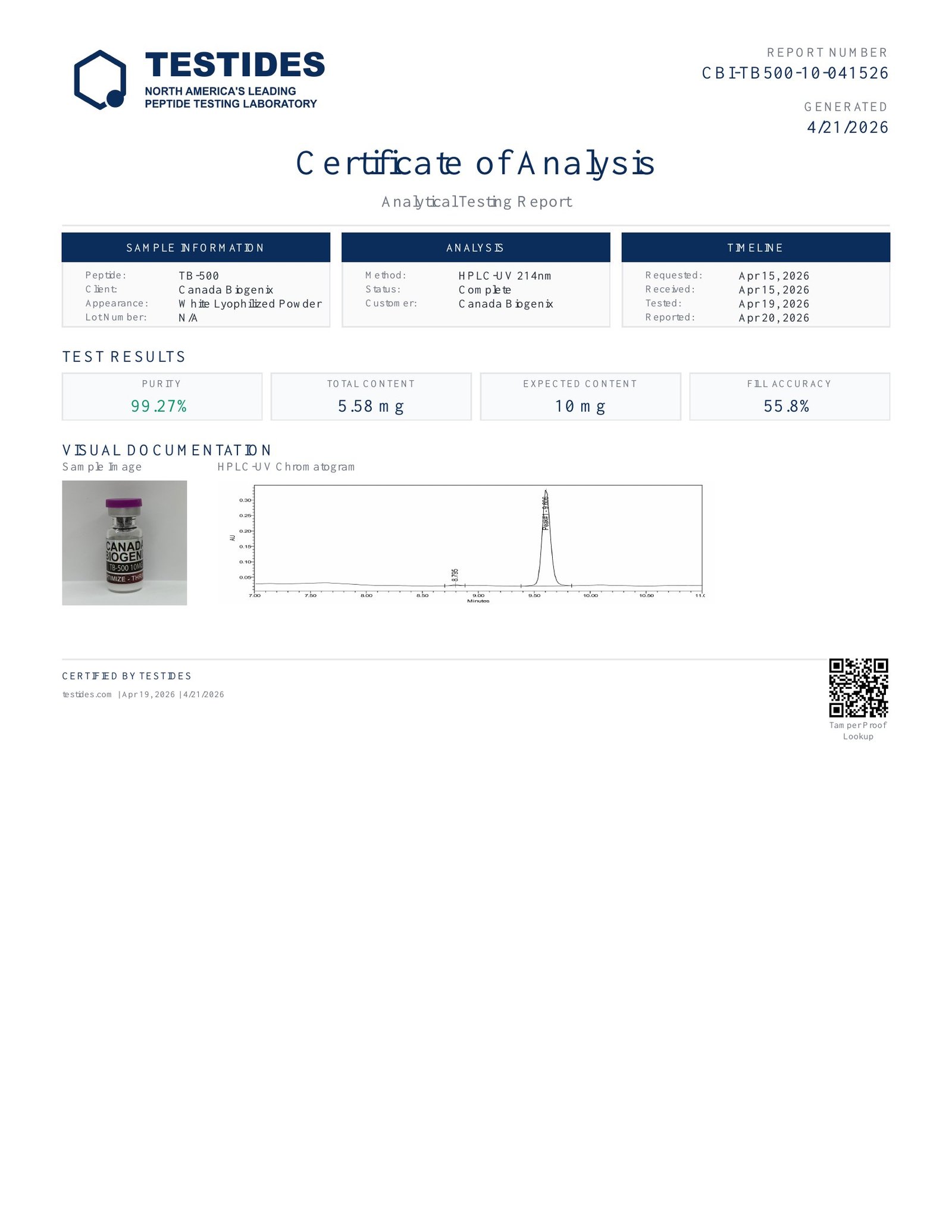
TB-500 10 mg is a synthetic thymosin beta-4-related heptapeptide attracting research interest for its potential influence on actin dynamics, cellular migration, vascular development, inflammatory signalling and tissue organization.
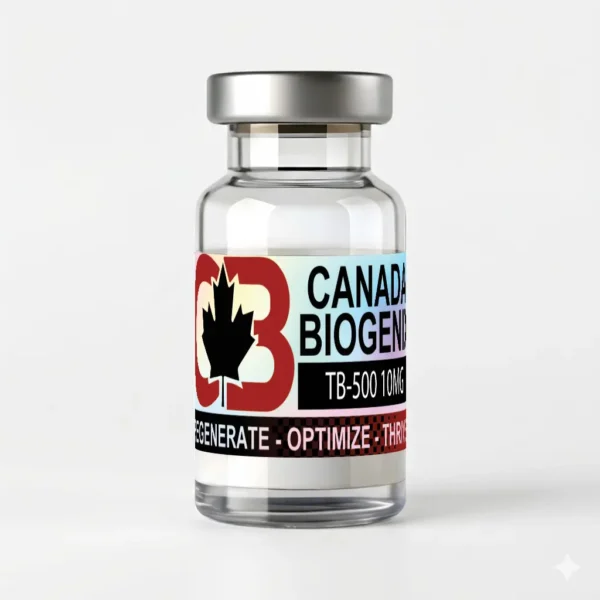
TB-500 is the synthetic N-acetylated peptide sequence Ac-LKKTETQ. This seven-amino-acid sequence corresponds to residues 17–23 within the actin-binding region of thymosin beta-4, a naturally occurring 43-amino-acid peptide found in many mammalian tissues.
Actin is essential to the cellular cytoskeleton. Cells continually reorganize actin to change shape, migrate, divide and build new tissue structures. Because the LKKTETQ region is closely associated with thymosin beta-4’s actin-regulating activity, TB-500 is being investigated as a smaller research tool for studying these processes.
TB-500 and full-length thymosin beta-4 are related but not identical compounds. Evidence involving the complete parent peptide provides valuable mechanistic context, but it should not automatically be treated as direct proof for the shorter TB-500 fragment.
The thymosin beta-4 actin-binding region is closely linked to cytoskeletal reorganization and the movement of endothelial, epithelial and progenitor cells.
Related research has demonstrated endothelial migration, tubule formation and new-vessel development—processes that can support remodelling tissue.
Thymosin beta-4 research connects actin regulation with cell survival, matrix organization, inflammatory balance and tissue-protective signalling.
| Research pathway | Observed or proposed response | Potential significance |
|---|---|---|
| Actin dynamics | Influences the balance between soluble G-actin and organized filamentous actin. | Helps cells rapidly reshape their cytoskeleton when movement or structural change is required. |
| Cellular migration | Thymosin beta-4 and its active region have been associated with directional movement of endothelial and epithelial cells. | Supports investigation of how cells populate and reorganize damaged or developing tissue. |
| Endothelial organization | Laboratory studies reported endothelial adhesion, migration, tube formation and aortic-ring sprouting. | Connects actin biology with new-vessel formation and tissue-supporting circulation. |
| Inflammatory and survival signals | Parent-peptide studies suggest reduced inflammatory mediators and support for Akt-linked cell-survival pathways. | May help create a more favourable environment for orderly tissue remodelling. |
| Research area | Encouraging finding | Evidence level | How to interpret it |
|---|---|---|---|
| Endothelial migration | Full-length thymosin beta-4 increased directional migration of human endothelial cells approximately four- to sixfold in laboratory chambers. | Cellular research using parent peptide | Strongly supports cell-migration biology while remaining indirect evidence for TB-500. |
| Active actin-binding sequence | The LKKTETQ region reproduced several endothelial and angiogenic actions associated with the complete thymosin beta-4 molecule. | Cellular and tissue-model research | Provides the key mechanistic bridge between TB-500 and the broader thymosin beta-4 literature. |
| Dermal remodelling | Parent-peptide studies reported faster wound closure, greater collagen deposition and improved tissue organization in animal models. | Animal research using parent peptide | Supports continued investigation of migration, matrix deposition and remodelling pathways. |
| Human chronic-wound studies | Two Phase 2 topical thymosin beta-4 trials reported substantially shorter closure time among participants whose ulcers fully healed. | Early human research using a distinct full-length formulation | Encouraging translational evidence for the parent pathway, not a clinical validation of TB-500 10 mg. |
| TB-500 metabolism | A 2024 study found significant scratch-wound activity from the Ac-LKKTE metabolite, suggesting metabolism may release an active shorter sequence. | Direct TB-500 laboratory research | Offers a useful explanation for how TB-500-related activity may emerge even when the parent fragment shows limited activity in a specific assay. |
Investigating fibroblast movement, collagen organization, vascular support and extracellular-matrix remodelling in dense connective tissue.
Exploring cytoskeletal repair, progenitor-cell recruitment, vascular development and recovery-related tissue organization.
Studying re-epithelialization, keratinocyte migration, inflammatory mediators and matrix deposition after tissue disruption.
Examining endothelial activity, cell survival, neovascularization and tissue responses following cardiac stress or ischemic injury.
| Feature | TB-500 | Thymosin beta-4 |
|---|---|---|
| Structure | Seven-amino-acid synthetic fragment: Ac-LKKTETQ | Naturally occurring 43-amino-acid peptide |
| Sequence relationship | Corresponds to the actin-binding region at residues 17–23 | Contains the active region plus additional sequences with broader biological functions |
| Evidence base | Direct evidence remains primarily analytical, cellular and preclinical | Substantial cellular and animal literature plus early formulation-specific human trials |
| Research strength | Focused tool for actin-region and metabolite research | Broader model for migration, inflammation, angiogenesis and cell-survival research |
Bottom line: the full-length molecule gives TB-500 a highly promising biological foundation, while the shorter fragment’s exact activity, metabolites and formulation-specific effects remain active areas of direct research.
| Research product | Primary pathway | Research emphasis |
|---|---|---|
| BPC-157 10 mg | Angiogenic, nitric-oxide and tissue-protection pathways | Tendon, ligament, muscle, gastrointestinal and vascular models |
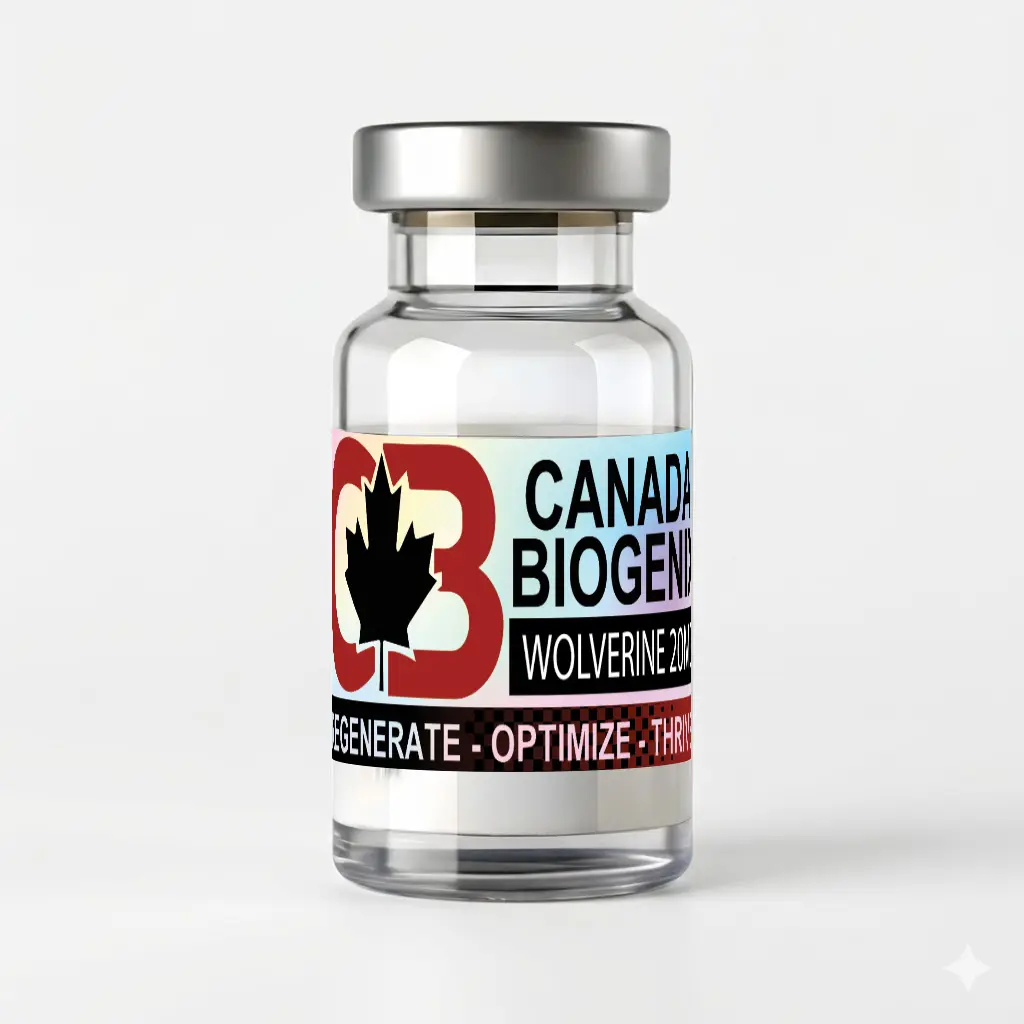
| Wolverine 20 mg | BPC-157 + TB-500 | Dual-pathway migration, vascular and connective-tissue research blend |
| GLOW 70 mg | BPC-157 + TB-500 + GHK-Cu | Migration, matrix remodelling, collagen and tissue-organization research |
| KLOW 80 mg | KPV + BPC-157 + TB-500 + GHK-Cu | Broad tissue-remodelling, epithelial and inflammatory-pathway research |
The 10 mg designation describes the total quantity of TB-500 supplied in the vial. It is not a dose, cycle length, treatment schedule or administration instruction.
Published experiments involving TB-500, its metabolites, full-length thymosin beta-4 or proprietary topical formulations use different compounds, concentrations, routes and controlled conditions. Their findings cannot be transferred automatically to a separate research vial.
Laboratory preparation, concentration, assay compatibility, storage and stability should be established for the specific experimental system. Canada Biogenix does not provide a human administration protocol for TB-500 10 mg.
TB-500 is supported by a compelling biological rationale. Its sequence comes directly from a well-studied actin-binding region, and the broader thymosin beta-4 literature consistently links this pathway to cell migration, vascular development, epithelial repair, matrix organization and tissue-protective signalling.
The main limitation is evidence attribution. Much of the strongest animal and early human research used full-length thymosin beta-4 or proprietary topical formulations rather than the Ac-LKKTETQ fragment sold as TB-500. Controlled human studies have not established TB-500 outcomes for tendon, ligament, muscle or general recovery applications.
Overall, TB-500 remains a focused and scientifically interesting research peptide. Current evidence is most persuasive for studying actin-region biology, cellular migration and the molecular organization of tissue-remodelling responses.
TB-500 10 mg is supplied for qualified laboratory research and analytical applications. It is not represented as an approved therapeutic product, and this page does not provide medical advice, a treatment recommendation or a human administration protocol.