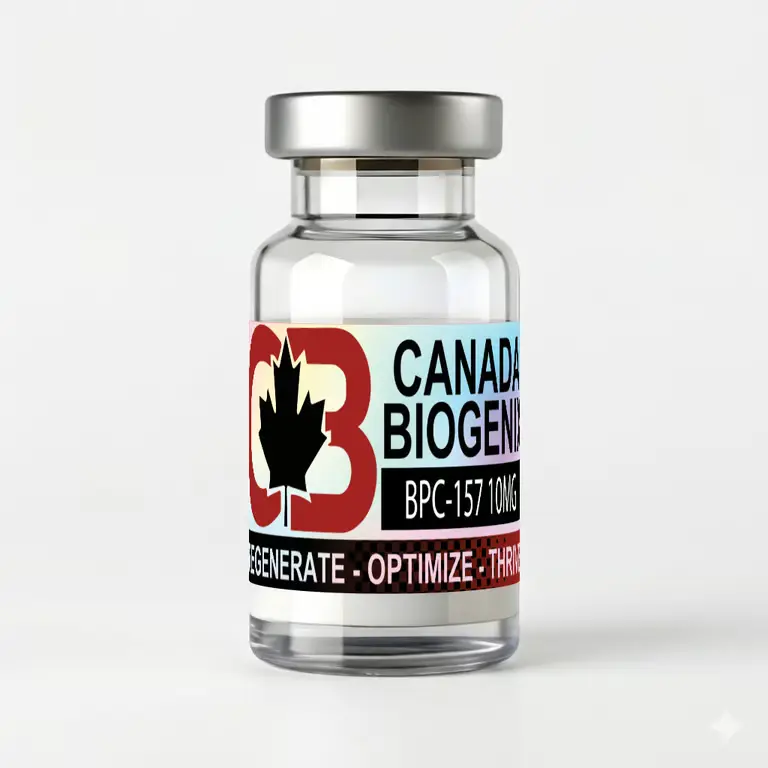
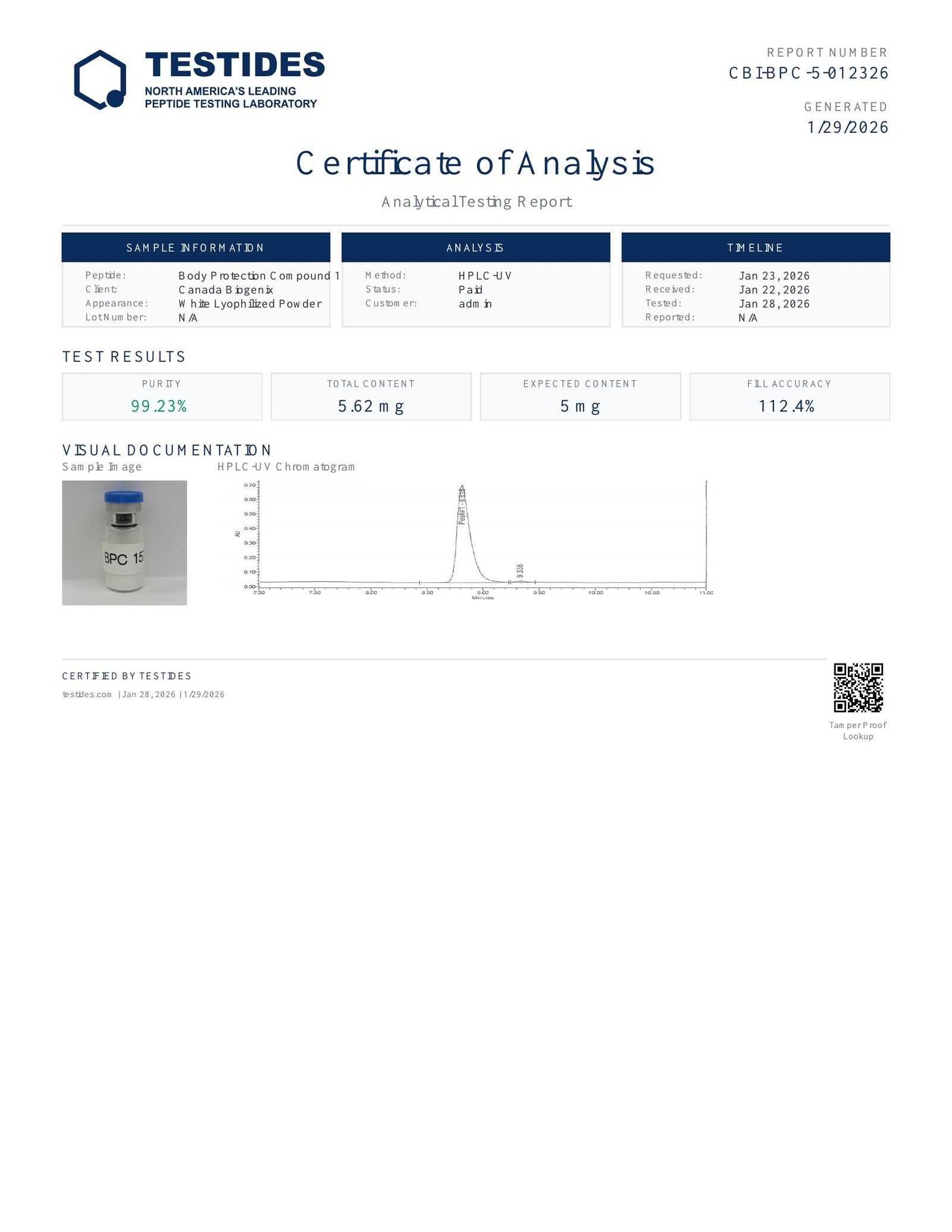
BPC-157 10 mg is a synthetic pentadecapeptide attracting significant research interest for its potential influence on tendon, ligament, muscle, vascular and gastrointestinal repair pathways.
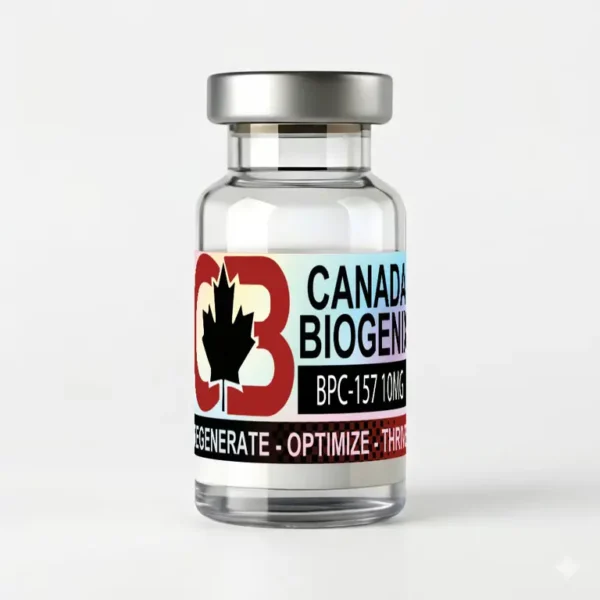
BPC-157 is a synthetic peptide containing 15 amino acids. Its sequence was developed from part of a protective protein found in human gastric juice.
The name BPC refers to “body protection compound.” Researchers originally explored the peptide because of its unusual stability in gastric environments. Interest later expanded to connective tissue, vascular signalling, inflammation and cellular protection.
Research suggests that BPC-157 may interact with several overlapping repair pathways rather than acting through one isolated mechanism.
Tendon research found increased fibroblast migration, spreading and survival under oxidative stress. Furthermore, these effects appeared to involve the FAK-paxillin signalling pathway.
Experimental findings suggest possible activity involving VEGF, VEGFR2, Akt, eNOS and nitric-oxide regulation. These pathways may help explain the peptide’s encouraging effects on blood-vessel organization and tissue repair.
Additional models suggest that BPC-157 may influence oxidative stress, inflammatory signalling and mitochondrial stability. However, the importance of these effects in humans has not yet been established.
Rat Achilles-tendon models have produced positive functional, structural and biomechanical findings. Laboratory studies also found increased tendon-cell migration and survival.
Preclinical studies reported encouraging improvements in ligament organization and muscle healing. In addition, BPC-157 continued to show activity in several challenging injury models.
Gastric and intestinal models suggest potential protective effects involving mucosal integrity, ulcer formation and inflammatory damage. These findings fit with the peptide sequence’s gastric origin.
Research suggests that BPC-157 may support blood-vessel organization and collateral-vessel responses. As a result, it has become a notable compound in experimental wound-healing research.
Early animal studies have examined nerve recovery, spinal-cord injury, neurotransmitter systems and brain-injury models. Results are intriguing, although this research remains preliminary.
Human evidence remains limited to a few small pilot studies. These have explored knee discomfort, interstitial cystitis and intravenous safety or pharmacokinetics.
In one small retrospective knee study, seven of twelve participants reported lasting relief after intra-articular administration. However, the study lacked a placebo group and was too small to establish efficacy.
A 2025 pilot study administered intravenous BPC-157 to two healthy adults. Doses up to 20 mg were reportedly well tolerated without measured adverse effects. Nevertheless, a two-person safety experiment cannot establish routine safety, efficacy or dosage.
| Research Setting | Route Studied | What It Establishes |
|---|---|---|
| Cell and tissue models | Direct laboratory exposure | Mechanism and concentration-response signals |
| Animal models | Oral, intraperitoneal and local experimental routes | Promising preclinical repair findings |
| Human knee pilot | Intra-articular | Preliminary observational signal only |
| Human safety pilot | Intravenous | Early tolerability in two adults |
| Subcutaneous use | Widely discussed but not clinically standardized | No validated human protocol |
Animal doses cannot be converted directly into human protocols. Furthermore, the 10 mg vial size describes total laboratory quantity and does not represent an individual dose.
Positive cell-migration and animal-healing findings.
Encouraging structural and functional animal results.
Broad protective findings in experimental models.
Promising but limited to very small pilot studies.
Researchers comparing complementary tissue-repair pathways can explore
TB-500 10 mg.
BPC-157 and TB-500 are also available together in the
Wolverine 20 mg research blend.
BPC-157 is additionally included in the
KLOW 80 mg multi-peptide research blend.
>