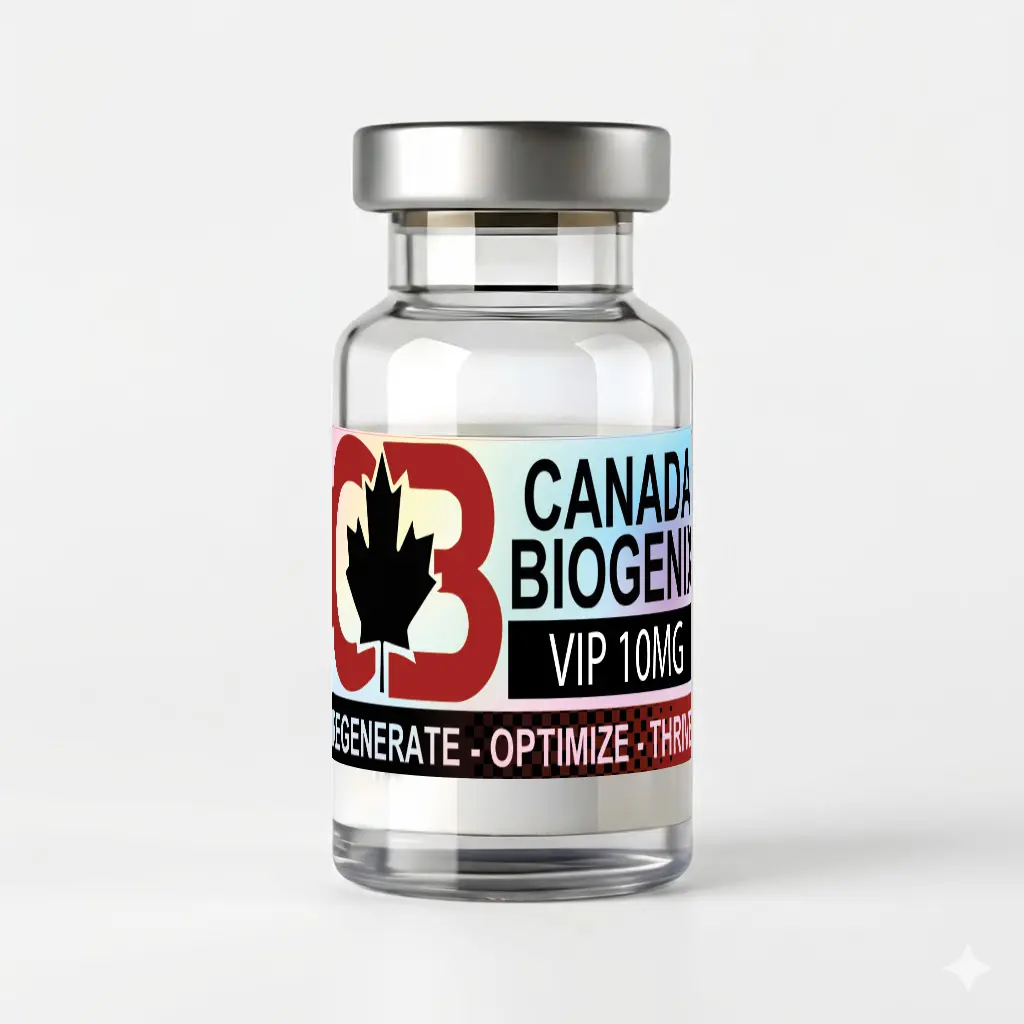
VIP 10 mg, or vasoactive intestinal peptide, is a naturally occurring 28-amino-acid signalling peptide attracting research interest for its potent vasodilatory, bronchodilatory and immune-regulating activity. Its influence reaches the lungs, circulation, gastrointestinal system, brain and biological clock.
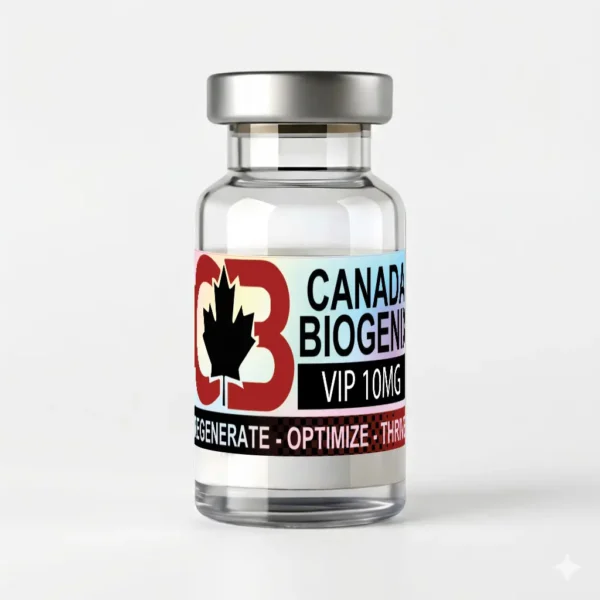
Vasoactive intestinal peptide is an endogenous neuropeptide and peptide hormone in the secretin–glucagon family. Researchers first identified it through its powerful ability to relax blood vessels. However, later work showed that it is far more than a vascular signal.
The body produces VIP in the central and peripheral nervous systems, gastrointestinal tract, pancreas, heart, lungs and immune tissues. It acts mainly through the VPAC1 and VPAC2 G-protein-coupled receptors. Therefore, the same peptide can influence vascular tone, airway smooth muscle, cytokine signalling, epithelial secretion, intestinal motility and circadian timing.
Aviptadil is the synthetic form of the human VIP sequence used in several pulmonary studies. The biological research on aviptadil is directly relevant to the 28-amino-acid VIP molecule, although formulation and delivery route can strongly affect experimental exposure.
VIP can relax pulmonary vessels and airway smooth muscle. Consequently, it has drawn interest in pulmonary hypertension, airway constriction and inflammatory lung models.
Research suggests VIP can reduce excessive inflammatory signalling while supporting regulatory immune-cell patterns rather than broadly suppressing every immune response.
VIP helps coordinate smooth-muscle relaxation, fluid and electrolyte secretion, mucosal blood flow and communication across the gut–immune–nerve network.
VIP/VPAC2 signalling synchronizes clock neurons in the suprachiasmatic nucleus. In addition, experimental models connect VIP with glial support and neuroprotective pathways.
VPAC receptor activation commonly raises intracellular cAMP and engages protein kinase A. However, the final response depends on receptor subtype, tissue, cell state and exposure pattern. Therefore, VIP can relax smooth muscle in one system while changing cytokine production or clock-gene activity in another.
Human VIP research is smaller than the evidence base for approved metabolic peptides. Even so, several studies provide encouraging biological signals and support further investigation.
| Research Area | Encouraging Finding | Evidence Context |
|---|---|---|
| Primary pulmonary hypertension | An early study in eight participants reported lower pulmonary artery pressure together with improved cardiac output, mixed venous oxygen saturation and exercise capacity. | Promising direct human physiology, but the study was very small and did not provide large randomized confirmation. |
| Chronic pulmonary hypertension | A single inhaled aviptadil exposure produced temporary selective pulmonary vasodilation and favourable changes in stroke volume and venous oxygen saturation. | Useful acute proof of mechanism; it does not establish durable clinical benefit. |
| Pulmonary sarcoidosis | In a 20-person open Phase 2 study, four weeks of inhaled VIP was well tolerated, reduced TNF-α production in lung-derived cells and promoted regulatory immune-cell activity. | Encouraging human immunoregulation, although the open-label design and small sample limit certainty. |
| CIRS / water-damaged-building illness | A small open-label study reported improvements in symptoms, quality of life and several inflammatory or regulatory markers during an intranasal VIP protocol. | Exploratory evidence only. Independent, blinded and controlled replication is still needed. |
VIP is both a vasodilator and bronchodilator. In lung research, it can relax pulmonary vascular and airway smooth muscle. It may also influence vascular remodelling, platelet activation and endothelial signalling.
Early human findings show measurable pulmonary effects. Moreover, the lung expresses abundant VIP receptors. Together, these observations explain the sustained interest in VIP-based respiratory research and longer-acting VPAC agonists.
VIP has been studied as a bridge between the nervous and immune systems. Preclinical models suggest it can reduce inflammatory mediators such as TNF-α while favouring regulatory T-cell and tolerogenic dendritic-cell responses.
Therefore, the peptide may be more accurately described as an immune modulator than a simple immune suppressor. That distinction supports research into inflammatory resolution, autoimmune signalling and tissue-protective immune balance.
Despite its name, vasoactive intestinal peptide is not limited to the intestine. Still, its gastrointestinal functions are important. VIP regulates intestinal smooth-muscle relaxation, local blood flow, electrolyte movement and epithelial secretion.
In addition, immune cells and enteric neurons both participate in VIP signalling. This makes the pathway relevant to gut motility, mucosal homeostasis and inflammatory bowel research. Most disease-specific benefit claims remain preclinical.
In the suprachiasmatic nucleus, VIP and VPAC2 help synchronize individual clock neurons. Animal studies show that disrupted VIP signalling can fragment cellular rhythms, while VPAC2 activation can restore synchrony in suitable models.
VIP also stimulates glial support pathways associated with activity-dependent neuroprotective proteins. These findings are scientifically promising. However, they do not yet establish cognitive enhancement, sleep improvement or neurodegenerative-disease treatment in humans.
VIP is best viewed as a broad neuroimmune regulator. Other Canada Biogenix products approach neighbouring questions through different pathways.
| Research Product | Primary Research Emphasis | Main Distinction |
|---|---|---|
| VIP 10 mg | VPAC1/VPAC2, vascular tone, pulmonary signalling and immune regulation | Broad neuroimmune and smooth-muscle signalling |
| KPV 10 mg | NF-κB, intestinal inflammation and epithelial pathways | Compact α-MSH-derived tripeptide |
| LL-37 5 mg | Innate immunity, antimicrobial activity and biofilm research | Host-defence peptide rather than neuropeptide |
| DSIP 15 mg | Sleep architecture, stress response and neuroendocrine research | Sleep-associated research rather than SCN clock synchronization |
These comparisons describe distinct research pathways. They do not establish that combining the compounds produces added benefit or an appropriate protocol.
The 10 mg label describes the total quantity of research material in the vial. It is not a recommended dose, administration amount, route, frequency or protocol.
Published studies have used different formulations and delivery systems for specific research questions. Those methods should not be transferred directly to Canada Biogenix VIP 10 mg. Canada Biogenix does not provide human dosing, reconstitution or administration instructions.
VIP 10 mg is presented as research material for qualified laboratory investigation. This educational overview summarizes published findings and does not provide medical advice, diagnosis, treatment instructions, dosing guidance or a guarantee of outcomes.