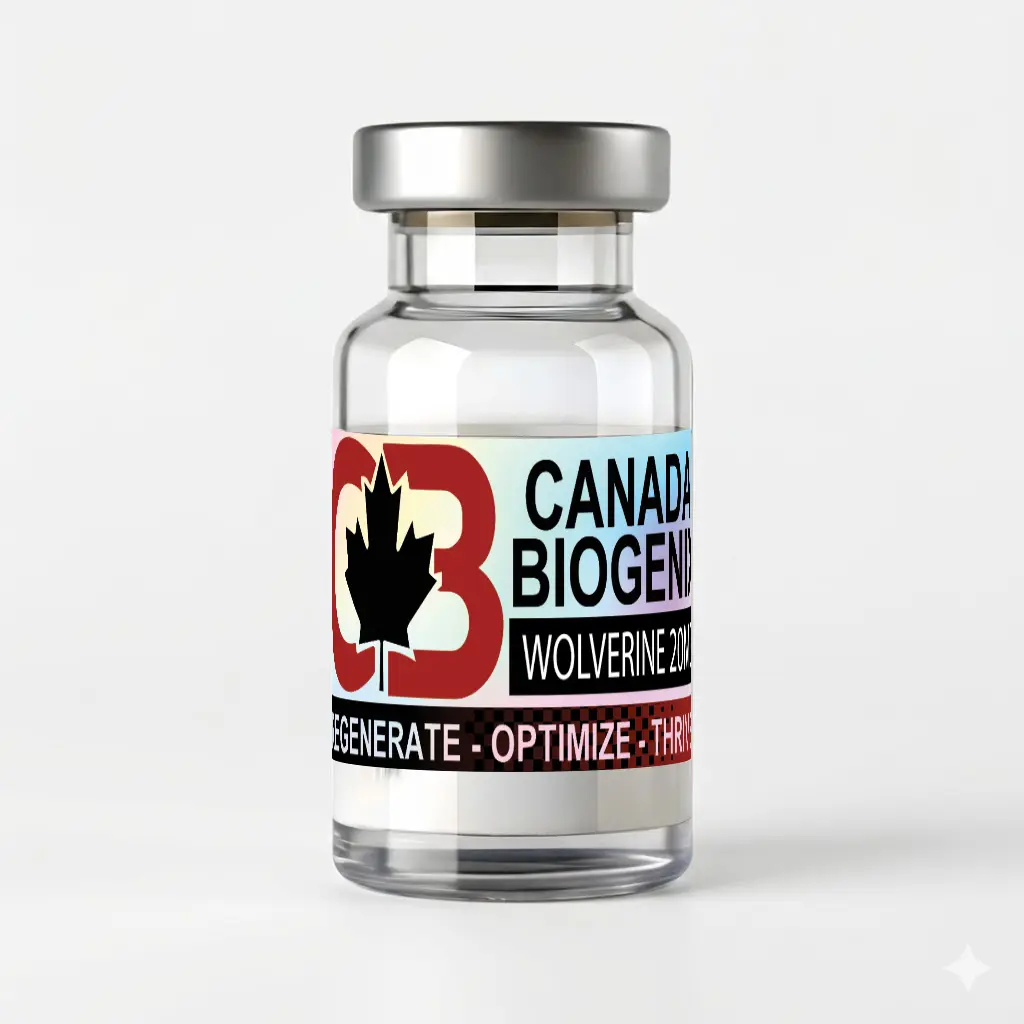
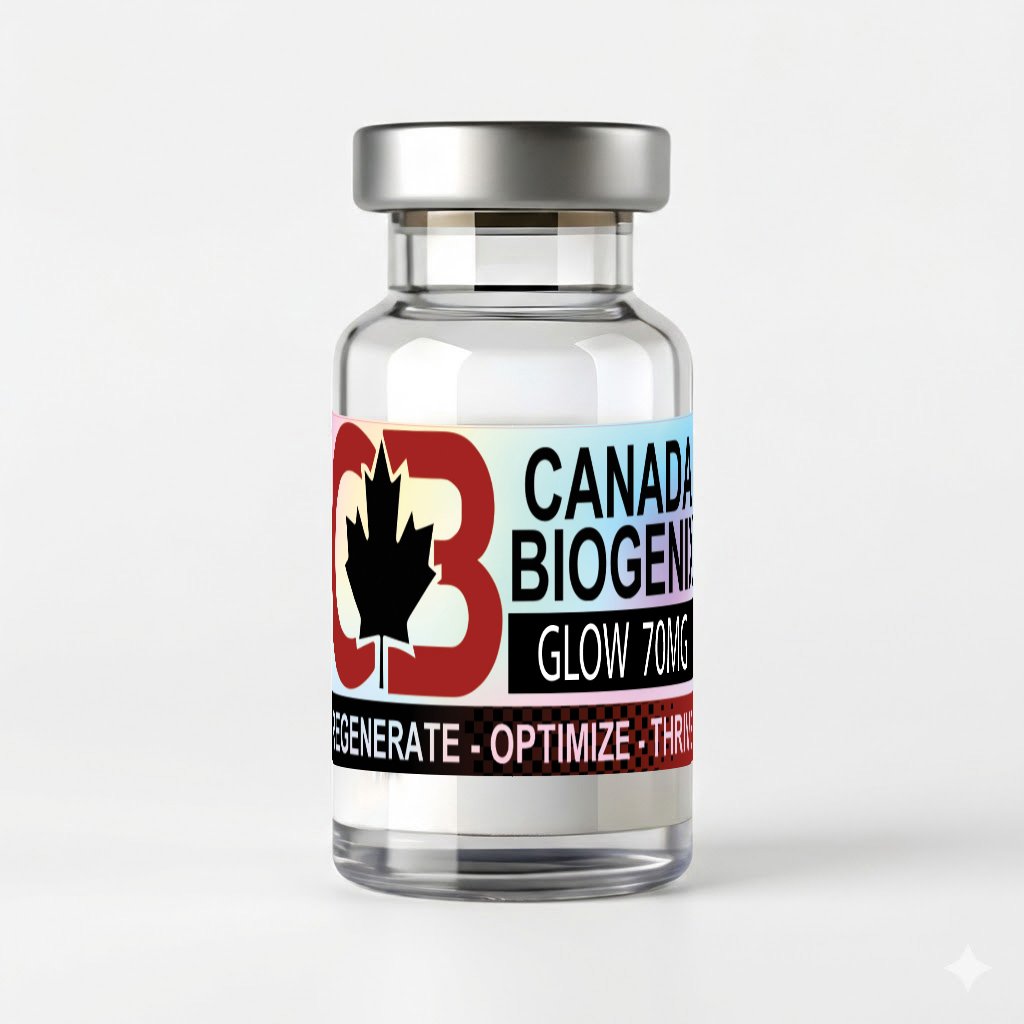
GLOW 70 mg combines BPC-157, TB-500 and GHK-Cu in one research blend, bringing together three complementary areas of interest: cellular migration, extracellular-matrix remodelling and copper-peptide signalling.
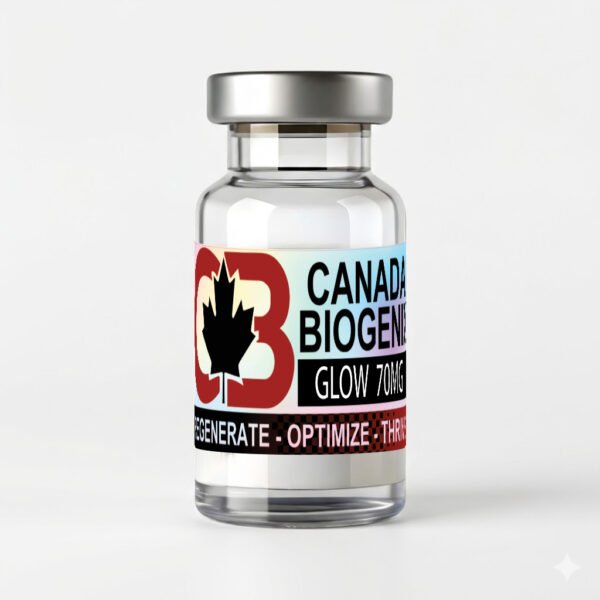
GLOW is a popular research name for a blend containing BPC-157, TB-500 and the copper-binding tripeptide GHK-Cu. Rather than representing one new peptide, it combines three compounds with distinct but potentially complementary signalling profiles.
BPC-157 is studied primarily in vascular, gastrointestinal and musculoskeletal repair models. TB-500 research focuses on actin-related cell movement and tissue organization, drawing heavily from thymosin beta-4 biology. GHK-Cu adds copper transport, extracellular-matrix and skin-remodelling pathways.
The 70 mg designation describes the total combined laboratory material in the vial. Research interest in GLOW 70 mg centres on how these pathways may be examined together in tissue-repair, collagen, vascular and cellular-remodelling models.
Cell and animal studies have reported positive signals involving tendon fibroblast migration, vascular regulation, gastrointestinal integrity and tissue response after injury. These findings make BPC-157 a prominent preclinical repair-research compound.
TB-500 is associated with the actin-binding region of thymosin beta-4. This pathway attracts interest for cell migration, endothelial behaviour, cytoskeletal organization and wound-remodelling research.
GHK-Cu binds copper and has been studied in collagen turnover, glycosaminoglycan production, fibroblast activity, antioxidant signalling and skin-remodelling models.
| Component | Primary research pathway | Potential contribution to the model |
|---|---|---|
| BPC-157 | Fibroblast migration, nitric-oxide and vascular signalling | Tendon, gastrointestinal and injury-response research |
| TB-500 | Actin dynamics, cytoskeletal organization and cell migration | Cell movement, endothelial activity and tissue organization |
| GHK-Cu | Copper signalling, collagen turnover and extracellular matrix | Skin, connective-tissue and matrix-remodelling research |
These pathways create a scientifically interesting combination: one component emphasizes vascular and fibroblast responses, another emphasizes cellular movement, and the third emphasizes copper-dependent matrix signalling. This supports the rationale for studying GLOW 70 mg as a multi-pathway blend, but it does not prove that the components produce additive or synergistic results.
| Research area | Encouraging observation | Evidence level | Important context |
|---|---|---|---|
| BPC-157 and tendon cells | A 2011 study reported increased tendon-fibroblast migration, cell survival and F-actin formation. | Cell and rat tendon-explant research | These findings do not establish faster injury recovery in humans. |
| Thymosin beta-4 pathways | Research has reported increased endothelial-cell migration, angiogenic activity and wound-remodelling signals. | Cell, animal and limited topical human research | Much of the literature concerns full-length thymosin beta-4 or defined fragments, not every product sold as TB-500. |
| GHK-Cu and matrix remodelling | Studies and reviews report collagen, elastin, glycosaminoglycan and fibroblast-related activity. | Laboratory, animal and some topical cosmetic research | Topical skin findings cannot be transferred automatically to other routes or whole-body outcomes. |
| Inflammatory signalling | All three research areas include potentially favourable inflammatory or oxidative-stress signals. | Mostly mechanistic and preclinical | The blend has not been shown to treat inflammatory disease or pain. |
| Combined GLOW formulation | The components provide a logical foundation for multi-pathway repair research. | Formulation concept; component-based evidence | Controlled human studies of the exact three-component 70 mg blend have not been established. |
The positive research rationale surrounding GLOW 70 mg includes several connected areas:
These component-level findings make GLOW a compelling blended research option. They do not establish treatment outcomes for injuries, inflammation, gut disorders, hair loss, skin aging or post-surgical recovery.
The three components of GLOW 70 mg act through different biological systems. That makes complementary activity scientifically plausible: BPC-157 may influence vascular and fibroblast responses, TB-500-associated pathways may influence cellular movement, and GHK-Cu may influence copper-dependent matrix remodelling.
However, complementary mechanisms are not the same as demonstrated synergy. A synergistic effect would require the combined blend to produce a result greater than the expected effect of its individual components under controlled conditions.
Direct comparison studies have not yet established that result for the exact GLOW formulation. For now, the strongest interpretation is that the blend offers a broad and promising multi-pathway research design.
The literature supporting BPC-157, thymosin beta-4-related peptides and GHK-Cu uses different cell models, animal species, formulations, routes, quantities and study durations. Some GHK-Cu findings come from topical cosmetic research, while much of the BPC-157 and thymosin-related evidence is preclinical.
No standardized human dose, cycle length, mixing method, injection schedule or administration protocol has been established for this product. The 70 mg designation describes the total laboratory quantity in the vial and should not be interpreted as a dose or administration instruction.
A complete short- or long-term safety profile has not been established for the combined GLOW formulation. Combining three research compounds also creates interaction questions that cannot be answered from single-component studies alone.
Repair pathways such as angiogenesis, fibroblast migration and extracellular-matrix turnover are biologically context dependent. They may be favourable in one laboratory model and undesirable in another. GHK-Cu research also depends on copper availability and route, while commercial TB-500 terminology is not always used consistently across the literature.
Overall, the individual components provide an encouraging foundation for continued research. Stronger formulation-specific human evidence is still needed before conclusions can be drawn about healing speed, pain, inflammation, skin appearance, hair growth, gut health or long-term safety.
| Research product | Components | Main distinction |
|---|---|---|
| GLOW 70 mg | BPC-157 + TB-500 + GHK-Cu | Broad repair, migration and matrix-remodelling research blend |
| Wolverine 20 mg | BPC-157 + TB-500 | Two-component injury and connective-tissue research blend |
| BPC-157 10 mg | BPC-157 | Single-compound vascular, tendon and gastrointestinal research |
| TB-500 10 mg | TB-500 | Actin, cellular-migration and tissue-organization research |
| GHK-Cu 100 mg | GHK-Cu | Copper signalling, collagen and extracellular-matrix research |
These products investigate overlapping but distinct pathways. A multi-component blend is broader, but it is not automatically more effective than a single-compound research design.
Research-use notice: GLOW 70 mg is presented for laboratory research and analytical discussion only. It is not intended to diagnose, treat, cure or prevent disease, or for human or animal use. This information is not medical advice or an administration guide.