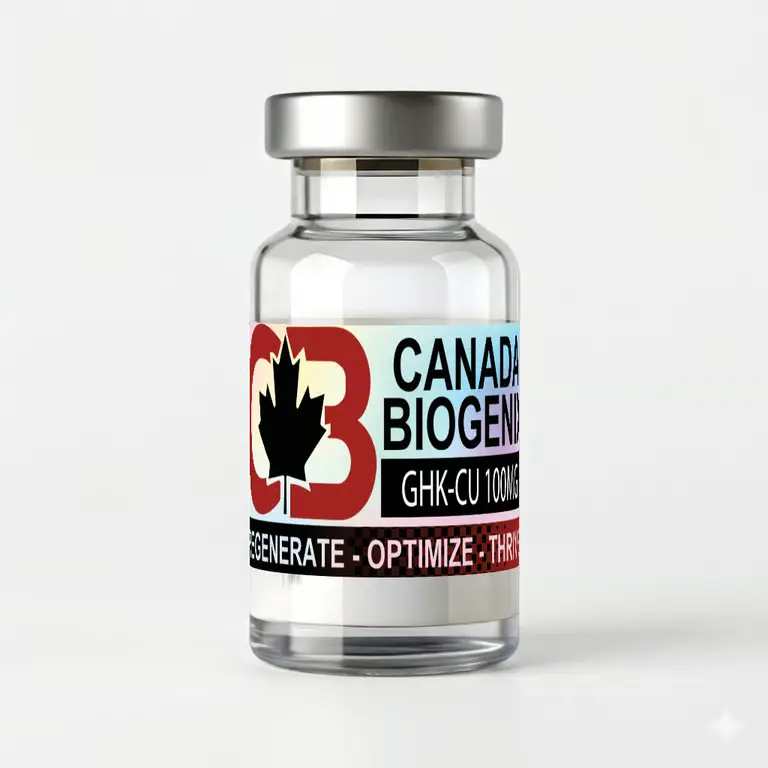
GHK-Cu 100 mg is a copper-binding tripeptide attracting strong research interest for its potential influence on collagen signalling, tissue remodelling, cellular protection and regenerative pathways.
GHK-Cu is a naturally occurring complex formed when the peptide GHK binds to copper. GHK contains three amino acids: glycine, histidine and lysine. It is therefore classified as a tripeptide.
Researchers have identified GHK in human plasma, saliva and urine. Furthermore, published reviews report that circulating levels decline with age. This observation has increased interest in its possible role in maintaining normal repair signals.
Laboratory findings suggest that GHK-Cu may encourage fibroblast activity and support the synthesis of collagen, elastin and glycosaminoglycans. These materials help form the extracellular matrix surrounding cells.
Research has produced encouraging findings involving wound closure, new blood-vessel formation and tissue organization. Additionally, the peptide appears to influence both matrix-building enzymes and their inhibitors. This balanced activity may be important for orderly remodelling.
Experimental models suggest that GHK-Cu may help regulate oxidative stress and inflammatory signalling. For example, research has examined pathways involving NF-κB, inflammatory cytokines and copper-dependent antioxidant enzymes.
Topical research has reported promising changes in firmness, elasticity, fine-line appearance and overall skin quality. However, studies have generally been small, and results have not been uniform across every measured outcome.
Copper peptides have also attracted interest in hair and scalp research. Early laboratory findings suggest possible effects on follicle size, growth signalling and the surrounding tissue environment. Nevertheless, stronger controlled human evidence is still needed.
Subcutaneous use of GHK-Cu is widely discussed in experimental and practitioner settings. Common online protocols often reference approximately 0.5–2 mg per administration, with frequency varying from daily administration to several times weekly.
Published studies use different routes, concentrations and research models. Therefore, animal doses should not be converted directly into human protocols. The 50 mg and 100 mg vial sizes describe total research quantity and do not represent an individual dose.
| Research Area | Promising Finding | Current Evidence |
|---|---|---|
| Skin remodelling | Collagen, elastin and firmness-related signalling | Laboratory and small topical studies |
| Tissue repair | Wound closure, angiogenesis and matrix formation | Primarily laboratory and animal research |
| Inflammation | Potential regulation of cytokines and inflammatory pathways | Cellular and animal models |
| Systemic administration | Growing experimental interest | No validated human subcutaneous protocol |
Researchers requiring a smaller quantity can explore
GHK-Cu 50 mg.
GHK-Cu is also included in the
KLOW 80 mg research blend
alongside KPV, BPC-157 and TB-500.