
Last Updated: August 30, 2026
Selecting the right peptide research tools for beginners 2026 determines whether your research stays organized, accurate, and compliant. Most beginners make their first mistake before ordering: they don’t understand what separates premium research peptides from lower-grade alternatives, skip the Certificate of Analysis, store compounds incorrectly, or use non-sterile injection supplies.
This guide covers the top 5 peptide research tools for beginners 2026, how to interpret purity reports, store peptides correctly, and choose supplies that won’t compromise your research.
| ToolBest ForKey AdvantageStartup Cost |
|---|
| Canada BioGenixQuality-first researchersPremium compounds + transparencyContact for pricingNutrigenix ScientificBudget-conscious beginnersThird-party verified + fast shippingFrom $40 per peptidePeptide Starter KitNew researchersAll-in-one injection suppliesContact for bundle pricingCustom Peptide SynthesisSpecific sequencesTailored synthesis + analytical dataQuote-basedGenScript Peptide ToolSequence planningFree design optimizationFree |
Canada BioGenix stands apart because every peptide compound goes through strict vetting with carefully selected manufacturing partners, and every batch comes with documentation you can trust. When you order the same peptide twice, it performs the same way both times, consistency that eliminates frustration for researchers still learning protocols.
The real differentiator is the focus on purity standards. Canada BioGenix backs quality claims with careful partner selection and batch-specific documentation, so you can verify whether your compound is actually what the label says it is.
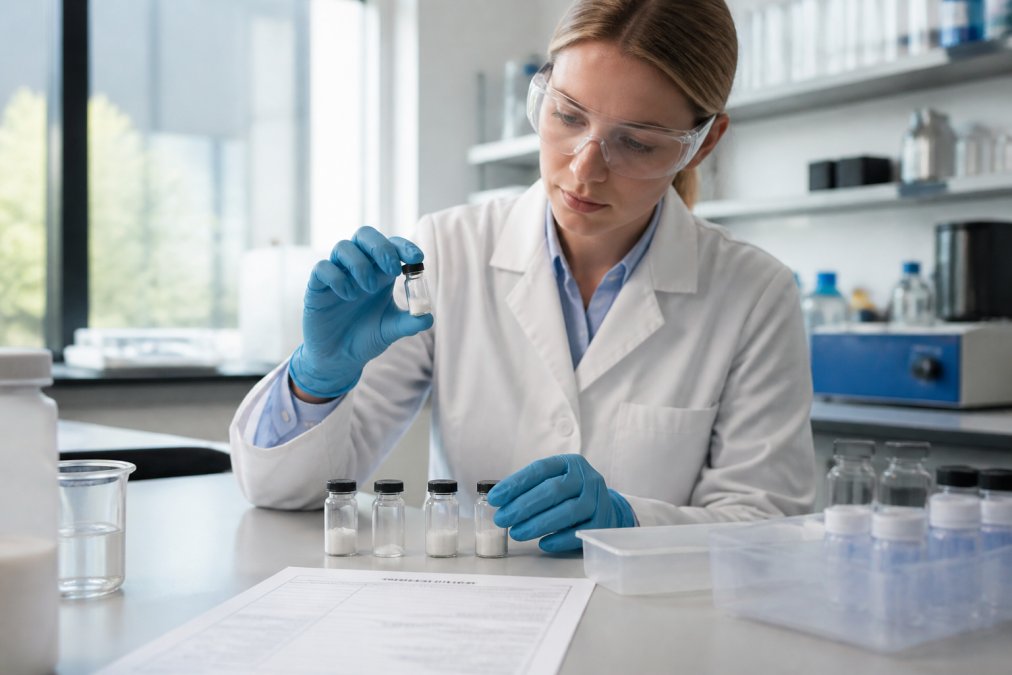
Request batch-specific Certificates of Analysis before ordering. This lets you confirm purity and identity before your peptides arrive, the single best way to avoid wasting time on degraded or mislabeled compounds.
Free shipping on orders over $250 removes friction once you’re ordering multiple compounds. Credit card payment also simplifies billing for Canadian researchers.
Nutrigenix Scientific offers peptides starting at $40 per compound with third-party Certificate of Analysis on every batch. For beginners on a tighter budget, this is meaningful savings without sacrificing verification.
Lyophilization in Canada reduces degradation risk during transit. Same-day or next-business-day shipping keeps compounds fresh. You’re trading some premium positioning for real savings while maintaining legitimate third-party verification, an independent lab confirmed purity, not just the supplier’s claim.
Third-party COAs matter because they’re verified by someone with no financial incentive to inflate purity numbers. That’s worth the peace of mind.
The range of peptides (BPC-157, GHK-Cu, Retatrutide) covers common research needs without custom synthesis costs.
The Peptide Starter Kit bundles bacteriostatic water, insulin syringes, alcohol prep pads, and reconstitution needles, all medical-grade from established manufacturers. Every component is compatible, preventing the common beginner mistake of mixing incompatible supplies.
Reconstitution requires sterile technique, the right needle gauge, and proper bacteriostatic water (not saline or distilled water). This kit handles all of that without requiring separate research on each component.
Never reconstitute peptides with regular water or saline. Bacteriostatic water prevents bacterial growth and keeps your compound stable longer. Using the wrong solvent degrades your peptide within hours.
Fast domestic shipping within Canada means everything arrives together when you’re ready to start your protocol.
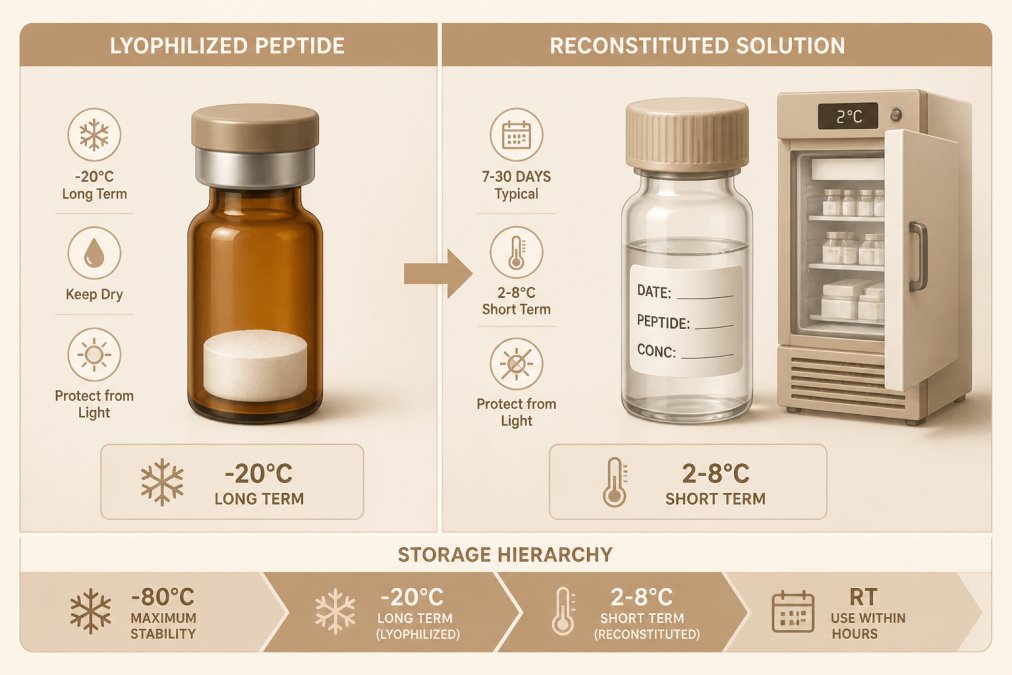
Storage determines whether your peptides stay potent or degrade into useless powder. Lyophilized peptides are remarkably stable as freeze-dried powder if kept dry and protected from light. At room temperature (20-25°C) in a sealed, desiccated container, most peptides retain 90% or greater potency for 12-24 months (peer-reviewed research).
Three factors degrade lyophilized powder quickly:
Moisture exposure: Peptides are hygroscopic and absorb water from the air. A vial left open in humid environments (above 60% relative humidity) can lose 20% potency within weeks (peer-reviewed research). Store powder in airtight, opaque containers with fresh desiccant.
Light exposure: Ultraviolet and visible light trigger photodegradation. Use amber or opaque vials, never clear glass.
Temperature fluctuation: Repeated heating and cooling cycles accelerate breakdown. Consistency matters more than absolute temperature.
Once you reconstitute lyophilized peptide with bacteriostatic water, the stability window shrinks dramatically. Reconstituted peptides degrade noticeably within 3-7 days at room temperature (peer-reviewed research). At 2-8°C (refrigerated), most remain stable at 90% potency for 2-4 weeks. At -20°C (standard freezer), stability extends to 3-6 months. At -80°C (ultra-freezer), reconstituted peptides remain stable for 12 months or longer.
Quality suppliers pack peptides with ice packs or dry ice and use insulated boxes to maintain temperature during transit. If peptides arrive warm or thawed, potency loss has already occurred. Contact your supplier, a reputable one will replace the order.
Every vial needs clear labeling with peptide name, concentration, reconstitution date, and your initials. Mark expiration dates based on storage temperature: a vial reconstituted January 15 and stored at -20°C expires April 15; one stored at 2-8°C expires February 15.
The most common beginner mistake is reconstituting too much peptide at once and storing it at room temperature. A vial left on a desk degrades 10-15% per day. Reconstitute only what you’ll use within 3-7 days, and refrigerate or freeze the rest immediately.
Stability is predictable if you follow the rules: keep powder dry and dark, keep solutions cold, and respect expiration windows for your storage temperature. Control moisture, light, and heat, and your peptides will perform consistently.
A Certificate of Analysis proves what you ordered is actually what you received. A legitimate COA includes the peptide sequence, purity percentage (usually measured by HPLC), and molecular weight confirmation (usually by mass spectrometry).
Purity above 90% is the baseline for research-grade peptides. Anything below 85% means significant impurities that could skew results. HPLC purity measures what percentage of your compound is the actual peptide versus contaminants. Mass spectrometry confirms you have the right molecule.
A red flag: COAs that list purity without specifying the testing method. “92% pure” means nothing without knowing whether it was measured by HPLC, titration, or estimation. Legitimate suppliers always specify the analytical method.
Always compare COAs using the same metric. If one says “92% HPLC” and another says “95% estimated,” the HPLC result is more trustworthy. The testing method matters as much as the number.
Check the COA date. If your peptide was synthesized six months ago, degradation may have occurred even if original purity was 95%. Quality suppliers rotate stock and provide recent COAs.
Choosing high-quality peptides involves verifying the compound itself and ensuring it’s safe for your individual health profile. Most guides focus only on the first; the second, medication interactions and hormonal management, is where most safety oversights occur.
Verifying the Compound: Source, Documentation, and Shipping
Start with the source. Where is the peptide manufactured? Canada BioGenix partners with carefully selected manufacturers rather than claiming to synthesize everything themselves. That transparency matters.
Second, verify documentation before ordering. Ask for a sample Certificate of Analysis. A supplier unwilling to show purity data before purchase is a warning sign. The COA should specify the testing method and include a recent synthesis or retest date. If the COA is more than three months old, ask for a fresh batch.
Third, check storage and shipping practices. How are peptides packaged? Are they shipped with ice packs or insulation? Degradation during transit is invisible until you start using the peptide and wonder why results are inconsistent.
Fourth, evaluate pricing against verification level. The cheapest peptide isn’t the best deal if it arrives degraded or mislabeled. Nutrigenix Scientific and Canada BioGenix both offer fair pricing while maintaining third-party or strict internal verification.
Fifth, consider the supplier’s responsiveness. If you receive a batch that doesn’t perform as expected, will the supplier investigate and provide replacement or refund? This matters more than you realize.
The Critical Safety Step: Medication Interactions
Before you order any peptide, you must assess whether it interacts with medications you’re currently taking. This is non-negotiable.
BPC-157 may potentiate anticoagulants (blood thinners like warfarin or apixaban) by enhancing tissue repair. If you’re on
anti coagulation therapy, discuss BPC-157 with your physician before use.
GHK-Cu can interfere with copper metabolism. If you take zinc supplements (which compete with copper for absorption), GHK-Cu may reduce zinc
bio availability. If you have Wilson’s disease or copper metabolism disorders, GHK-Cu is contraindicated.
Retatrutide and GLP-1 receptor agonists mimic glucagon-like peptide-1. If you’re taking diabetes medications (metformin, sulfonylureas, insulin), GLP-1 peptides can amplify glucose-lowering effects and increase hypoglycemia risk. If you’re on thyroid medication, GLP-1 agonists may alter absorption. Space peptide injections at least 4 hours away from levothyroxine doses.
Melanotan II and MSH analogs can interact with dopamine agonists (bromocriptine, cabergoline) and may potentiate serotonergic drugs (SSRIs, SNRIs). If you’re on psychiatric medication, MSH analogs require medical oversight.
Ipamorelin and growth hormone secretagogues stimulate growth hormone release. If you’re taking corticosteroids (which suppress GH), the two work against each other. If you have a personal or family history of cancer, GH secretagogues carry theoretical risk because growth hormone can stimulate cell proliferation.
The Practical Interaction Checklist
Before ordering any peptide:
Never assume a peptide is “natural” or “research-only” means it’s safe to combine with your medications. Peptides are biologically active compounds. If you’re on prescription medication, you need medical guidance before starting peptides.
Post-Cycle Therapy and Hormonal Management
Many peptides create feedback loops in your endocrine system. Your body adapts to the peptide’s presence. When you stop, your natural hormone production doesn’t immediately bounce back. The transition period, typically 2-4 weeks, is when side effects emerge: fatigue, mood changes, appetite dysregulation, and sleep disruption.
Post-cycle management involves three phases:
Phase 1: Taper (Weeks 1-2 after stopping)
Reduce the dose by 50% for one week, then 25% for the second week. This gradual reduction allows your endocrine system to adjust without shocking it.
Phase 2: Support (Weeks 2-6)
Support hormonal recovery with sleep optimization (8+ hours nightly), adequate protein intake (1.6-2.2 g per kg of body weight), micronutrient sufficiency (zinc, magnesium, vitamin D), and reduced training intensity (dial back volume by 20-30%).
Phase 3: Monitoring (Weeks 6-12)
If you used peptides that significantly affect growth hormone, testosterone, or metabolic hormones, consider blood work 6-8 weeks post-cycle to confirm hormonal recovery. A simple panel (total testosterone, free testosterone, IGF-1, fasting glucose) costs $150-$300 CAD and provides objective confirmation that your hormones have stabilized.
Building a Relationship with One or Two Suppliers
Build a relationship with one or two reliable suppliers rather than shopping around constantly. Consistency in your compound source reduces variables in your research. Over time, you’ll develop a track record with that supplier, making it easier to request batch-specific data or discuss quality concerns.
Quality peptides matter, but safety is the foundation. A premium peptide that interacts with your blood pressure medication or crashes your hormones post-cycle is worse than a mid-tier peptide used safely. Verify your compound, screen for interactions, plan your exit strategy, and work with suppliers who support that process.
Beginner-friendly peptide research tools prioritize ease of use, clear documentation, and transparent quality standards. Look for suppliers offering third-party Certificates of Analysis (COA), fast domestic shipping, and all-in-one starter kits that include bacteriostatic water, insulin syringes, and reconstitution needles. Tools should provide straightforward guidance on proper reconstitution, storage in cold chain conditions, and safe subcutaneous or intramuscular injection techniques. Reputable suppliers also offer customer support to answer questions about dosage protocols, cycle duration, and post-cycle therapy considerations.
A Certificate of Analysis for peptides should include HPLC (high-performance liquid chromatography) results showing the percentage purity, typically expressed as >90%, >95%, or >99%. The COA must also confirm the amino acid sequence matches your order and list any detected impurities. Verify the COA comes from an independent third-party laboratory, not just the supplier’s in-house testing. Check that the batch number on the vial matches the COA batch number, and confirm the testing date is recent. Request batch-specific COAs even for smaller quantities, this demonstrates the supplier’s commitment to quality and transparency.
Reconstitution involves mixing lyophilized peptide powder with bacteriostatic water using sterile technique. First, calculate the correct volume of bacteriostatic water needed based on desired concentration (e.g., 100 mcg/mL). Use a sterile insulin syringe and reconstitution needle to draw water, then slowly inject it into the vial at an angle to avoid foaming. Allow the peptide to dissolve for 5-10 minutes without shaking. Store reconstituted peptides in a refrigerator at 2-8°C. Always use alcohol prep pads to sterilize the vial top before each injection, and rotate injection sites to minimize tissue irritation and improve
bio availability
.
Canadian suppliers offer faster shipping times (often same-day or 1-2 business days), reducing the risk of peptide degradation during transit and ensuring stable cold chain delivery. They operate under Canadian regulatory frameworks and standards, providing greater accountability and transparency. Domestic suppliers typically offer better customer support for Canadian researchers and can provide batch-specific documentation quickly. They also eliminate customs delays and potential import complications, ensuring your research peptides arrive in optimal condition with verified purity and identity intact.
This article was written using GrandRanker