
The conversation around research peptides and muscle science in Canada has grown dramatically in recent years. From gym communities to research labs, more Canadians are exploring what the preclinical science says about peptide compounds and their potential role in muscle tissue research, recovery, and body composition studies.
In this guide, we break down the most studied research peptides in the muscle growth and recovery space, explain how they have been examined in preclinical models, and give Canadian researchers and curious individuals the honest, science-grounded overview they deserve.
Research Purposes Only: All information in this guide is educational. Canada Biogenix supplies peptides strictly for laboratory and research purposes. This content does not constitute medical advice and no therapeutic claims are made.
Before diving into specific compounds, it helps to understand what a research peptide actually is and why the scientific community has shown such interest in peptides in the context of muscle tissue and recovery.
A peptide is a short chain of amino acids the same building blocks that form proteins. Unlike full proteins, peptides are smaller and more targeted in how they interact with biological systems. In a research context, synthetic peptides are lab-manufactured compounds studied for how they interact with specific receptors, signalling pathways, and biological processes.
In the context of muscle-related research, scientists have been particularly interested in peptides that interact with two key biological pathways:
Peptides that interact with these pathways are studied for their potential role in muscle recovery research, body composition studies, and tissue repair making them among the most actively researched compounds in the Canadian and global peptide science community.
Key Distinction: Research peptides are not anabolic steroids. Steroids directly alter hormone levels through gene expression. Research peptides work by interacting with specific receptors a more targeted mechanism studied in preclinical models for its potential relevance to muscle tissue science.
Understanding the research process is essential for interpreting what the science actually says and what it does not yet confirm.
The majority of peptide muscle research has been conducted in rodent models. Scientists administer a compound, then observe changes in muscle tissue, hormone levels, body composition markers, and recovery speed. These findings are valuable but preliminary animal results do not automatically translate to human outcomes.
Some peptides have been studied in cell cultures exposing isolated muscle cells or fibroblasts to a compound and measuring biological responses. These studies help researchers understand mechanisms at the cellular level.
A small number of growth hormone-related peptides have progressed to limited human studies, typically with small sample sizes and short durations. These early findings are interesting but far from conclusive large-scale, double-blind human clinical trials are still needed for most compounds.
⚠️ Important Context: When this guide says a peptide ‘has been studied for muscle research’ or ‘preclinical findings suggest’, this refers to animal or cell studies not proven human outcomes. The distinction matters, and we will always be transparent about it.
CJC-1295 is one of the most searched and widely studied research peptides in Canada among those interested in growth hormone signalling and muscle-related science.
CJC-1295 is a synthetic analog of Growth Hormone Releasing Hormone (GHRH) the natural signal from the hypothalamus that tells the pituitary gland to release growth hormone. In animal research, CJC-1295 has been studied for its ability to stimulate sustained GH release compared to natural GHRH, which has a very short half-life.
CJC-1295 is available in two research forms with DAC (Drug Affinity Complex) which extends its half-life significantly, and without DAC (also called Mod GRF 1-29) which produces shorter, more pulsatile GH release patterns. Researchers studying different GH stimulation models may select either version depending on their protocol design.
🔬 Research Note: CJC-1295 is studied for research purposes only. It is not approved by Health Canada as a pharmaceutical drug for human muscle-related therapy. All studies referenced are preclinical.
Ipamorelin is consistently one of the most searched research peptides in Canada particularly among those studying growth hormone secretagogue mechanisms alongside CJC-1295.
Ipamorelin is a selective growth hormone secretagogue a compound studied for its ability to stimulate GH release through ghrelin receptor pathways. What makes it particularly interesting to researchers is its selectivity: preclinical studies suggest it stimulates GH release without significantly affecting cortisol or other hormonal pathways, unlike older secretagogues such as GHRP-6.
The selectivity profile of Ipamorelin is one of the primary reasons it attracts significant research attention in Canada and globally making it one of the most studied GH secretagogues in the preclinical peptide science space.
Among Canadian researchers and the broader peptide research community, the combination of CJC-1295 and Ipamorelin is one of the most discussed research protocols in the muscle science space.
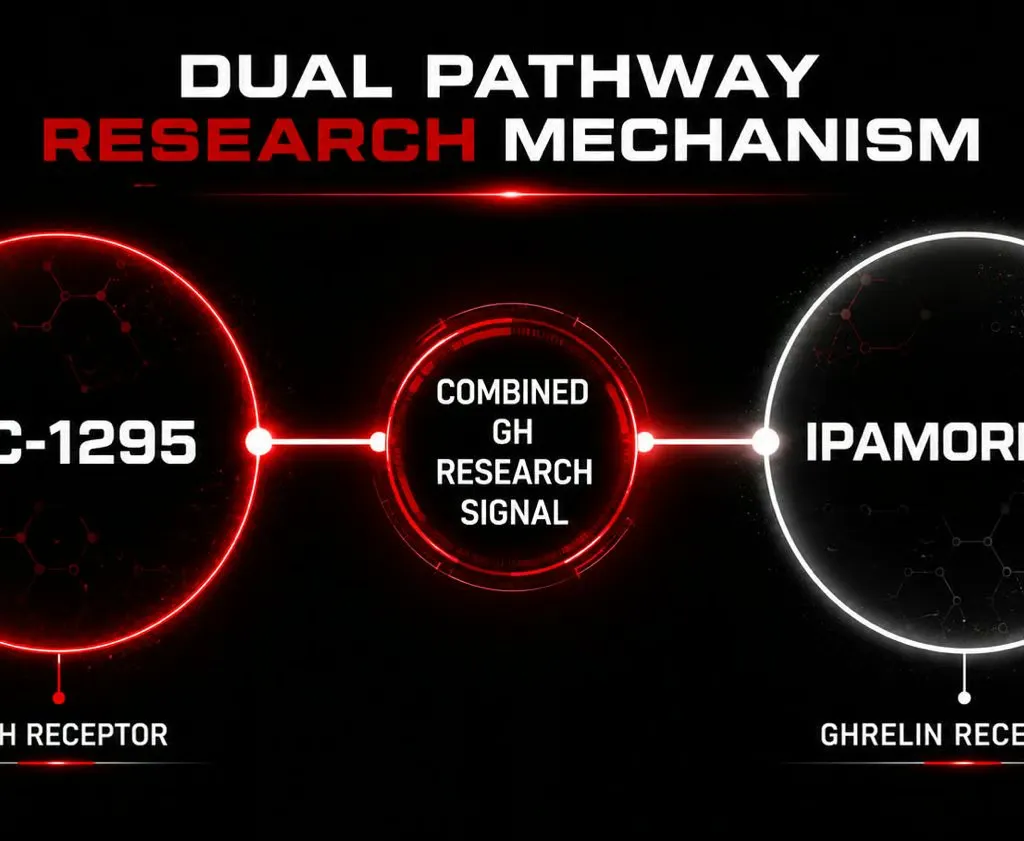
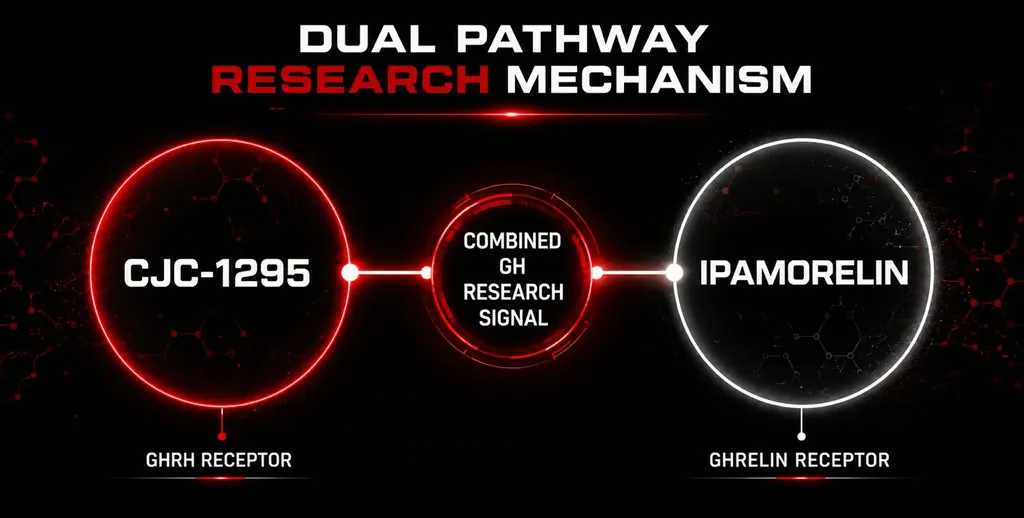
CJC-1295 and Ipamorelin work through different but complementary mechanisms. CJC-1295 stimulates GH release via GHRH receptors, while Ipamorelin activates ghrelin receptors. When studied together in preclinical models, researchers have examined whether this combination produces a more robust and sustained GH signalling response than either compound alone.
Research Transparency: The CJC-1295 + Ipamorelin combination is studied at the preclinical level. Large-scale human clinical trials examining this combination specifically for muscle applications are still limited. Researchers should approach findings with appropriate scientific caution.
IGF-1 LR3 (Insulin-Like Growth Factor 1 Long Arg3) is a synthetic, extended-half-life version of naturally occurring IGF-1. It is one of the most researched compounds in the direct muscle tissue science space.
IGF-1 is a natural hormone produced primarily in the liver in response to GH signals. It plays a documented role in cellular growth, protein synthesis pathways, and tissue repair mechanisms. IGF-1 LR3 is a modified version with an extended half-life compared to natural IGF-1, making it a popular subject in research settings where sustained IGF-1 activity is the subject of study.
IGF-1 LR3 is notable for being one of the few research peptides with well-documented receptor-level mechanisms in muscle tissue making it a frequently cited compound in academic literature on muscle biology research.
While CJC-1295, Ipamorelin, and IGF-1 LR3 are studied primarily through the GH/IGF-1 pathway, BPC-157 and TB-500 represent a different research category tissue repair and recovery science.
BPC-157 (Body Protective Compound 157) is a 15-amino-acid synthetic peptide originally studied in the context of gastrointestinal tissue protection. Research has since expanded to explore its potential role in tendon, ligament, and connective tissue repair all of which are directly relevant to muscle recovery science.
Preclinical findings suggest BPC-157 may interact with angiogenesis pathways (new blood vessel formation) and fibroblast activity both of which are studied in the context of how damaged muscle-adjacent tissue heals in animal models.
TB-500 (Thymosin Beta-4) is a synthetic peptide studied for its interaction with actin a structural protein involved in cell movement, tissue regeneration, and inflammation modulation. In preclinical models, TB-500 has been examined for its potential role in muscle tissue repair, mobility support research, and systemic recovery processes.
BPC-157 and TB-500 are often studied in combination in preclinical models because their mechanisms appear complementary BPC-157 targeting local repair processes and TB-500 supporting broader systemic tissue regeneration pathways. This combination is among the most discussed research stacks in the Canadian peptide science community.
Internal Link Tip: For a full deep-dive on BPC-157 specifically, see our complete BPC-157 research overview on the Canada Biogenix blog.
Tesamorelin is a GHRH analog similar in mechanism to CJC-1295 but with a distinct research profile that has attracted particular attention in the body composition science space.
Tesamorelin is a synthetic analog of growth hormone releasing hormone. It is one of the few GHRH analogs that has progressed to human clinical study, primarily in the context of body composition research in specific patient populations. This gives it a more advanced research profile compared to many other peptides in this category.
Tesamorelin’s more advanced human research profile makes it a particularly interesting subject for Canadian researchers studying the relationship between GH signalling, body composition, and muscle tissue science.
The growth of interest in research peptides in Canada has attracted a wide range of suppliers and unfortunately, not all of them prioritize quality, transparency, or research integrity. Here is what to look for:
Canada Biogenix was built by a Canadian family that experienced firsthand how difficult it is to find a truly trustworthy research peptide supplier. That personal experience drives our commitment to quality, transparency, and honest science communication.
Based on search volume and scientific literature, the most studied compounds in the Canadian muscle research space include CJC-1295, Ipamorelin, IGF-1 LR3, BPC-157, and TB-500. The CJC-1295 + Ipamorelin combination is the most searched stack in Canada for growth hormone signalling research.
Research peptides are available in Canada for laboratory and scientific research purposes. They are not approved by Health Canada as pharmaceutical drugs for human therapeutic use. Canadians sourcing these compounds should ensure they are working with suppliers that clearly position products for research use only.
CJC-1295 is a GHRH analog that stimulates GH release through GHRH receptors, typically producing sustained GH elevation in animal models. Ipamorelin is a ghrelin receptor agonist that stimulates GH through a different receptor pathway, producing more pulsatile GH release. In preclinical research, they are often studied together because their mechanisms are complementary acting on two distinct GH stimulation pathways simultaneously.
IGF-1 LR3 is a synthetic version of naturally occurring Insulin-Like Growth Factor 1 with an extended half-life. It is studied in the muscle tissue science space because IGF-1 plays a well-documented role in protein synthesis pathways and cellular repair mechanisms. The LR3 modification allows researchers to study IGF-1 receptor interactions over a longer research window compared to natural IGF-1.
BPC-157 and TB-500 are studied together in preclinical recovery research because their mechanisms appear to address different aspects of tissue repair. BPC-157 is associated with local angiogenesis and fibroblast activity, while TB-500 is studied for broader systemic tissue regeneration via actin-related pathways. Together, they represent a comprehensive recovery research stack in the preclinical literature.
Look for a Canadian supplier that provides independent third-party COA documentation, clearly states products are for research use only, offers domestic Canadian shipping, and maintains transparent sourcing practices. Canada Biogenix provides research-grade peptides meeting these standards, sourced from independently vetted and tested manufacturers.
The preclinical science around muscle-related research peptides is genuinely compelling and the Canadian research community’s interest in these compounds reflects a broader global trend toward understanding how peptide biology intersects with muscle tissue, recovery, and body composition science.
At the same time, the honest message from the current state of research is this: the findings are promising, not proven. Preclinical animal data and limited human pilot studies provide important signals but they are not the final word. Large-scale human trials are still needed for most of these compounds.
What we can offer Canadians is a transparent, research-grounded overview and a commitment to supplying only the highest-quality, independently tested research peptides available in Canada.
Explore our full range of research-grade peptides at canadabiogenix.com Canada’s trusted source for quality, transparency, and honest science.
DISCLAIMER: This content is for educational and informational purposes only and does not constitute medical advice. All peptides supplied by Canada Biogenix are intended strictly for laboratory and scientific research purposes and are not approved by Health Canada for human therapeutic use. Canada Biogenix makes no medical or therapeutic claims about any product. Always consult a qualified healthcare professional before making health-related decisions.